Reuters reported on Thursday, 17 September 2026, that China has privately asked Tehran to help rein in Yemen’s Houthis after an appeal to Beijing by Saudi Arabia, according to three Iranian sources familiar with the matter. Riyadh turned to China after the Iran-backed group’s military blitz along the Red Sea coast and around the Bab el-Mandeb Strait, the sources said, moves that have left Saudi oil exports and shipping more exposed. China’s public line has been restraint, dialogue and the restoration of safe navigation. The private message, the sources said, went further: Beijing wants Iran to use its influence with the Houthis to stop the conflict spreading across energy routes on which China depends.
That is a diplomatic file with a voyage-order consequence. Hormuz is already a commercially closed strait in all but name. Houthi forces this month seized Mokha, then Perim and the Greater and Lesser Hanish islands, putting an armed group across the southern gate of the Red Sea. Some liner schedules are nonetheless being put back through Suez. A private Chinese request is not a UKMTO warning and not a Houthi ceasefire. It is evidence that the cargo owner with the most barrels at stake on both chokepoints is now asking the sponsor to limit the southern one. Operators should not treat that as a threat downgrade until a Houthi statement, a UKMTO product or a carrier routing notice actually changes.
The sources did not say how the message was delivered, or whether it was conveyed during Iranian Foreign Minister Abbas Araghchi’s visit to China on Wednesday, 16 September, when he met Foreign Minister Wang Yi. Tehran’s reported reply was that stability and peace in the region depend on ending the U.S.–Israeli war on Iran. Chinese officials did not issue explicit threats or indicate that Beijing would squeeze Tehran economically if it failed to use its influence, the three sources said. Iran’s foreign ministry and the Saudi government’s media office did not immediately respond to Reuters. The Chinese foreign ministry, asked to comment, said China “does not wish to see regional tensions further spill over into Yemen and the Red Sea,” that “facilities vital to people’s livelihoods must not be targeted,” and that issues should be resolved through dialogue.
Why Beijing is in this conversation
China has been Iran’s largest trading partner for more than a decade and remains the main buyer of its oil. Kpler figures carried by Reuters put Chinese purchases at more than 80 percent of Iran’s seaborne oil exports in 2025, averaging about 1.4 million barrels a day. A senior Western diplomat in the region told Reuters that Beijing is one of the few capitals that can still press Iran on the Houthis. Alex Vatanka, director of the Iran Program at the Middle East Institute, put the wider exposure in numbers operators already know: roughly half of China’s oil imports come from the Middle East, and trade between China and the Gulf Cooperation Council states totals around $300 billion a year. “Iran can disrupt Hormuz. But at some point that leverage begins hurting the very power Tehran increasingly depends on,” he said.
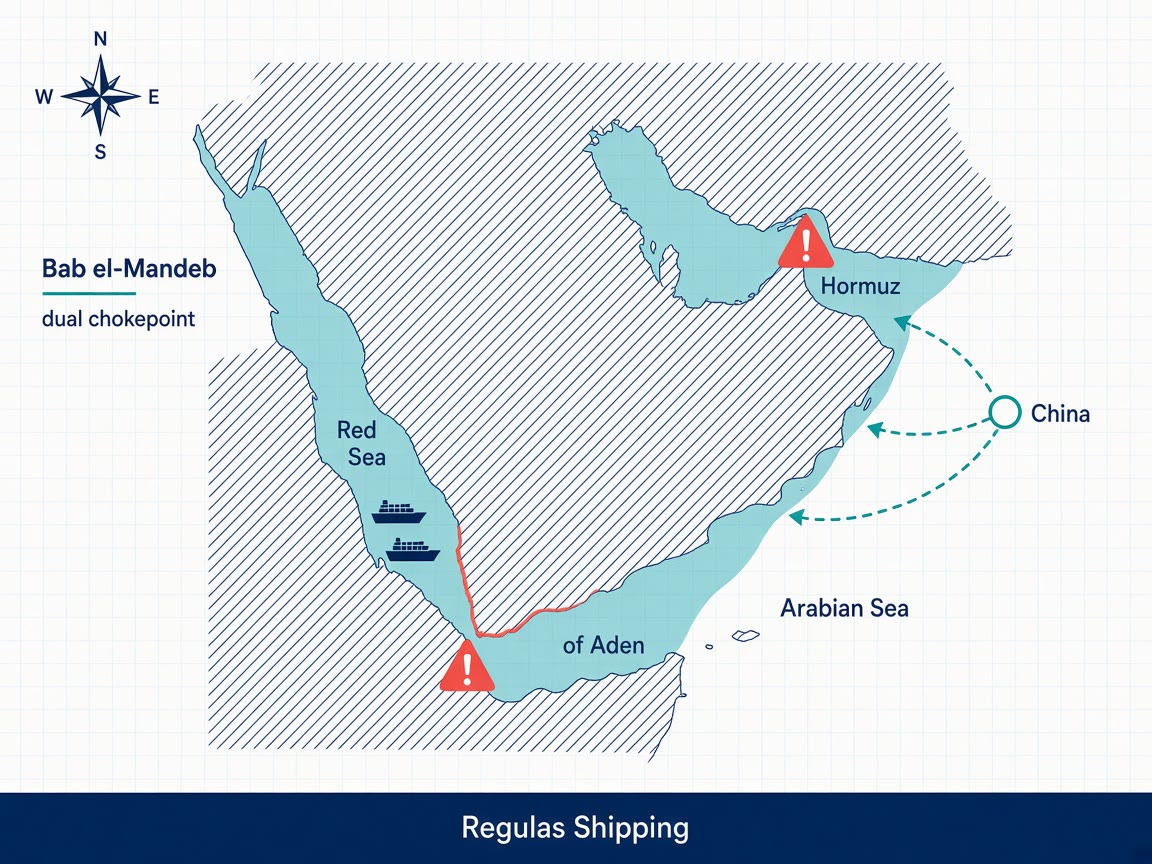
One of the Iranian sources made the same point in operational language: Iran and its allies now exert pressure over both ends of the region’s key maritime network, and “China depends on both.” That is the dual-chokepoint case in a single sentence. With Hormuz effectively shut to ordinary commercial crude and LNG, sustained Houthi attacks on vessels or ports in the Red Sea would hit the Middle East’s two main oil-export routes at once. Saudi Arabia’s East–West Petroline to Yanbu, the principal Hormuz bypass, is still stopped after drone strikes on pumping stations. If Bab el-Mandeb also becomes a no-go for energy and liner traffic, the remaining water is the Cape. Japanese shipowners, cited earlier this month, put a Saudi-to-Asia round trip in that case at about 100 days, against about 40 via Hormuz and 40 to 50 via the Red Sea.
Beijing has used this channel before. China brokered the 2023 agreement that restored diplomatic ties between Iran and Saudi Arabia. It has not, on Thursday’s evidence, attached consequences to the new request. Critics inside Iran have already complained that Chinese non-oil trade and investment since the 2021 25-year cooperation pact have been modest beside Beijing’s commitments in Gulf Arab states. Two of the three sources said China’s interests were only one consideration among many in Tehran. The Western diplomat’s summary is the one that belongs in a company security brief: “Tehran and Beijing need each other. China is a factor Tehran cannot ignore, and Beijing wants Hormuz reopened and Red Sea shipping secured.” Analysts quoted by Reuters said the test is whether China is prepared to attach consequences. A private message without a visible Houthi change is still a private message.
What has already changed on the water
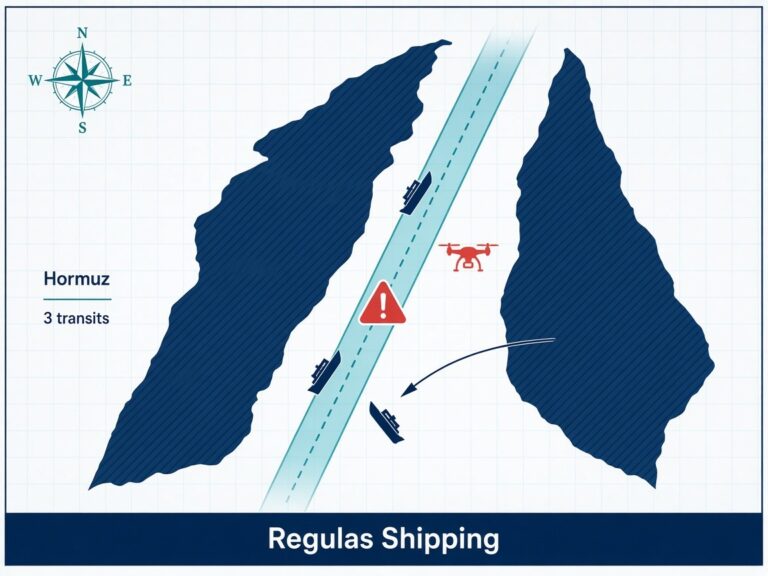
The Houthi coastal picture is not waiting on Beijing. Forces aligned with the group seized Mokha, then moved onto islands around Bab el-Mandeb, including Perim at the centre of the strait and the Hanish group further north. The UN Security Council held a second emergency meeting on Yemen on 15 September. Assistant Secretary-General Khaled Khiari described Bab el-Mandeb as volatile. Reuters, citing Kpler, put Wednesday’s Bab el-Mandeb commodity crossings at 21 against 24 on Tuesday — thin against peacetime, but an order of magnitude above Hormuz’s three-ship Wednesday. IMO has confirmed four seafarer deaths in the 11 August attack on a merchant vessel off Al Mokha. The Houthis have so far framed their naval blockade around Saudi-associated shipping. Container operators are trading on that distinction. It is a political statement by an armed group that has already killed seafarers, not a routing circular.
Liner restorations this week still have to leave Suez, run the Red Sea and pass that coast. Maersk and Hapag-Lloyd are putting four more Gemini services through Suez, with named westbound sailings from 19 September, conditional on stability and no further escalation. MSC will restore Indusa westbound-only from 23 September; eastbound stays on the Cape. OOCL Portugal made COSCO’s first southbound Suez ultra-large container transit on 16 September on a Belgium–China backhaul. None of those notices is a clearance of Bab el-Mandeb. A Chinese request that Iran restrain the Houthis, if it worked, would be the first political event that might eventually change those caveats. It has not worked yet on the public record. Passage plans that drop BMP Maritime Security, UKMTO reporting or a Cape contingency because Reuters moved a diplomatic exclusive are ahead of the water.
The cargo screening problem is unchanged. Saudi-associated ownership, charterers, cargo origin, AIS presentation and any remaining Yanbu or Jeddah call still sit inside the Houthi blockade line. China-bound boxes and China-bound barrels sit inside Beijing’s interest. Those are not the same screen. A Hong Kong or China-linked hull running southbound through Suez is still a merchant ship on a Yemeni coast that IMO has already counted as a fatality theatre. A tanker loading residual Gulf crude for China is still a Hormuz or Gulf of Oman STS problem first. Thursday’s story tells operators that Beijing is trying to keep the southern gate from becoming a second Hormuz. It does not tell them that the southern gate is open.
What it does not change in the SMS
It does not amend SOLAS, ISPS or any NAVAREA. It does not reopen Hormuz. It does not lift Liberia’s ISPS Security Level 3 for the Red Sea and Gulf of Aden. It does not cancel JMIC’s SEVERE rating in the Gulf. It does not name a Houthi stand-down date. Company security officers should date-stamp the Reuters exclusive in the political file and keep the voyage order on UKMTO, MSCIO, carrier advisories and the last named coastal seizure. If Tehran’s reply — that regional peace depends on ending the war on Iran — is the working Iranian position, then a Chinese request is being answered with a precondition operators cannot satisfy from the bridge.
Charterers and beneficial cargo owners with China discharge, Saudi association, or both, need a written split. China discharge does not buy a Houthi pass. Saudi association is still the declared blockade criterion. Dual exposure — a China-bound ship that also carries Saudi-linked cargo, ownership or a Jeddah call — is the fixture that should be re-read first. War-risk additional premiums attach to the water, not to a ministry statement about dialogue. If Beijing later does attach consequences, the first shipping evidence will be a Houthi statement, a drop in MSCIO/UKMTO incident cadence, or a carrier that removes its Red Sea caveat. Until one of those prints, Thursday’s exclusive is context for why China-bound Asia–Europe cargo is still being offered a Suez option, not a reason to price the option as safe.
What Operators Should Note
- Treat Thursday’s Reuters exclusive as a diplomatic request, not as a Bab el-Mandeb clearance. Three Iranian sources say China asked Tehran to restrain the Houthis after a Saudi appeal. Tehran’s reported reply tied peace to ending the war on Iran. China issued no economic threat. The foreign ministry called for dialogue and said livelihood facilities must not be targeted. No Houthi stand-down has been announced.
- Keep Mokha, Perim and the Hanish islands on the live southern-gate board. Those seizures are this month’s coastal facts. UN ASG Khiari called Bab el-Mandeb volatile on 15 September. Kpler/Reuters put Wednesday’s strait crossings at 21 against 24 on Tuesday. IMO’s last verified Houthi merchant-ship fatalities remain the four dead on 11 August off Al Mokha.
- Do not collapse China-bound cargo and Saudi-associated cargo into one screen. Beijing’s interest is both chokepoints and the China barrel. The Houthi blockade line is still Saudi-associated shipping. Dual-exposure fixtures — China discharge plus Saudi-linked cargo, ownership, AIS or a Jeddah/Yanbu call — should be re-read before the next load.
- Hold the liner Suez restorations to their own caveats. Gemini’s two-way return is conditional on no further escalation, with named sailings from 19 September. MSC Indusa is westbound-only from 23 September. COSCO’s OOCL Portugal southbound on 16 September is a backhaul test. A Chinese demarche does not rewrite those notices. Cape contingencies stay priced.
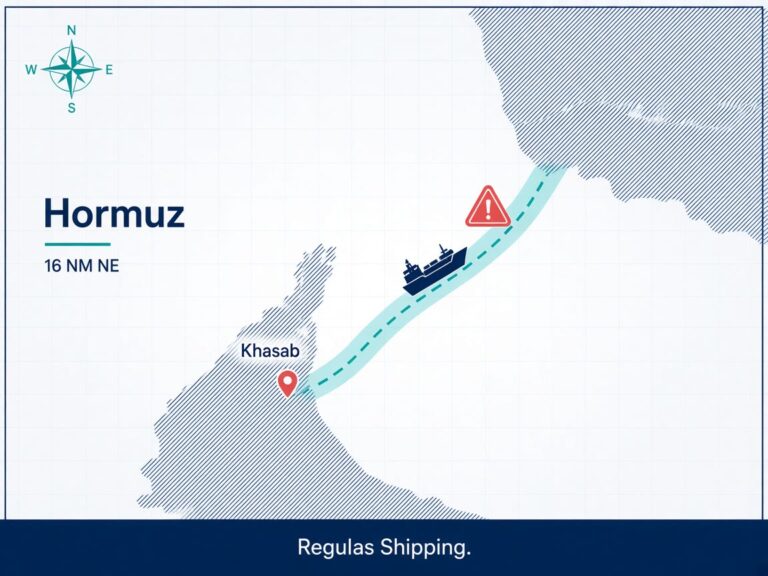
- Re-price the dual-chokepoint case, not a single-strait workaround. Hormuz printed three AIS-visible commodity transits on Wednesday, with no VLCC and no LNG. Petroline/Yanbu remains offline. If Bab el-Mandeb is also impaired, the remaining water is the Cape. Name that alternative in the charter before the ship is stemmed.
- Watch for shipping evidence, not for more ministry language. The first useful signal would be a Houthi statement, a change in UKMTO/MSCIO cadence, or a carrier that drops its Red Sea stability caveat. Until then, BMP Maritime Security, UKMTO reporting, citadel and fire plans, and Liberia’s Red Sea/Gulf of Aden Level 3 posture remain the SMS.
- Send the exclusive to the commercial and insurance desks, not only to the marine superintendent. China buys most of Iran’s seaborne oil and about half of its own crude from the Middle East. A Beijing request that fails still tells charterers why China-bound Suez options are being offered. A request that later succeeds would be the first political event that might shorten war-risk quotes. Neither outcome is a master’s night-order change today.
Regulas Shipping will keep lining the China–Iran Houthi demarche against UKMTO, MSCIO and the Mokha–Perim–Hanish file so operators can treat Thursday’s Reuters exclusive as a dual-chokepoint political signal, not as a declaration that Bab el-Mandeb is clear.