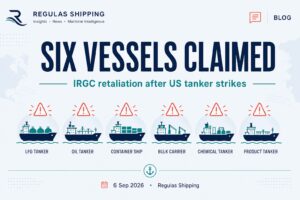
On 6 September 2026, commercial shipping confronted the aftermath of CENTCOM’s strikes on Iranian tankers Downy, Stark 1 and Kylo — a direct response to IRGC ballistic-missile attacks on US warships. The exchange lands on top of an already damaged reopen narrative: late-August mine-clearance claims, Iran–Oman corridor talks, and Qatar mediation had not restored normal traffic, and early September twin VLCC attacks plus Sidr fatalities further eroded confidence.
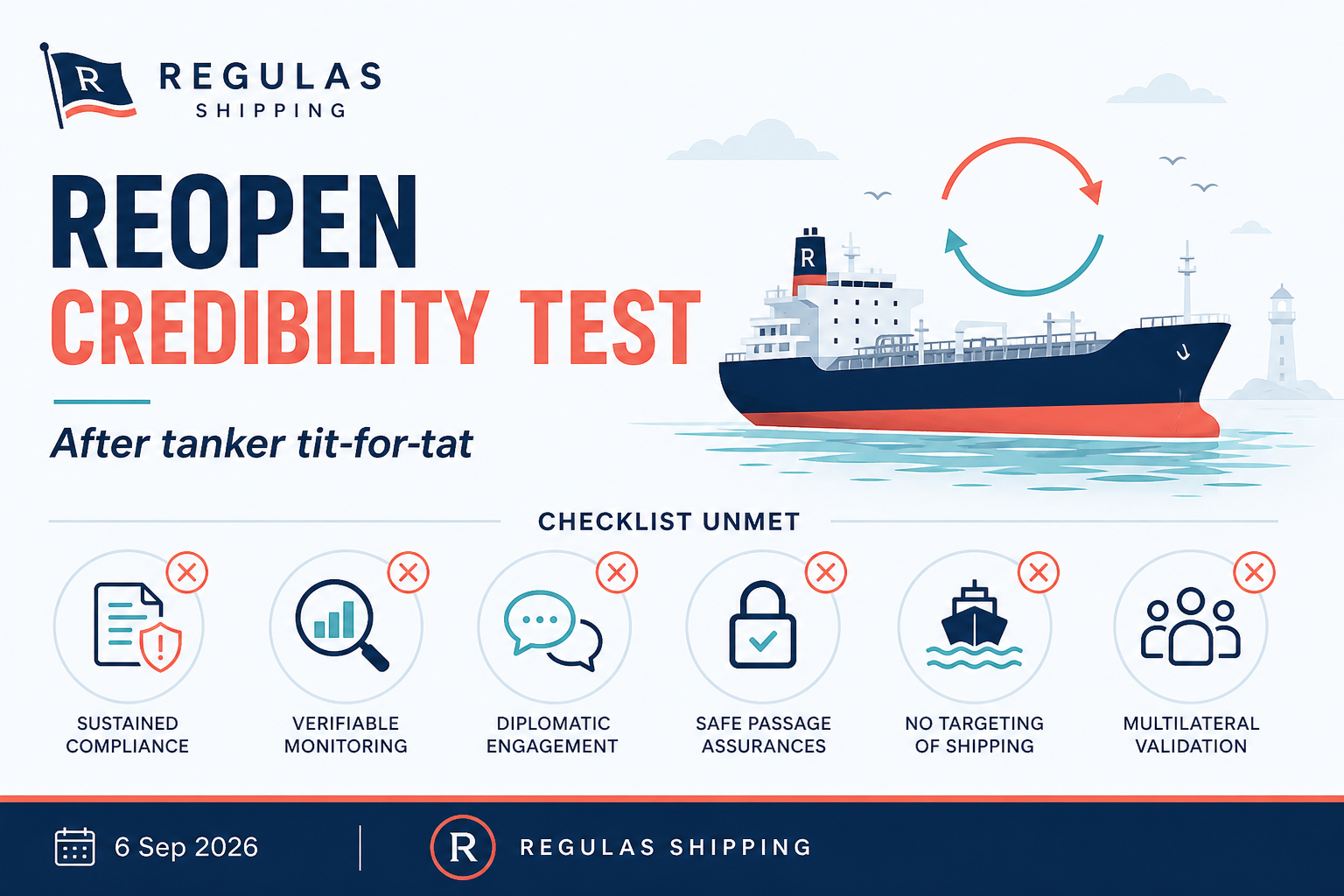
The credibility test for any future “Hormuz open” statement is now steeper. Operators will look for simultaneous evidence: JMIC threat downgrade from SEVERE, multi-day recovery in liquid-tanker mix, stable war-risk pricing, and an absence of naval tanker-targeting in both Hormuz approaches and Kharg waters. Absent that bundle, corridor diplomacy remains political theatre relative to voyage risk.
Chartering and operations teams should brief leadership that September’s first week cemented a high-intensity phase — administrative blacklists, mines, projectiles, and now reciprocal tanker strikes — rather than a glide path to normalisation.
What Operators Should Note
- Require a multi-indicator reopen checklist before approving Hormuz employment.
- Treat 5 September tanker strikes as a regime shift in Gulf naval escalation.
- Hold off on optimistic Q4 Gulf volume assumptions in fleet planning.
- Keep dual-chokepoint and Cape options fully funded in budgets.
- Refresh weekly board risk packs with JMIC level, attack log and traffic mix.
Regulas Shipping will keep testing political reopen claims against on-water indicators before recommending Gulf transits.