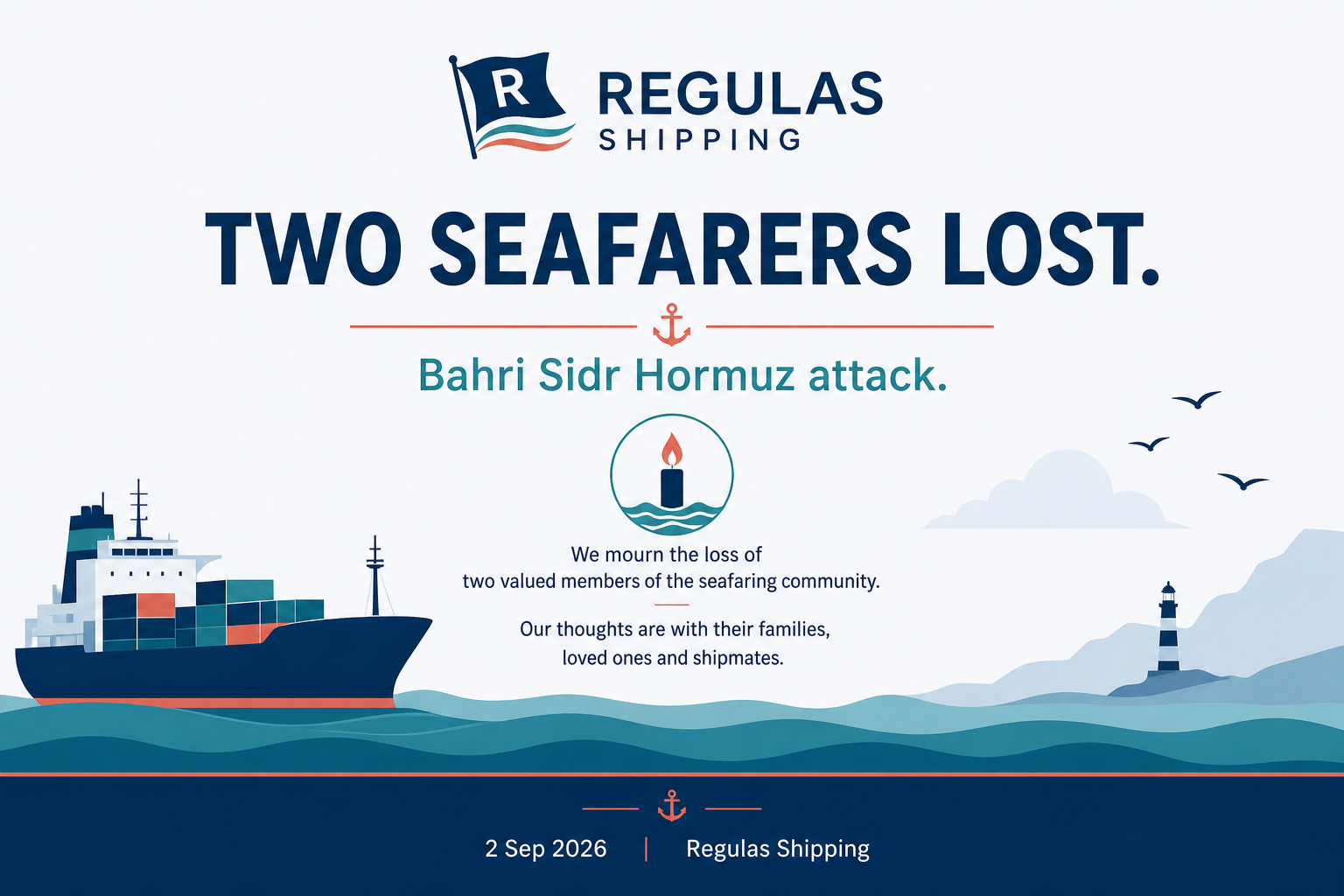
On 2 September 2026, Saudi Arabia stated that an Iranian attack on the Bahri-owned VLCC Sidr in the Strait of Hormuz had killed two Filipino seafarers. Bahri confirmed Sidr was involved in a security incident while transiting Hormuz around 23:40 local time on Monday (about 19:40 GMT) and expressed condolences to the families. The Saudi foreign ministry formally condemned Iran’s targeting of the Saudi tanker.
Sidr was one of two Saudi-oil VLCCs reported hit near Khasab the previous evening; the second, Senegal Prosperity, was also struck in the same outbound corridor. Early industry notes had not always confirmed fatalities; Wednesday’s Saudi and Bahri statements converted a kinetic incident into a confirmed seafarer fatality case and a diplomatic escalation between Riyadh and Tehran. Bahri tonnage has previously been hit in both Hormuz and Red Sea theatres, underlining dual-chokepoint exposure for Saudi export logistics.
For the industry, the deaths reinforce IMO-linked warnings that commercial considerations must not override crew safety in Hormuz. Manning agents, flag states and owners should review refusal-of-orders protections, next-of-kin procedures and trauma support for Filipino and other nationality crews still being asked to sail Gulf exits.
What Operators Should Note
- Elevate crew-safety veto authority for any remaining Hormuz VLCC programmes.
- Update next-of-kin and crisis communications for multinational crews after confirmed fatalities.
- Reassess Saudi-linked export routing across Hormuz and Red Sea alternatives together.
- Expect diplomatic and insurance aftershocks following official Iranian attribution by Riyadh.
- Document ISM decision trails when commercial desks press for continued Gulf exits.
Regulas Shipping extends condolences to the seafarers’ families and will track safety and routing implications from the Sidr fatalities.