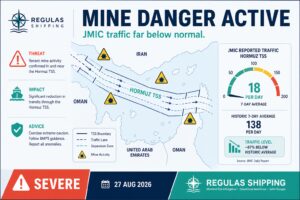
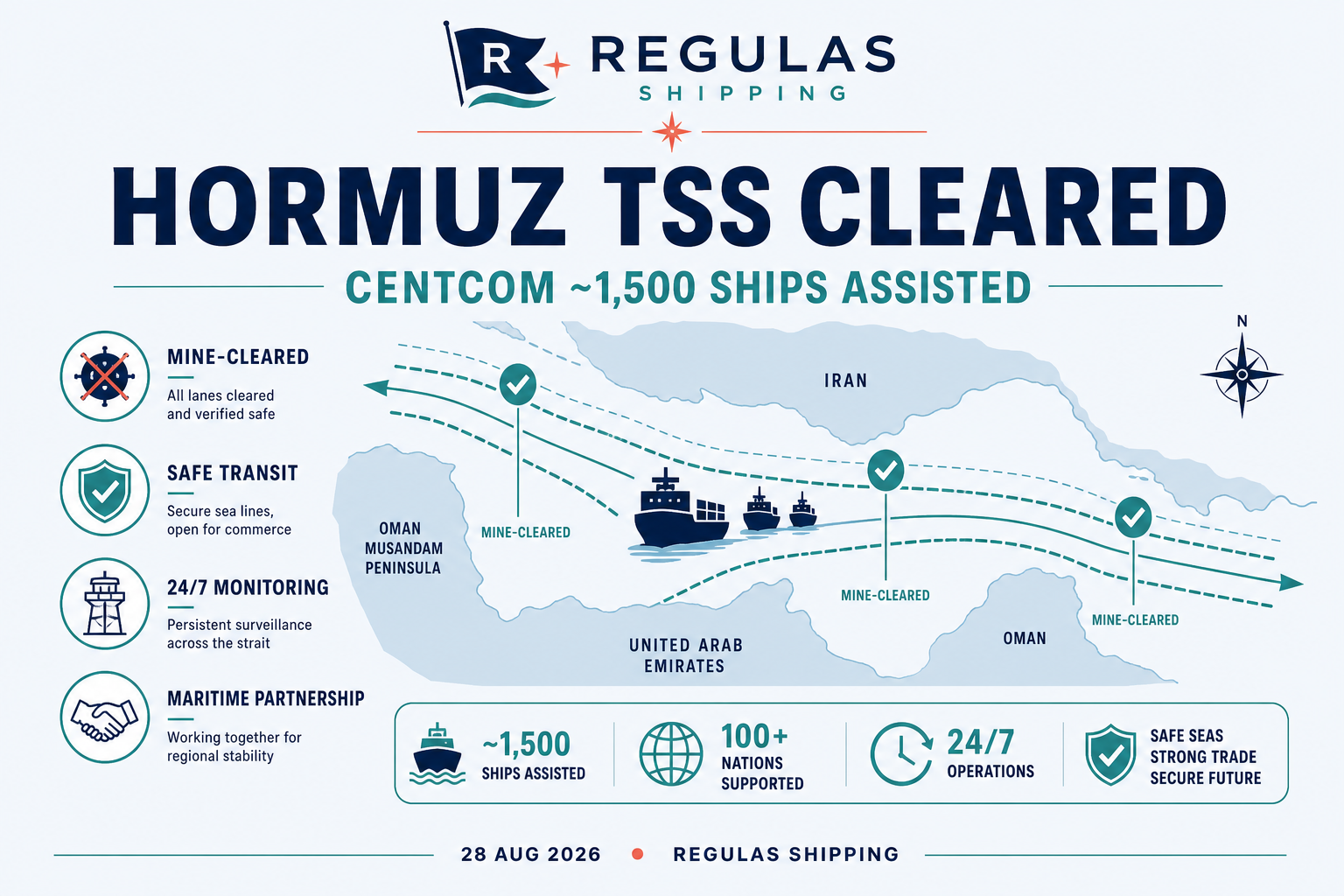
On 28 August 2026, the head of US Central Command, Admiral Brad Cooper, said US forces have cleared internationally recognised shipping lanes in the Strait of Hormuz of sea mines laid by Iran and have assisted nearly 1,500 commercial vessels through the waterway. In a video message, Cooper said divers, special operations forces and aircraft were used to clear the traffic separation scheme (TSS) — the established inbound and outbound lanes through the narrow strait — and declared that “international shipping lanes are open and momentum is building.”
According to the CENTCOM account, vessels assisted by US forces carried nearly 750 million barrels of crude oil destined for global markets. Cooper also said Iran has been unable to export oil from its shores since the US resumed a naval blockade in mid-July, that roughly 75 vessels attempting to breach the blockade were turned back, and that three ships that failed to comply were disabled. Washington is openly trying to lift commercial volumes through Hormuz after six months of conflict-driven disruption.
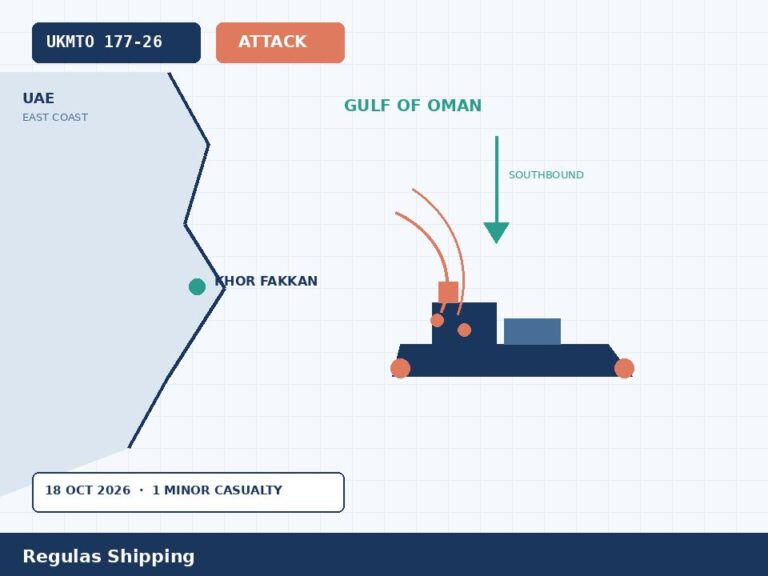
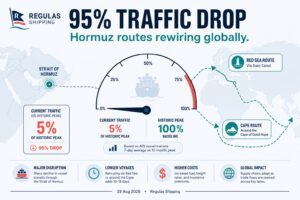
Operators should treat the demining claim as an important but incomplete safety signal. Independent tracking still shows commodity traffic at a fraction of pre-war levels — recent Kpler counts around 10 commodity vessels a day versus a short-window average near 15, and far below the historical roughly 130–140 ships per day that once used the strait. JMIC and UKMTO have also continued to warn about drifting or uncharted mine risk outside fully surveyed lanes, while projectile attacks on tankers in late August underline that mines are only one layer of the threat picture.
What Operators Should Note
- Separate “TSS cleared” from “strait safe” — projectile, boarding and administrative risks can persist after mine countermeasures.
- Confirm the latest UKMTO/JMIC mine-danger graphics before any Hormuz TSS planning, even after CENTCOM statements.
- Document facilitation status (escort, reporting, AIS posture) for each voyage, not only mine-clear headlines.
- Brief crews that blockade enforcement and kinetic threats can coexist with US-assisted lanes.
- Reprice war-risk and delay assumptions against still-suppressed daily crossing counts, not political reopen messaging.
Regulas Shipping will continue comparing CENTCOM clearance claims with UKMTO/JMIC advisories and observed transit volumes for masters and CSOs.