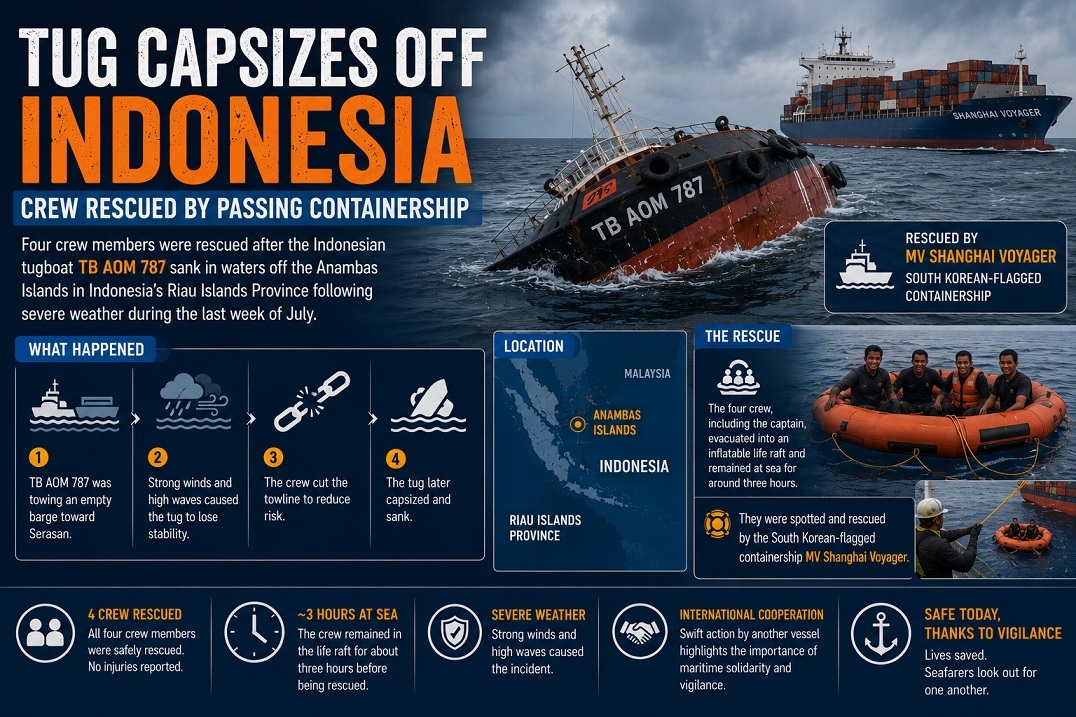
Tug Capsizes Off Indonesia’s Anambas Islands, Crew Rescued by Passing Containership
July 2026 | Accidents & Incident Desk
A tugboat towing an empty barge toward Serasan sank in waters off the Anambas Islands in Indonesia’s Riau Islands Province after severe weather overwhelmed the vessel. All four crew members, including the captain, made it into an inflatable life raft and were later picked up by a passing container ship after roughly three hours adrift.
How the Incident Unfolded
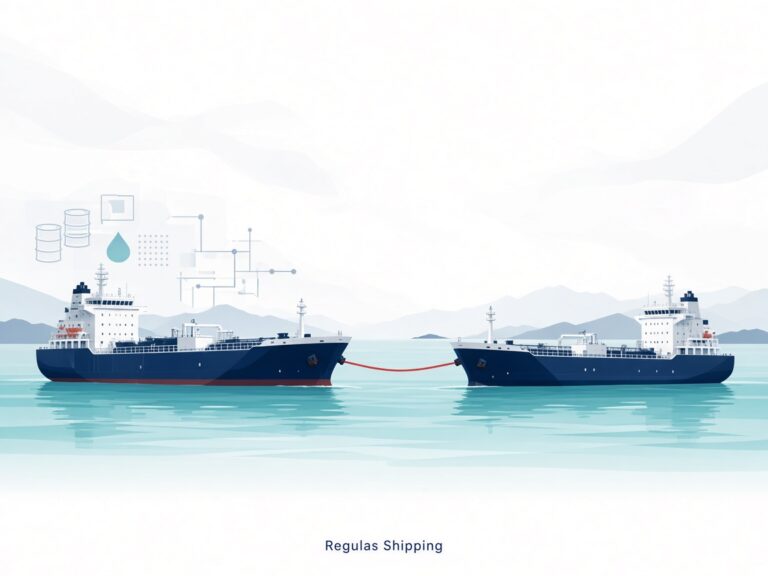
According to local reports, the tug was underway with an empty barge in tow when strong winds and high waves began to compromise its stability. Recognising the danger, the crew cut the towline connecting the tug to the barge in an attempt to reduce strain and regain control. The manoeuvre wasn’t enough, the tug capsized and went down shortly after, forcing the crew into an emergency abandon-ship.
A Rescue That Worked Because Basics Were in Place
The four crew spent close to three hours in an inflatable life raft before being spotted by the South Korean-flagged container vessel, which diverted course to assist despite difficult sea conditions. The container ship alerted Indonesian search and rescue authorities and made for Matak, where a joint SAR team transferred the survivors ashore for medical checks. Every seafarer was reported in good condition, a reminder that a functioning life raft, a working distress capability, and a passing vessel willing to divert can be the difference between a close call and a tragedy.
Why Towage Operations in Bad Weather Deserve Extra Scrutiny
Tugs towing barges are particularly vulnerable to sudden weather deterioration because the towline itself changes the vessel’s handling characteristics, a tug that could otherwise ride out rough seas comfortably can become unstable once drag and lateral forces from the tow are added to the equation. The crew’s decision to cut the towline was the correct emergency response, but the incident underscores how quickly a routine coastal tow can turn into a life-threatening situation once weather exceeds the operation’s planned tolerances.
Takeaways for Tug and Barge Operators
- Build clear weather abort criteria into towage passage plans, not just go/no-go decisions at departure
- Ensure crews are drilled on emergency towline release procedures so the decision to cut and run can be executed quickly under pressure
- Verify life raft servicing schedules and EPIRB functionality on tugs operating coastal and inter-island routes, where response times from shore-based SAR can be long
- Recognise that any vessel in the vicinity, not just dedicated SAR assets, may be the fastest available rescue resource, reinforcing the importance of maintaining a proper lookout and prompt response to distress signals
The Bottom Line
This incident ended the way maritime safety systems are designed to work: a crew that made the right emergency call, survival equipment that functioned when needed, and a merchant vessel that diverted to help. It’s also a useful case study for towage operators on how quickly weather can turn a routine tow into an abandon-ship situation, and why abort criteria and towline release drills deserve regular review rather than a once-a-year mention in the safety management system.
This article is based on publicly reported details of the tugboat TB AOM 787 incident off Indonesia’s Anambas Islands. Details of the ongoing weather conditions and any formal investigation findings were not available at the time of writing.