The quoted cost of insuring a tanker that loads at Yanbu has tripled in recent weeks, four industry sources told Reuters on Thursday, 24 September. War-risk premiums for Saudi-linked ships calling at the Red Sea port are now around 3 percent of hull value, against less than 1 percent in early July, before the London market designated that stretch of water as high-risk after Houthi attacks near Bab el-Mandeb. For ports south of Yanbu, including Jizan, about 50 miles from the Yemeni border, quotes that were around 1 percent in early July can now reach 7 percent, almost as high as Hormuz transits, which the same sources put at 6 to 9 percent. Tankers moving the Red Sea with no Saudi connection typically pay 0.2 to 0.3 percent, with further discounts often available. There is no public tape of agreed rates. The quoted jump is still the cleanest available measure of how the supposed Hormuz workaround has repriced.
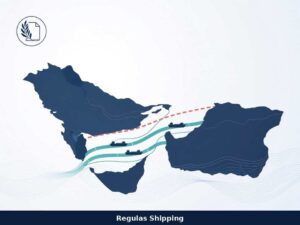
The operational point is narrower than a general Red Sea shutdown. Houthi forces that took Mocha, Mayyun (Perim), the Hanish islands and the Yemeni Red Sea coast this month have said they will target Saudi-linked vessels because of Riyadh’s backing for Yemen’s government. Yahya Saree’s “safe except Saudi” line remains the published rule. Pankaj Khanna, chief executive of Heidmar Maritime Holdings, told Reuters it is “easier to do the Strait of Hormuz right now” because the United States is providing some cover there, “in the Red Sea, there’s nothing.” “If you have a Saudi connection, then you have a problem.” Heidmar is avoiding Saudi ports while remaining active in both Hormuz and the Red Sea. Any tanker that berths at Yanbu, Khanna said, will have a Saudi connection and therefore sit inside the targeting envelope. That is an owner decision about association risk, not a statement that non-Saudi dry bulk or product ships have a clear lane.
A bypass that now prices like the problem it was built to avoid
Saudi Arabia used the East-West pipeline, Petroline, to move around 4 million barrels a day — about 4 percent of global supply — to the Red Sea after Iran constrained Gulf exports through Hormuz from March. The 1,200-kilometre line has a nameplate of about 7 million barrels a day. The kingdom shut it on 11 September after Iraq-origin drones damaged pumping and relief stations. Tuesday’s Reuters file, covered in the 23 September Regulas note, said the line had restarted at a low rate, with a full return to pumping rates still six to eight weeks away and no Aramco confirmation that the first China-bound Yanbu stem had completed. Thursday’s insurance story said the kingdom is building volumes back but that loadings at Yanbu have yet to resume, according to industry sources, satellite images and shipping data. Those two readouts can sit together: a constrained inland restart is not the same as a confirmed lift programme. Macron’s Thursday offer of soldiers, radars and defence systems for the terminal, covered in this morning’s Regulas note, does not change the premium. A promised load-port shield is not a 7-day war-risk policy, and it has no start date.
The money is voyage-sized. War-risk cover is typically written for seven-day periods and reviewed every 24 hours. Reuters’ sources said a Yanbu voyage could cost about $3 million in premium, or some $7 million from more southerly Saudi ports or via Hormuz, against at least $100,000 before the war. Charter hire is at least $500,000 a day on current industry estimates, with bunkers adding $100,000 or more. David Smith, head of marine at broker McGill and Partners, said the market has seen rates “certainly north of 7 percent for all calls south of Yanbu.” Old tankers have traded above $100 million on average, five sources said, as some Gulf producers look to buy hulls rather than rely on the open market. Riyadh this week denied an Iraqi allegation that it had bought 25 tankers worth about $4.5 billion, saying higher transport costs came from other war-linked factors. The Saudi cabinet has appointed the Saudi Reinsurance Company to lead a national marine war-risk pool. That is a domestic capacity measure. It is not a quoted 3 percent becoming 1 percent.
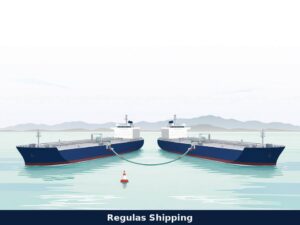
Traders had already started positioning around the load-port gap. Two trading sources told Reuters earlier in the week that hulls were being moved to Egypt’s Mediterranean Port Said for ship-to-ship transfers, so that cargo could sail south through Bab el-Mandeb instead of going north through Suez and, for Asia, around the Cape. That is positioning, not a completed stem. Corey Ranslem, chief executive of Dryad Global, said Bab el-Mandeb tanker-only counts remain “only a handful of vessels per day,” with what still moves consisting “primarily of dry bulk cargo, certain products, and a limited number of tankers without Saudi affiliations.” Thursday’s six ballistic missiles toward Taif and Yanbu, which the Saudi-led coalition said it intercepted, sit on the same day as the insurance file. Houthi media later claimed Aramco infrastructure at Yanbu. A terminal that is in the alert and claim cycle is not a cheap alternative to Hormuz.
Cover in one theatre, nothing automatic in the other
The United States has been providing some aerial support to ships in Hormuz in recent months, sources have told Reuters. A US official, speaking anonymously, said Washington does not automatically provide protection when private companies ask. There is no equivalent US cover in the Red Sea. The European Union’s Aspides operation is the defensive presence there; EU foreign-policy chief Kaja Kallas said on 21 September that the mission needs more than 10 warships and more air assets, against about six ships now operating, and wrote to the 27 member states on 19 September ahead of the 28 September defence ministers’ meeting. Italy’s national Bab el-Mandeb escort plan remains a separate product. None of those arrangements is a general-traffic lane, and none of them is written into a war-risk quote.
The association test is now the practical underwriting question. Cargo origin, charterer, last port, AIS history, STS partner and the simple fact of a Yanbu berth can all create a “Saudi connection” in the Houthi rule-set even when the registered owner is not Saudi. Non-Saudi Red Sea traffic still prices at a fraction of a Yanbu call. That spread will keep pulling willing hulls toward unassociated dry bulk and products and away from Saudi stems until either the targeting rule changes or the quoted 3 percent comes in. Saudi crude moving the other way, through Hormuz, has already risen. Friday shipping reports, citing Reuters, put those flows around 2.9 million barrels a day against about 700,000 barrels a day in August, which is why Gulf of Oman ship-to-ship capacity is tight. A Red Sea premium that now approaches a Hormuz premium removes the commercial reason to prefer Yanbu even if Petroline’s remaining stations come back.
What Operators Should Note
- Price the Saudi-connection test before the load port. A Yanbu berth is, on the Heidmar reading, enough to put the hull inside the Houthi envelope. Cargo, charterer, last port, AIS history and STS partner can do the same for a ship that never flies a Saudi flag. Write that test into the voyage order, not into a footnote.
- Treat 3 percent of hull value as a quoted 7-day figure, reviewed daily, not as a filed rate. There is no public tape. McGill and Partners has seen north of 7 percent south of Yanbu. Hormuz still quotes 6 to 9 percent. Name who pays if the 24-hour review moves the number between fixture and sailing, or if the ship is held at Port Said for an STS that was only a positioning idea.
- Do not brief Yanbu as the cheap Hormuz workaround. Tuesday’s low-rate Petroline restart and Thursday’s “loadings yet to resume” readout are not in conflict if the inland line is pumping and the jetty is not lifting. Macron’s air-defence offer has no troop number, start date or battery list. A promised radar is not war-risk cover.
- Keep non-Saudi Red Sea traffic on its own price. Unassociated tankers still quote 0.2 to 0.3 percent. Dryad’s tanker-only Bab el-Mandeb count is a handful a day. That is a selective corridor, not a restored 4-million-barrel Red Sea programme.
- Do not assume US cover because the same owner is active in Hormuz. Aerial support in the strait is not automatic on request and does not exist as a US product in the Red Sea. Aspides is short of the “more than 10” ships Kallas asked for. Italy’s national escort is a different product for different hulls.
- Put the Saudi Re pool and the $3 million / $7 million voyage maths in the same recap. A national war-risk pool may add capacity. It does not, on Thursday’s evidence, pull Yanbu back under 1 percent. Add charter hire of at least $500,000 a day and bunkers before calling the Red Sea cheaper than a Gulf STS.
- Keep UKMTO, MSCIO and BMP Maritime Security on any Yanbu, Jizan or northbound Red Sea voyage. Thursday’s Taif and Yanbu missile alerts are the live risk picture. Report while an approach or projectile is happening. Write next-of-kin and armed-guard language before treating a lower non-Saudi quote as a reason to accept a Saudi-linked stem.
Regulas Shipping will keep lining the tripled Yanbu war-risk quote against Petroline’s repair clock, the Houthi Saudi-association rule and the still-thin Bab el-Mandeb tanker count so operators can treat a Red Sea load as a priced security decision, not as a cheap way around Hormuz.