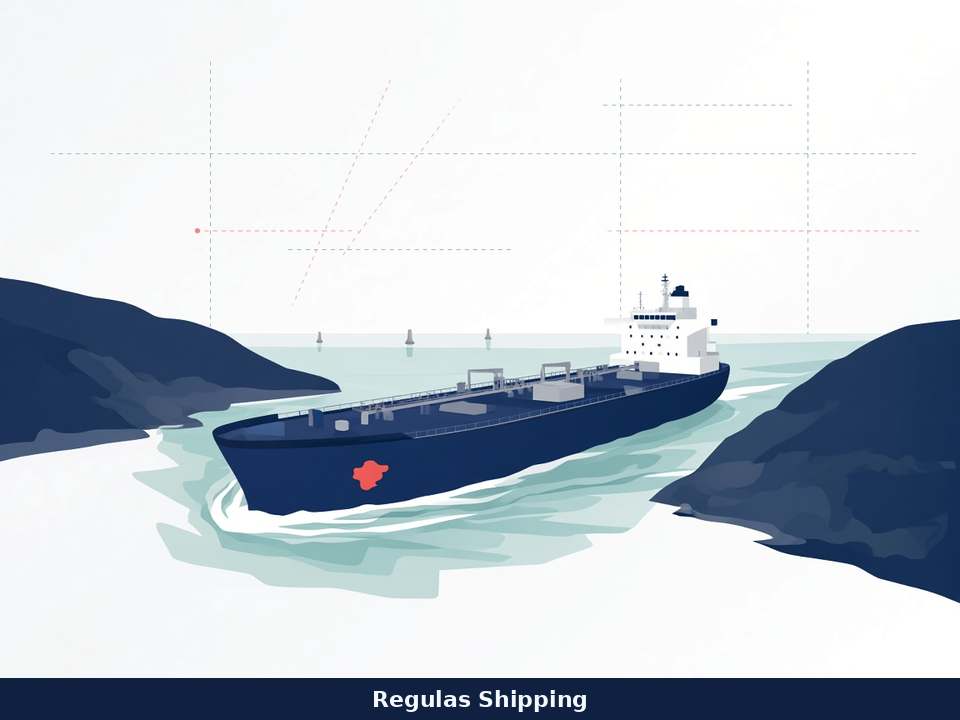
The United Kingdom Maritime Trade Operations centre issued Warning 164-26 on Sunday, 11 October. It is an Attack product, source Company Security Officer, timed at 1200 UTC. UKMTO said it had received a report of an incident within the Strait of Hormuz. The CSO reported a tanker transiting outbound had been struck on the port side by an unidentified projectile, resulting in damage to the vessel. All crew members were reported safe, and no environmental impact was reported at the time of the attack. Authorities were investigating. Vessels were advised to transit with caution and report any suspicious activity to UKMTO. The official PDF named neither hull, flag, cargo, projectile type, fire location nor a responsible party.
India’s ports, shipping and waterways minister, Sarbananda Sonowal, and the Ministry of External Affairs later named a Marshall Islands-flagged tanker, MT Valthera, as the Sunday Hormuz hull. Sonowal said it was struck by an unknown projectile in the Strait of Hormuz, causing a fire on board, and that all 11 Indian seafarers on board were safe. The MEA used the same hull, flag, projectile and fire lines and added that attacks on commercial vessels, seafarers and civilian infrastructure must cease. Argus, citing Vortexa, described Valthera as a 149,997 deadweight-tonne Suezmax carrying crude from Basrah after sailing on 8 October. That Indian naming and the Argus cargo colour are the working identity for operators. They are not a UKMTO naming. 164-26 remains an unnamed outbound tanker Attack warning.
What UKMTO published on Sunday, and what it left open
164-26 is an Attack warning, not a suspicious-activity note and not an Advisory. The CSO line is short: outbound tanker, unidentified projectile, port side, damage, Strait of Hormuz, all crew safe, no environmental impact at the time of the attack, investigating. That combination is a hull-integrity and cargo-integrity problem with a completed crew snapshot and a completed MARPOL snapshot that Saturday evening’s dedicated Warning 162-26 did not have. UKMTO did not say the ship was on fire. It did not say the fire, if any, was out. It did not say the ship was underway, adrift or at anchor after the hit. It did not report how many people were on board. The “damage” line is not a class survey. The “no environmental impact” line is a snapshot at the time of the attack, not a completed oil-record-book finding for the rest of the voyage.
Hold the source tag. Saturday’s dedicated 162-26 was source Master, 1920 UTC, fire on board, damage and environment unknown. Sunday’s product is source Company Security Officer, 1200 UTC, damage, crew safe, no environmental impact reported. That is a different confirmation bar and a different damage picture on a new numbered file, not a 17-hour rewrite of Saturday’s unnamed outbound tanker. Stay with “unidentified projectile.” UKMTO did not name a UAV, a missile, a mine or the Islamic Revolutionary Guard Corps. Do not back-fit Saturday’s 162-26 fire, Friday’s dedicated 160-26 west of Al Jazeera, or the unused 159-26 time-late Hormuz crude product onto Sunday’s CSO report.
What India named, and what that does not settle
Sonowal’s Sunday posts and the MEA statement are the naming primary. Marshall Islands-flagged MT Valthera. Unknown projectile. Fire on board. All 11 Indian seafarers safe. The MEA placed both Sunday tankers in the “Strait of Hormuz region” in its condemnation line; the Valthera file is the Hormuz TSS product, not the Sohar product. Hold the fire line as India’s line. UKMTO printed damage and no environmental impact. India printed fire. Do not collapse those two snapshots into one completed class survey. A CSO can report damage and a clean environment while a labour-supplying state reports a fire that was later fought or contained. Until UKMTO or the Joint Maritime Information Center prints Valthera on 164-26, brief two desks: an unnamed CSO Attack warning, and a named Indian casualty line on a Marshall Islands Suezmax.
Open-register colour only, not a UKMTO or JMIC print: IMO 9296389, MMSI 538012619, call sign V7B3113, Marshall Islands crude oil tanker, built 2006, about 274 by 48 metres, about 78,845 gross tons and 149,997 deadweight. VesselFinder listed destination Shinas, Oman, with an ETA of 11 October 12:00, a draught of about 15.3 metres, and a last public AIS position in the Arabian Sea reported about 12 days stale, with a last port of Khor Fakkan Anchorage on 28 September. That is tracker colour, not a class survey, not a cargo declaration and not a UKMTO position. Do not invent a current latitude and longitude from a stale AIS fix. Argus’s Vortexa colour — crude from Basrah, sailed 8 October — is a cargo-intelligence line, not a UKMTO cargo finding. Treat the two voyage pictures as competing colour until the flag, class or P&I puts a cargo and a last-port line on the master’s report.
A Hormuz TSS file, not a Saturday reprint
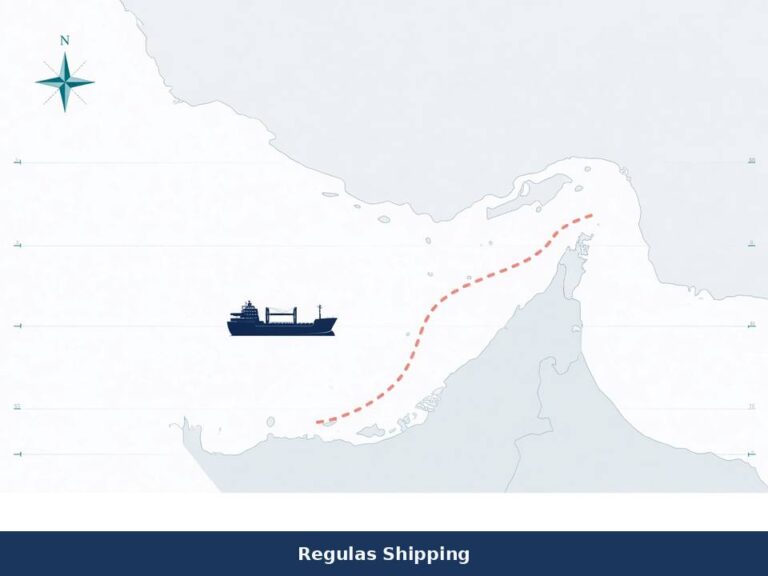
The geography is the operational point. UKMTO placed the incident within the Strait of Hormuz. That is the traffic-separation and Musandam corridor, not the Emirates’ inner coast, not Ras Al Khaimah, and not the Sohar or Fujairah roadstead. Saturday evening’s dedicated 162-26 remains an unnamed outbound tanker, unknown projectile, port-side hit, fire on board, crew safe, damage and environment unknown, in the same waterway on a different clock. Sunday is a new numbered Attack file 16 hours and 40 minutes later, source CSO rather than Master, with a damage line instead of a fire-on-board line. Do not invent a latitude and longitude, a TSS lane, a named Omani or Iranian coastal mark, or a territorial-sea call. UKMTO did not make a coastal-state finding.
Update 103, information cut-off 081500 UTC on Thursday, 8 October, is still the last numbered JMIC regional note on the bridge. It held the Strait of Hormuz at SEVERE, printed confirmed files through 158-26, and asked for continued monitoring. Sunday’s 1200 UTC product sits outside that cut-off, as did 160-26, 161-26, 162-26 and 163-26. Do not treat Update 103 as a Sunday all-clear for outbound Hormuz legs. Do not rewrite Update 103 on the strength of one later CSO warning. 159-26 remains an unused time-late 6 October Hormuz crude product that is not on Update 103’s table.
What this is not
164-26 is not a rewrite of Saturday’s dedicated 162-26. The clocks, sources and damage lines differ. It is not a naming of 162-26, not a 160-26 increment, not Advisory 161-26’s Ras Al Khaimah VHF move, and not Sunday’s dedicated 163-26 tanker-and-military-forces Advisory in the Gulf of Oman. It is not a JMIC Update 104.
Do not collapse 164-26 into On Peace, Maran Gas Mystras, GEM NO.2 industry matching on 160-26, NV Sunshine, Ocean Molica / Akira Sun, or the unused Fujairah-roadstead fire colour on Marshall Islands VLCC Dhalkut. Do not fold Sunday into Yanbu loadings, the UAE MPCI container-filing mandate, Japan’s 35-ship vessel-level permit, the 9 October OFAC/State 22-tanker package, Oman’s Article 10 AIS-on territorial-water rule, or Iran’s Persian Gulf Strait Authority declaration channel. Those are crude-export, documentation, sanctions and coastal-state products. Sunday’s file is an unnamed outbound tanker, unidentified projectile, port-side hit, damage, crew safe, no environmental impact reported at the time, in the Strait of Hormuz, alongside an Indian naming of Valthera that UKMTO has not printed.
Saturday’s IRGC mine claim, and Isna’s later line that the IRGC Navy claimed three weekend mine contacts on unauthorised lanes, remain competing narrative. Argus noted that published footage of one claimed mine event did not clearly resemble a mine explosion and that none of those weekend mine claims had been independently confirmed at the time of its report. UKMTO printed an unidentified projectile on the port side, source CSO. That is not a mine finding and not an IRGC naming of Valthera.
Operational implications
A port-side projectile hit with a published damage line, a crew-safe line and a no-environmental-impact snapshot is a different night order from Saturday’s fire-on-board warning with unknown damage. Masters already committed to an outbound Hormuz transit still need a written projectile watch on the port quarter and after end. Citadel, fire-main isolation, inert-gas and cargo-tank integrity, emergency generator and steering-gear redundancy remain the standing orders even though UKMTO did not print a fire. India’s fire line is a reason to keep boundary cooling and a foam watch in the night order, not a reason to invent a UKMTO engine-room or deck location. The damage line means the ship may need tugs, a diversion to Fujairah, Khor Fakkan, Shinas or another Omani port, or a request for an escort of a damaged hull through the eastern approaches. UKMTO did not say which.
Managers who later recognise the 164-26 hull as theirs, or who already recognise Valthera from the Indian naming, should assume flag, class and P&I will ask for the master’s report, the CSO log, the VDR, the last position before the hit, whether a fire was fought, the casualty list even though both primaries printed the crew safe, and whether emergency power and steering were restored. Charterers still stemming Gulf crude or products through the southern Omani corridor should treat Sunday midday as another kinetic day on a strait that Update 103 left at SEVERE. Do not brief the combination of a reported-safe crew and a no-spill snapshot as a reason to drop BMP, war-risk clauses or a lookout for a Suezmax that may be AIS-dark after a port-side hit.
Hold the published hygiene from Update 103 for the strait itself: neutral transit, prompt answers to military queries, NAVCENT NCAGS for any Iran-port humanitarian exception, and no cargo loaded in Iran beyond fuel and stores on an approved exemption. Sunday’s file does not rewrite that blockade picture. It also does not convert a Hormuz range into an Iran-port call. An outbound tanker is already in the waterway. The next inbound behind her has a possible damaged hull, a possible Indian-reported fire and a possible uncoordinated VHF picture to plan around, on the same day as a separate Sohar UAV product and a Saturday Gulf of Oman military Advisory.
What Operators Should Note
- Log a new Sunday Attack product, not a Saturday reprint. Warning 164-26, 11 October, 1200 UTC, source Company Security Officer, outbound tanker in the Strait of Hormuz, unidentified projectile, port side, damage, all crew safe, no environmental impact reported at the time of the attack, investigating. Transit with caution and report to UKMTO. Do not invent a UKMTO name, flag, cargo or attacker to fill the PDF gap.
- Keep India’s Valthera naming labelled as India’s naming. Marshall Islands-flagged MT Valthera, unknown projectile, fire on board, 11 Indian seafarers safe. Argus / Vortexa: 149,997 dwt Suezmax, crude from Basrah, sailed 8 October. Open registers: IMO 9296389. That is not a UKMTO or JMIC print. Hold UKMTO’s damage / no-spill snapshot against India’s fire line rather than forcing one completed survey.
- Put the projectile watch back on the Hormuz outbound, not only on the UAE inner coast or Sohar. 164-26 is a Strait of Hormuz file. 162-26 remains Saturday evening’s unnamed outbound fire. 163-26 remains the Gulf of Oman military Advisory. 165-26 is a separate Sohar UAV product. Do not collapse the four geometries.
- Treat the CSO source as a stronger company line than a third-party note, not as a completed flag investigation. Plan for a possible disabled or leaking hull even though UKMTO printed no environmental impact at the time of the attack. That omission is a snapshot, not a completed MARPOL finding for the rest of the passage.
- Do not rewrite Update 103. ICOD remains 081500 UTC 8 October. Hormuz SEVERE. 164-26 sits outside that cut-off. Replace nothing in the master’s JMIC pack until Update 104, a UKMTO naming of 164-26, or a threat-level change appears.
- Stay with unidentified projectile and no claim. Do not recast Sunday as a UKMTO-named hull, a confirmed IRGC mine, a 162-26 rewrite, a Hormuz reopen, or a completed weekly tape. Keep the IRGC weekend mine claims on their own unverified desk.
Regulas Shipping will keep lining Warning 164-26 against India’s Valthera naming and Update 103 so operators can treat the 1200 UTC port-side hit on an outbound tanker as a new Strait of Hormuz casualty warning, not as a Saturday reprint or a completed mine finding.