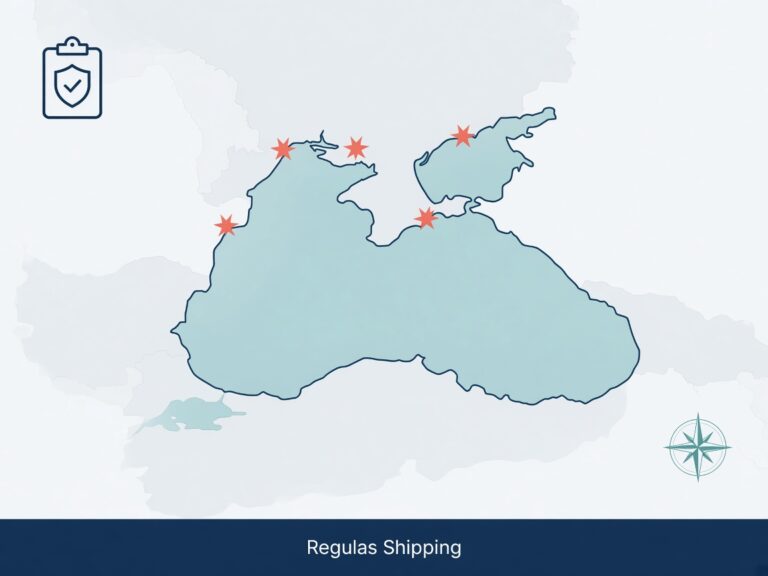
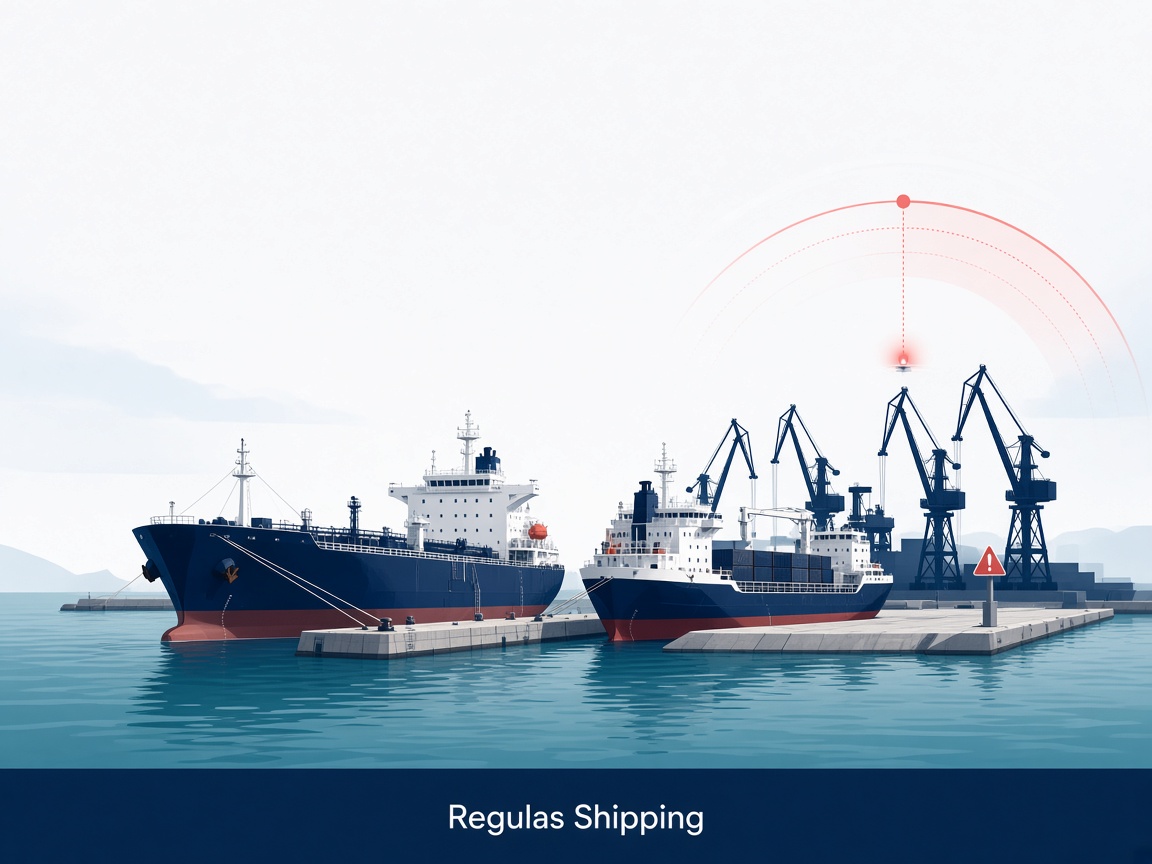
Interfax reported on Saturday, 19 September 2026, that Russia’s Defence Ministry said Geran unmanned aerial vehicles had struck a Ukrainian dry-cargo ship and a tanker involved in the carriage of military cargoes. The ministry’s own wording, as carried by Interfax, named the weapon as the Geran-4 Seeker. It put the dry-cargo ship in Black Sea waters on passage to the port of Odesa, and the tanker-type vessel alongside in that port. The ministry published video of the claimed strikes. Reuters said it could not independently verify the battlefield reports. No vessel name, IMO number, MMSI, flag, cargo document, crew count, casualty figure or pollution statement has been released.
That is a Russian state-media product, not an AMPU circular and not a UKMTO warning. Company security officers should log it as two unnamed hulls under a Geran-4 Seeker claim, then keep Saturday’s file off Thursday’s Tanzanian-flagged inbound. Ukraine’s Sea Ports Authority and the Ministry for Development of Communities and Territories said on 17 September that a Tanzanian-flagged civilian ship bound for a Ukrainian port had been hit by a drone, that the captain was killed and that three crew were injured. That hull is still unnamed. Saturday’s products do not identify it, and they do not give operators a second named flag to put in the night orders.
The operational point is the geometry, not the cargo adjective. Moscow is telling the market that an inbound dry-cargo ship in the north-western Black Sea and a tanker at an Odesa-region berth are both inside a UAV targeting envelope, and that both will be described as military logistics. Peskov’s earlier line that commercial vessels “used to transport weapons” would be destroyed is the same targeting theory in shorter form. The SMS answer is still BMP, lookout, citadel, fire party, command succession and a written abort. It is not an argument about what was in the tanks.
What the Saturday products actually said
Interfax is the cleanest primary. Date: Saturday, 19 September. Source: Russian Defence Ministry. Weapon: Geran-4 Seeker UAV. First hull: a dry-cargo ship in the Black Sea, on passage to Odesa, alleged to be delivering military cargo for Ukraine’s armed forces. Second hull: a tanker-type ship in the port of Odesa, alleged to be used to deliver military cargoes. Video released. Names not released. Flags not released. Reuters: not independently verified.
Later Russian products on the same day moved the berth. RIA Novosti put a dry-cargo ship that had already delivered military cargoes at the port of Chornomorsk. Sputnik, quoting the ministry, put a tanker-type vessel that had delivered fuel and lubricants for Ukraine’s armed forces at the same port. Secondary outlets compressed both hulls into “the harbour” and described a drone aimed at the stern of a docked tanker, toward the wheelhouse and engine space. Those are not three confirmed ships. They are overlapping ministry lines with an unstable place-name. Odesa and Chornomorsk are neighbouring ports. They are not the same berth. A voyage-order that writes “the Odesa tanker” as if it were a verified IMO is how the next fixture inherits the wrong port.
Keep Friday’s TASS product on a third line. On 18 September TASS quoted the ministry as saying Geran-4 Seeker crews had hit two dry-cargo ships in the early hours of 17 September, one at Odesa and one east of Izmail, both alleged to be carrying cargo for Ukraine’s armed forces. Saturday’s Interfax pair is a later claim: one inbound dry-cargo ship and one tanker. Do not stack Thursday’s Tanzanian-flag fatality, Friday’s two-dry-cargo TASS item and Saturday’s cargo-plus-tanker claim into a single “Odesa weekend attack.” Three products. Three unverified identity files. One theatre.
Parallel Ukrainian Air Force reporting, carried in open channels on Saturday morning, described a large overnight strike package against Kyiv and Odesa regions: on the order of 174 strike drones, a substantial share of them said to be jet-powered, plus loitering munitions and two Zircon anti-ship missiles launched from Russia’s Kursk region, with Ukraine claiming most of the drones were shot down. That package has not been independently verified in the same Reuters item that carried the two-ship claim. It is context for the UAV density over the Odesa coast. It is not an identification of either hull, and it is not a reason to brief Saturday’s tanker as a Zircon casualty.
How this sits on a week of Black Sea crew risk
The Black Sea in the second week of September has already produced casualties and fires on both coasts. Lionfish (IMO 9162667), a Turkish-flagged 13,059 dwt feeder on an Ambarlı–Novorossiysk run, took a drone in the container section on 13 September; the crew extinguished the fire and diverted to Trabzon. Matros Koshka (IMO 9550137), a Russian-flagged bulker, was hit on 12 September while alongside at Novorossiysk, with damage to the bridge and cabins and three seafarers injured. Ukraine’s Unmanned Systems Forces released footage of a drone that hit the Russian products tanker Armada Leader (IMO 9260483) near Sochi after a helicopter escort failed. Thursday’s Tanzanian-flagged inbound is the Ukrainian-port-approach fatality in that sequence. Saturday’s unnamed tanker-at-berth claim, if it stands, is the alongside geometry on the Ukrainian coast: a ship that cannot manoeuvre, cannot cite “we were only transiting,” and has nowhere to go except the quay.
IMO Secretary-General Arsenio Dominguez told Member States on 16 September that attacks on merchant ships in the Black Sea and Sea of Azov have caused dozens of fatalities in recent months, though precise numbers are hard to verify, and that the attacks are not attributable to one actor. Saturday’s Russian claim does not add a verified death. It does add a second unprotected place: the berth. An inbound UAV that kills a master is a command-succession problem. A UAV that hits a tanker alongside is a fire, pollution, port-closure and crew-evacuation problem on a hull that is already fast. Passage plans that only harden the approach, or only harden Russian ports, miss half of the week.
Turkey’s August proposal for a moratorium on attacks against commercial ships has produced no mechanism. Ukraine said it was ready to accept one. Moscow showed no interest. Grain sailings from Ukrainian ports have already been described in IMO safety briefings as a handful of ships against the 20-to-30 range operators treated as a working corridor. Azov traffic has been effectively closed since mid-July. Novorossiysk’s grain terminals were reported suspended in August. FAO food-price readings in August were the highest since November 2022. A ministry product that puts a tanker and a dry-cargo ship in the same day’s UAV file is how remaining owners decide the next fixture is not worth the additional premium, even when Reuters cannot verify the hits.
What it changes on the bridge and in the fixture
A tanker alongside is a different SMS object from an inbound dry-cargo ship. The inbound still has speed, a citadel plan and an abort to a Romanian, Bulgarian or Turkish port if the UAV envelope closes. The alongside tanker has cargo operations or residual fuel, shore connections, a fire party that has to fight from a quay, and a crew that may already be in reduced harbour watches. If Saturday’s video is what secondary outlets described — a seeker picture on the stern, wheelhouse and engine space — the ship may not make way after the hit even if it does not sink. Port state, terminal and P&I then inherit a dead ship in a UAV envelope, not a casualty at sea.
War-risk underwriters will ask whether the ship was bound for, or lying at, a Ukrainian port; whether AIS was transmitting; whether the company had named a diversion port before the ship closed the coast; and whether crew contracts allowed seafarers to refuse the area. Charterers who still send bulkers, general cargo and tankers into the north-western Black Sea need a written rule for when an alongside call is no longer a commercial act. Open-register flags do not reduce the targeting risk. They can slow flag-state confirmation if Saturday’s unnamed hulls later acquire names.
Do not brief Saturday’s ships as confirmed identifications of Thursday’s Tanzanian-flag casualty, of Golden Leo, or of any Chornomorsk corn carrier from earlier in the month. Do not brief the tanker as a verified fuel-for-the-front delivery. Russia’s cargo adjective is a targeting claim. Ukraine has not, in the public reporting available on Saturday, named either hull or confirmed the strikes. The working brief is: two unnamed merchant types, one inbound and one in port, Geran-4 Seeker claimed, place-name unstable between Odesa and Chornomorsk, Reuters unverified. That is enough to raise ISPS, fire, pollution and abort readiness on the next Ukrainian-port voyage without waiting for an IMO number.
What Operators Should Note
- Log Saturday as two unnamed hulls under a Geran-4 Seeker claim, not as a confirmed AMPU casualty. Interfax, 19 September, Russian Defence Ministry: dry-cargo ship in the Black Sea on passage to Odesa; tanker-type vessel in Odesa port; both alleged military cargoes; video released; names, flags, crew and pollution not released. Reuters could not independently verify.
- Do not merge Saturday with Thursday’s Tanzanian-flag inbound or Friday’s TASS two-dry-cargo item. Thursday is a UAV inbound with a dead master and three injured, flag Tanzania, hull still unnamed. Friday’s TASS product is a 17 September claim of two dry-cargo ships at Odesa and east of Izmail. Saturday adds a tanker. Three files. Keep the IMOs off all three until a flag circular or company statement carries them.
- Treat Odesa and Chornomorsk as neighbouring ports, not as one berth. Interfax said Odesa. RIA and Sputnik later put a dry-cargo ship and/or a fuel tanker at Chornomorsk. Write both names in the security message. Do not invent a single “Odesa tanker” identity for the SMS.
- Harden the berth as well as the approach. An inbound still has an abort. A tanker alongside does not. Extra harbour watches, a named fire party, foam and boundary cooling, a shore disconnect drill, and a written crew-muster point off the quay belong on the same passage plan as the UAV lookout for the last 12 hours of the inbound.
- Write a named abort port west or south of the Odesa UAV envelope before the next stem. Romanian, Bulgarian and Turkish ports are the practical options. Name the person who may order the abort if the master is incapacitated, and what happens to cargo interests if the ship never berths. Thursday already showed that the master can be the first casualty.
- Close up accommodation and engine-room protection on tankers calling Ukrainian ports. Secondary descriptions of Saturday’s video put the seeker on the stern, wheelhouse and machinery. Lionfish was a cargo-bay fire. Matros Koshka was an accommodation hit. The next alongside call may be either, or both.
- Re-read war-risk, IBF/ITF area lists and crew refusal rights before offering the voyage. There is no announced Russia–Ukraine moratorium. Peskov’s “used to transport weapons” line is how inbound and alongside merchant ships will be described. If seafarers can refuse the area, an owner cannot sail a ship that cannot be manned. Price that in the fixture.
- Preserve VDR, AIS, cargo documents and terminal communications from the moment of any impact. P&I and flag will ask whether the ship reported, whether harbour watches were set, and whether the fire party could be mustered on a quay under UAV threat. A clean log is part of the defence of the remaining crew.
Regulas Shipping will keep lining Interfax, RIA and AMPU products against unnamed Black Sea UAV claims so operators can treat Saturday’s Odesa and Chornomorsk reports as a berth-and-approach decision, not as a verified identification of either hull.