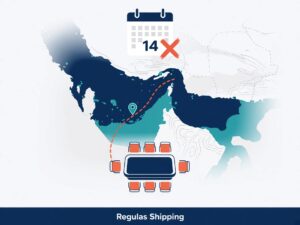
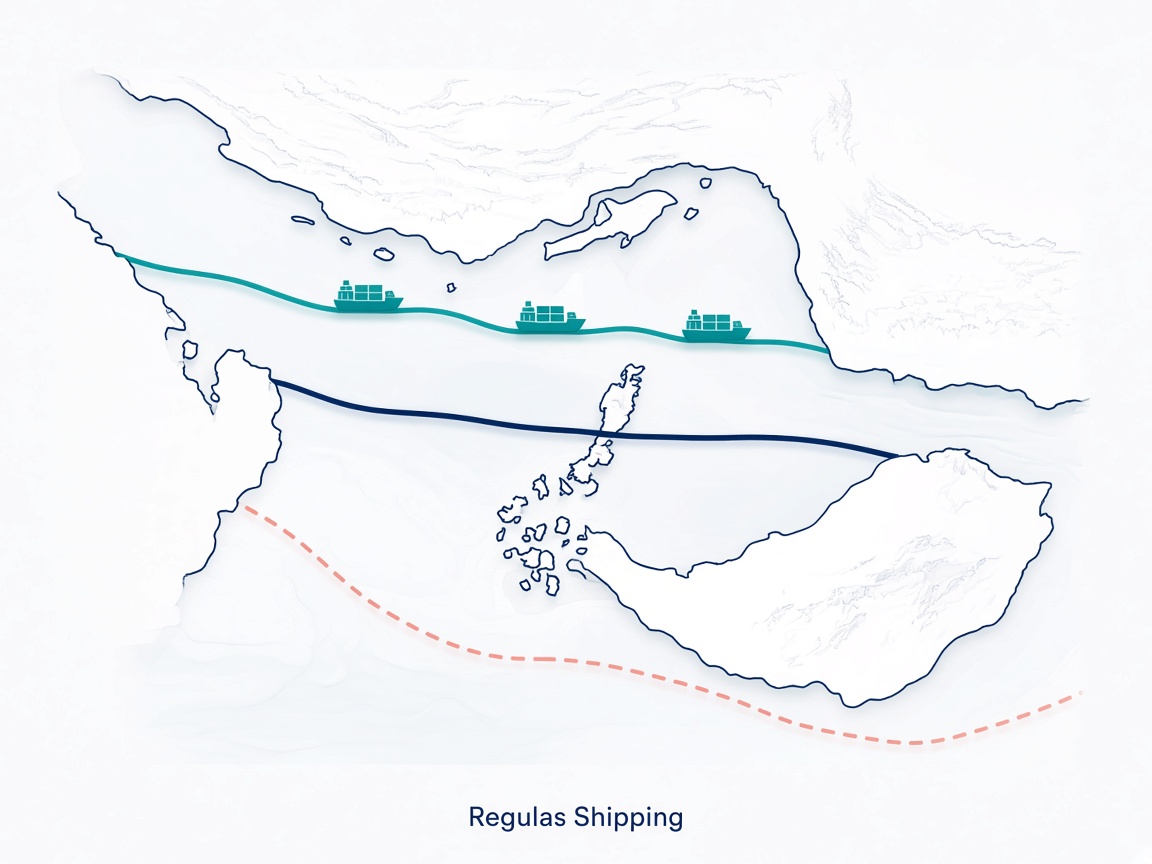
Iran and Oman have agreed details of new entry and exit routes for the Strait of Hormuz and intend to present them to regional foreign ministers on Monday, 14 September 2026. The arrangement is a temporary traffic-separation product, not a reopening. A source close to Iran’s negotiating team told the semi-official Tasnim news agency that the inbound route would lie entirely in Iranian territorial waters, that part of the outbound route would also pass through Iranian waters, and that the southern route Washington had pushed to reopen would close once the new system operated. Traffic along those routes would run under Iranian arrangements. The same source said the deal “in no way means the reopening of the Strait of Hormuz” and that the waterway would stay closed until Washington met seven conditions set by Tehran.
Venue language is not settled. Iranian Foreign Ministry spokesman Esmaeil Baqaei said the meeting would take place in Salalah and would cover regional issues plus the outcome of Tehran–Muscat talks on safe shipping lanes. President Masoud Pezeshkian, speaking to India Today, said Arab foreign ministers would meet in Muscat to sign a joint Iran-Oman route and “to notify the International Maritime Organization of the agreement.” Iranian officials have also spoken of eight Gulf-bordering states, including Iraq. Operators should treat Monday as a briefing date, not as a signed IMO circular. A senior Iranian official, quoted by Reuters, played down the chance of a breakthrough and said the gathering was not expected to yield a signed Hormuz agreement. Oman Observer, citing Baqaei, framed the session as a negotiation of a temporary commercial-shipping arrangement, not as a completed instrument.
Bahrain has already said it will not be in the room. The kingdom’s Foreign Ministry stated on Saturday that it would not take part in any collective meeting that includes Iran before diplomatic relations are restored. Manama cut ties with Tehran in 2016; Riyadh restored its own in 2023, but Bahrain has not. The ministry said that position had been passed to Oman through official channels. It also set out the legal test Bahrain wants applied to any Hormuz arrangement: it must rest on the 1982 United Nations Convention on the Law of the Sea, must be adopted by the IMO, must preserve transit passage for all vessels without discrimination, fees or permits, and must involve all six Gulf Cooperation Council states. Pointing to attacks on infrastructure across the Gulf, the ministry said regional security “cannot be preserved through a policy of appeasement.”
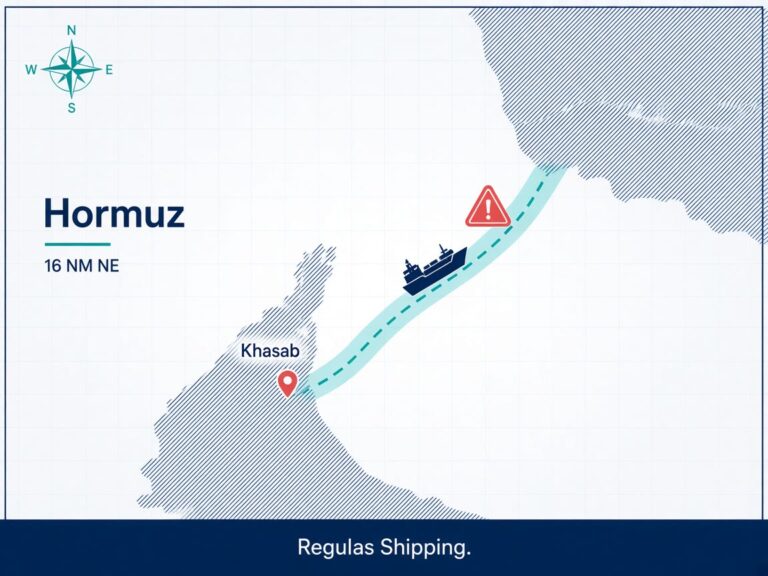
That legal line is the operational heart of Monday’s meeting for anyone who still has a ship in the Gulf. Iran now requires permission to transit and has discussed service fees. Pezeshkian said the strait would reopen when the United States ended its blockade and attacks. Secretary of Iran’s Supreme National Security Council Mohsen Rezaei said last week that the entrance and exit of the proposed corridor would be under Iranian control. Iranian officials have previously described a temporary corridor about 7 miles (11.3 km) wide. Amwaj.media, citing a senior Iranian political source, called the middle route agreed with Oman a new temporary Traffic Separation Scheme, with talks on a permanent scheme to follow, and said fees and future administration were, for now, an Iran–Oman matter under Article 5 of the Islamabad Memorandum. A route that lives inside Iranian territorial waters, under Iranian traffic management, with a fee still unresolved, is not UNCLOS transit passage as Bahrain described it. It is a coastal-state control scheme that a master may be asked to enter.
The traffic that scheme would govern is still a fraction of the pre-war lane. Before February, roughly one-fifth of global oil moved through Hormuz, on the order of 20 million barrels a day and around 100 commercial crossings. Kpler had 112 oil and gas tankers crossing between 1 and 19 August, of which 21 openly used the Iranian route and only two formally used the Omani route; many others used routes that were not publicly confirmed. Reuters put early-September commodity crossings at about 10 ships a day. Preliminary Kpler counts earlier this week ran nine, then two, then 14. U.S. Central Command has said 96 commercial vessels were redirected as of 10 September. More than 500 hulls have been counted stuck inside the Arabian Gulf. Most ships that did move went dark. A 7-mile corridor drawn on Iranian paper does not, by itself, put lookouts, war-risk cover or a charterer’s voyage order back to a 100-ship day.
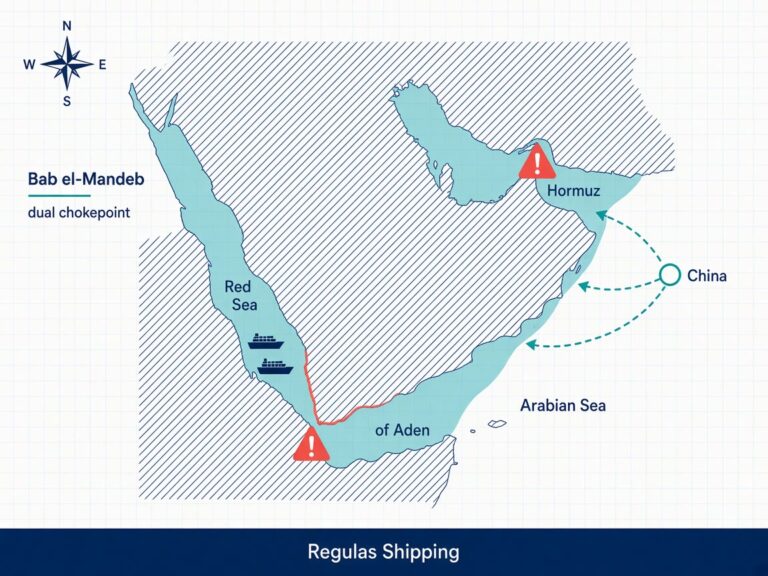
The workarounds that used to sit beside a closed Hormuz have also narrowed. Saudi Arabia’s Ministry of Energy stopped the East-West crude pipeline, Petroline, on 11 September as a precaution after drones of Iraqi origin. That line is the principal Hormuz bypass to Yanbu, with a nameplate near 7 million barrels a day and recent throughput nearer 4–5 million. The UAE’s Abu Dhabi Crude Oil Pipeline to Fujairah, about 1.5 million barrels a day, cannot replace the strait. Houthi forces seized Mokha on 10 September and reached Perim at the Bab el-Mandeb, and Kpler had Bab el-Mandeb crossings down sharply from the previous week. A company that has been waiting for an Oman “safe lane” so it can avoid both the Iranian side and the Cape is waiting for a product that Tehran says will close the southern highway, keep inbound traffic in Iranian waters, and still require U.S. conditions before the strait opens.
The overnight security file does not wait for the ministers. UKMTO Warning 134-26, received at 2300 UTC on Saturday, logged an unknown projectile on an unnamed commercial vessel in the strait. Update 001 on Sunday said a fire had broken out and local authorities were evacuating the crew. Separately, Qeshm’s governor reported a merchant vessel struck around 0500 local off Hengam and Shib Deraz, with one person killed and three or four injured. Those reports are the water Monday’s map would cover. A company security officer who briefs the Salalah or Muscat session as a reason to thin the watch, or to accept an Iranian routing instruction before the IMO has a circular, will send the next inbound into a lane that has already produced a fire and a fatality this weekend.
The operational implication is that Monday can change the paperwork without changing the threat. If ministers present a temporary TSS, owners will be asked whether they will accept Iranian traffic management, whether they will pay a fee, whether they will close the Omani southern route they have been using, and whether war-risk underwriters will treat an Iranian-water inbound lane as a declared condition or as a new excluded area. If they do not sign, or if Bahrain’s UNCLOS-and-IMO test is the position other flags quietly share, the strait stays what it is today: a permission-and-projectile waterway with single-digit or low-teens commodity traffic. Voyage orders written for “proceed when Oman announces a corridor” need a second sentence: who may accept an Iranian routing, who may pay, and who must hold or divert if the announcement is only a briefing.
Reporting and insurance have to sit in the SMS before that sentence is tested. Masters should keep UKMTO, MSCIO and IFC-IOR reporting live. BMP MS does not lapse because a foreign minister is in Salalah. AIS policy for the last miles of the strait still has to be written, including when a shuttle or waiting order is in force. Insurers will ask whether the ship entered Iranian territorial waters under a coastal-state instruction that had not been adopted by the IMO, whether the voyage order treated Monday as a safety clearance, and whether the master had a named alternative if the southern route closed while projectiles were still arriving. Flag and charterers should decide before Monday whether an unnotified Iran–Oman TSS is an order they will follow or a political map they will note and decline.
What Operators Should Note
- Do not brief Monday’s Oman meeting as a reopening or as a safety clearance. Tasnim’s source said the Iran–Oman route deal does not reopen Hormuz and that the strait stays closed until Washington meets seven Iranian conditions. Pezeshkian tied any reopening to an end of the U.S. blockade. A briefing is not a voyage order.
- Read the geometry before you accept a routing. Inbound traffic would sit entirely in Iranian territorial waters. Part of the outbound lane would also be in Iranian waters. The southern route would close. Iranian officials have described a temporary corridor about 7 miles wide under Iranian traffic management. That is a coastal-state scheme, not UNCLOS transit passage as Bahrain defined it.
- Treat venue and signature language as unsettled. Baqaei pointed to Salalah; Pezeshkian pointed to Muscat and to an IMO notification. Reuters quoted a senior Iranian official saying a signed Hormuz agreement was not expected. Wait for an IMO circular or a published TSS before you rewrite the passage plan.
- Bahrain’s legal test is the one underwriters and flags will quote. UNCLOS 1982, IMO adoption, transit passage without discrimination, fees or permits, and the involvement of all six GCC states. If your flag or P&I club uses that test, an Iranian permission-and-fee lane is a commercial and compliance decision, not an automatic new highway.
- Write who may accept an Iranian instruction before Monday. Name the person who can authorise entering Iranian waters, paying a fee, or closing the southern route. Silence in the voyage order will land on the master if a coastal-state controller calls the bridge after the briefing.
- Keep the weekend security file in the same briefing pack as the map. Warning 134-26 Update 001 (fire, crew evacuation) and the Qeshm fatality off Hengam are the water the new lanes would cover. BMP MS, UKMTO, MSCIO and IFC-IOR stay live. A dark AIS picture does not remove the ship from a projectile envelope.
- Re-price the workarounds, not only the corridor. Petroline is stopped. Bab el-Mandeb has tightened after Mokha and Perim. Fujairah’s ADCOP bypass cannot replace 20 million barrels. A ship that has been waiting in the Gulf for an Oman lane still needs a Cape, hold or shuttle decision if Monday produces only a presentation.
Regulas Shipping will keep lining the Iran–Oman Hormuz route briefing against UNCLOS, IMO notification and the live projectile file so operators can treat Monday’s map as a political product, not as a reason to thin the watch.