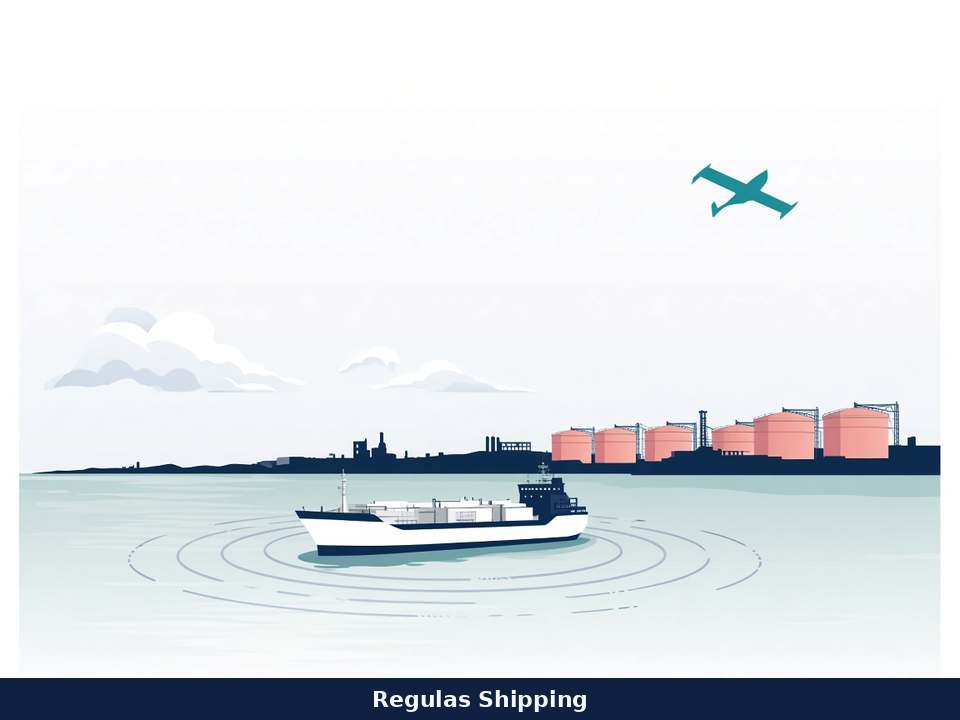
The United Kingdom Maritime Trade Operations centre issued Warning 165-26 on Sunday, 11 October, for an incident in the vicinity of Sohar anchorage, Oman. The first product was carried as Suspicious Activity: UKMTO had received a report of an incident involving a tanker; status of crew, damage assessment and environmental impact were unknown at the time of the report. Update 001 reclassified the incident as an Attack after confirmation that the tanker was struck by an uncrewed aerial vehicle. Local authorities were assisting in the evacuation of the crew. Damage assessment and environmental impact remained unknown at the time of the update. Vessels were advised to transit with caution and report any suspicious activity to UKMTO while authorities investigate. The UKMTO wording named neither hull, flag, cargo, UAV type, fire location nor a responsible party.
India’s ports, shipping and waterways minister, Sarbananda Sonowal, the Ministry of External Affairs and the Embassy of India in Muscat later named the hull. Sonowal said Nicaragua-flagged MT Petro Dolphin, carrying 11 Indian seafarers, was subjected to a drone attack at Sohar Anchorage on 11 October. Nine Indian crew members were rescued and safe; two Indian nationals remained missing, with search-and-rescue operations underway by the local Coast Guard. The embassy described the same Nicaragua-flagged tanker and said two of the 11 Indian seafarers on board were reported missing. The MEA condemned the attacks on commercial vessels in the Strait of Hormuz region on 11 October, repeated the Petro Dolphin drone line and the two-missing count, and said the embassy in Muscat was coordinating with Omani authorities and the ship-management companies. That Indian naming is the working identity for operators. It is not a UKMTO naming. 165-26 remains an unnamed tanker Attack warning at Sohar anchorage.
What UKMTO published, and why the reclassification matters
165-26 did not open as an Attack file. The first product was a tanker incident at Sohar anchorage with unknown crew, damage and environment. Update 001 is the operational change: UKMTO confirmed a UAV strike, moved the product to Attack, and said local authorities were helping evacuate the crew. That sequence is a different confirmation bar from Sunday midday’s dedicated Warning 164-26, which opened as Attack on a Company Security Officer line. It is also a different mechanism. 164-26 printed an unidentified projectile on the port side of an outbound Hormuz tanker. 165-26 printed a UAV on a tanker in an Omani anchorage. Do not merge projectile and UAV into one weapon picture, and do not treat the first 165-26 snapshot as the last word on crew or damage.
Hold the unknown lines. After Update 001, UKMTO still did not publish a casualty count, a fire location, a pollution volume or a position inside the anchorage. Evacuation assistance is not a completed SAR finding and not a completed class survey. The unknown-environment line is an omission, not a MARPOL all-clear. Stay with “uncrewed aerial vehicle” on the UKMTO desk. UKMTO did not name the Islamic Revolutionary Guard Corps, a coastal-state shooter or a UAV type. Industry colour that recasts Sunday as a confirmed IRGC strike at Sohar is not a UKMTO print.
What India named, and the SAR clock
Sonowal’s X post, the embassy line and the MEA statement are the naming and crew primary. Nicaragua-flagged MT Petro Dolphin. Drone attack. Sohar Anchorage. 11 Indian seafarers. Nine rescued and safe. Two missing. Local Coast Guard SAR. The embassy said it was in close and continuous contact with the concerned authorities. The MEA said the safety of Indian seafarers remained a priority and called for immediate de-escalation, an end to attacks on commercial vessels, seafarers and civilian infrastructure, and the unimpeded flow of maritime commerce through international waterways. Argus put Petro Dolphin at 3,922 deadweight tonnes as a small oil-products tanker. Maritime Executive described a roughly 4,000 deadweight-tonne coastal product tanker built in 2004, UAE-owned and operated, with no port-state-control inspection history on its Equasis record and an AIS signal not received by commercial services since May 2026.
Open-register colour only, not a UKMTO or JMIC print: IMO 1072294, MMSI 350651000, call sign H7AA1, oil-products tanker, built 2004, about 94.7 by 13.8 metres, about 2,551 gross tons and 3,922 deadweight. VesselFinder’s AIS flag is Nicaragua; its particulars table still prints Saint Kitts and Nevis. Maritime Executive said the Equasis record suggests the ship is falsely flagged in Nicaragua. Treat that flag split as open-register colour, not as a completed flag-state finding. VesselFinder’s last public AIS was about 158 days stale, last port Muscat on 6 May, draught about 2.5 metres. That is tracker colour, not a UKMTO position and not proof the ship was dark at the moment of the hit. Do not invent a berth, a cargo or a current latitude and longitude from a May AIS fix.
A competing social-media headcount circulated on Sunday putting 12 people on board, including one Bangladeshi national, with 10 rescued. Stay with the official Indian count: 11 Indian seafarers, nine rescued, two missing. Do not add a Bangladeshi casualty line unless Oman, the flag or the company publishes it. The SAR is an Omani Coast Guard problem in an Omani anchorage. India’s embassy coordination does not convert 165-26 into a Hormuz TSS file.
A Sohar roadstead file, not a Hormuz TSS reprint
The geography is the operational point. UKMTO placed the incident in the vicinity of Sohar anchorage, Oman. That is the Gulf of Oman coast, the industrial port and storage complex north of Muscat, outside the Strait of Hormuz traffic-separation scheme and outside the Emirates’ inner gulf. Sunday midday’s dedicated 164-26 remains a Hormuz outbound projectile. Saturday’s dedicated 162-26 remains a Hormuz outbound fire. Saturday’s dedicated 161-26 remains a Ras Al Khaimah VHF move. Friday’s dedicated 160-26 remains 13 nautical miles west of Al Jazeera. Sunday’s dedicated 163-26 remains a Gulf of Oman tanker-and-military-forces Advisory. 165-26 does not reuse those ranges and does not reuse those mechanisms. An anchorage UAV hit is a sitting-ship problem: limited manoeuvre, nearby bunkering and waiting hulls, and a coastal-state SAR and pollution desk that Hormuz TSS products do not automatically trigger.
Sohar sits on the coast of a state that has been managing a separate maritime relationship with Iran over Hormuz arrangements. That diplomatic colour is context. It is not a UKMTO finding that Oman was the target, and it is not a finding that the UAV launched from Omani territory. UKMTO did not make a coastal-state attribution. Do not brief Sunday as a breach of a named Oman–Iran power-sharing instrument unless Oman or UKMTO prints that legal characterisation.
Update 103, information cut-off 081500 UTC on Thursday, 8 October, is still the last numbered JMIC regional note on the bridge. It held the Gulf of Oman at MODERATE and the Strait of Hormuz at SEVERE. Sunday’s Sohar Attack sits outside that cut-off. Do not treat a Gulf of Oman MODERATE rating as a finding that Omani anchorages are quiet, and do not rewrite Update 103 on the strength of one later UAV evacuation.
What this is not
165-26 is not a rewrite of 164-26, 163-26, 162-26 or 160-26. It is not a naming of Valthera, Ocean Molica, NV Sunshine or GEM NO.2. It is not a JMIC Update 104. Do not fold the Sohar UAV into Yanbu loadings, the UAE MPCI container-filing mandate, Japan’s 35-ship vessel-level permit, the 9 October OFAC/State 22-tanker package, Oman’s Article 10 AIS-on territorial-water rule, or Iran’s Persian Gulf Strait Authority declaration channel. Those are crude-export, documentation, sanctions and coastal-state products. Sunday’s file is an unnamed tanker, confirmed UAV, crew being evacuated, damage and environment unknown, at Sohar anchorage, alongside an Indian naming of Petro Dolphin and a live two-person SAR.
Do not treat automated industry alerts that print an IRGC UAV strike on a UAE tanker as a UKMTO or Omani attribution. The primaries used here — UKMTO, Sonowal, the MEA and the embassy — did not name a shooter. Maritime Executive described the event as a suspected Iranian strike far from the main Hormuz conflict zone; that is industry colour, not a completed responsibility finding.
Operational implications
A UAV strike on a small products tanker in an Omani waiting anchorage, with an evacuation in progress and two seafarers missing on the Indian desk, is a different night order from a Hormuz TSS projectile on a laden Suezmax with a crew-safe line. Masters already at Sohar, approaching Sohar, or waiting off Fujairah and Khor Fakkan need an anchorage UAV watch: citadel, fire-main, inert-gas if cargo requires it, a written decision on whether to remain at anchor, weigh and move, or request a berth or a place of refuge, and a channel to Omani port control and coast guard. A 94-metre coastal tanker can burn or flood faster than a Suezmax. UKMTO did not say there was a fire. India’s drone line and the evacuation line are enough to keep boundary cooling and a pollution watch in the orders. The unknown-environment line means a MARPOL watch even though no volume was published.
Managers who later recognise the 165-26 hull as theirs, or who already recognise Petro Dolphin from the Indian naming, should assume flag, class, P&I and the labour-supplying state will ask for the master’s report if it exists, the CSO log, the last AIS and VDR picture, the time of the UAV hit, the evacuation sequence, the names and next-of-kin of the two missing Indian seafarers, and whether the ship remains afloat, aground, alongside or under tow. A coastal products tanker with a stale AIS picture and a competing flag line is a documentation problem as well as a casualty problem. Charterers with hulls in the Sohar waiting area should treat Sunday as a day on which a UAV reached an Omani anchorage, not only the Hormuz TSS. Do not brief a Gulf of Oman MODERATE rating as cover for a ship sitting with a radar horizon toward the coast.
Hold the published hygiene from Update 103 for the wider theatre: neutral transit, prompt answers to military queries, NAVCENT NCAGS for any Iran-port humanitarian exception. Sunday’s Sohar file does not rewrite the Hormuz blockade picture and does not convert an Omani anchorage into an Iran-port call. It does mean the next ship waiting at Sohar has a possible damaged or abandoned coastal tanker, a live SAR, and a UAV threat that is no longer confined to the strait in the UKMTO product set.
What Operators Should Note
- Log a new Sunday Attack product that began as Suspicious Activity. Warning 165-26, 11 October, vicinity of Sohar anchorage, Oman; tanker incident, crew/damage/environment unknown; Update 001 reclassified as Attack after a confirmed UAV strike; local authorities assisting evacuation; damage and environment still unknown. Transit with caution and report to UKMTO. Do not invent a UKMTO name, flag, cargo or shooter to fill the product gap.
- Keep India’s Petro Dolphin naming labelled as India’s naming. Nicaragua-flagged MT Petro Dolphin, drone attack at Sohar Anchorage, 11 Indian seafarers, nine rescued, two missing, Omani Coast Guard SAR. Embassy in Muscat in contact with authorities. Argus: 3,922 dwt products tanker. Open registers: IMO 1072294, AIS flag Nicaragua, particulars also printing Saint Kitts and Nevis, AIS stale since May. That is not a UKMTO or JMIC print.
- Treat the two missing seafarers as a live SAR, not a closed crew-safe line. Do not brief Sunday as a completed evacuation. Keep next-of-kin, labour-supplying-state and P&I welfare channels open until Oman or India closes the search. Stay with the official 11/9/2 Indian count unless the company or Oman publishes a different headcount.
- Put the UAV watch on the Omani anchorage, not only on the Hormuz TSS. 165-26 is a Sohar roadstead file. 164-26 remains the Sunday Hormuz projectile. 163-26 remains the Gulf of Oman military Advisory. 162-26 remains Saturday’s Hormuz fire. Do not collapse the four geometries, and do not treat a sitting coastal tanker as covered by an outbound Suezmax night order.
- Plan for a small-tanker fire, flood and pollution problem even though UKMTO printed no volumes. Evacuation assistance plus unknown damage is a reason to ready tugs, boom and a place-of-refuge request, not a reason to assume the hull is intact. A competing flag line and a stale AIS picture are a documentation watch for the same desk.
- Do not rewrite Update 103. ICOD remains 081500 UTC 8 October. Gulf of Oman MODERATE. Hormuz SEVERE. 165-26 sits outside that cut-off. Replace nothing in the master’s JMIC pack until Update 104, a UKMTO naming of 165-26, or a threat-level change appears. Do not recast Sunday as a confirmed IRGC attribution, a Hormuz TSS hit, or a completed weekly tape.
Regulas Shipping will keep lining Warning 165-26 against India’s Petro Dolphin naming and Update 103 so operators can treat the Sohar UAV strike and the two-person search as a new Gulf of Oman anchorage casualty, not as a Hormuz projectile reprint or a closed crew-safe file.