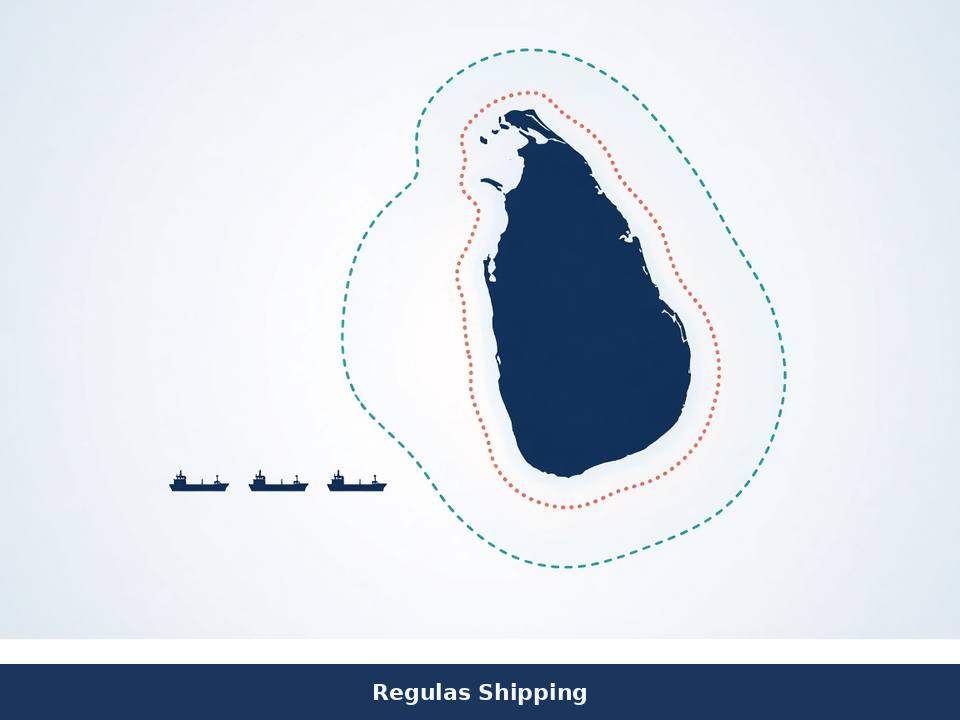
Sri Lanka’s Sunday papers have put a number, a legal split and a named humanitarian exception on the Iranian ships sitting off the island. The Morning, in a 11 October piece by Maheesha Mudugamuwa, said Foreign Affairs Minister Vijitha Herath has confirmed that about 47 foreign vessels are positioned beyond Sri Lanka’s 12-nautical-mile territorial limit, including around 19 Iranian vessels that have remained in the region for an extended period. The government has not provided supplies or logistical services to vessels subject to U.S. sanctions. Iranian authorities had requested essential supplies, including food and water. Colombo declined. Herath said Sri Lanka would still intervene when a genuine humanitarian need arose, and he pointed to the Iranian vessel IRIS Bushehr, currently in Trincomalee, where 13 crew members remain under Sri Lankan care.
That is the working primary for a DPA and for any agent, chandler or bunker barge asked to work a ship in the island’s exclusive economic zone this week. It is a coastal-state services stance, not a new statute and not a published Notice to Mariners. It is also not a Hormuz kinetic file. The useful facts are the 12-mile line, the 47 / 19 count, the refused routine-supply request, the IRIS Bushehr exception, and a live argument about whether United Nations Convention on the Law of the Sea Article 98 requires more. Do not treat Sunday’s legal feature as a finding that the ships are in territorial waters, and do not treat it as a completed distress case.
What Colombo has said, and where the counts differ
Herath’s public line has been consistent since early October. Speaking on 4 October, as carried by Ada Derana and Tamil Guardian, he said around 47 vessels were anchored in international waters near Sri Lanka, 19 of them Iranian-flagged, and that none were inside the territorial sea. He rejected reports that the United States had asked, intervened or exerted pressure to cut off food and water. “If such reports are being circulated, they are completely incorrect,” he said. He also said private companies supplying sanctioned vessels could face U.S. secondary sanctions. Zira Daily’s same-day account had him adding that Sri Lanka was still required under international maritime law to provide necessary guidance and assistance to vessels operating in international waters, and that IRIS Bushehr remained at Trincomalee port with food, accommodation and security for its 13 crew.
Hold the count variants. The Diplomat, writing from a Sunday Times interview, had Herath identifying 15 Iranian vessels among the 47 foreign ships. The Morning on Sunday printed around 19. The Wall Street Journal’s 30 September report, which opened this file for the trade, spoke of around 20 empty Iranian tankers short of food, fuel and fresh water some 15 miles off the south-west coast. Brief the band — mid-teens to about 20 Iranian ships among a larger 47-ship waiting area — and do not invent a hull list. Colombo has not published the names of the 19. IRIS Bushehr is the named exception because it is already in port, not because it stands in for the EEZ cluster.
AsiaNews, citing local scholars, recorded the government’s legal distinction in plainer language: because the ships sit in the exclusive economic zone and not inside the 12-mile limit, and because the crews are not described as in a life-threatening situation, Sri Lanka says it has no binding duty to provide food and water. The Ministry of Ports and Civil Aviation has acknowledged secondary-sanctions risk. Shipping agents have said routine crew changes, stores and fuel are difficult to arrange. That is the commercial constraint operators will meet first. It is not a port-state detention and not a published ban on Iranian flags in Galle or Colombo.
The Sunday legal split: Article 98 against a territorial-sea line
The Morning is useful because it puts two named Sri Lankan voices against that government line. Former foreign minister Ali Sabry told the paper that UNCLOS supplies a framework for assistance to persons in distress, and that presence in the exclusive economic zone should not automatically block humanitarian intervention. “If it is in the economic zone itself, it is our responsibility when somebody makes a call for it,” he said. He argued that any sanction should be a United Nations sanction, that the crews were multinational, and that providing essential assistance to civilian seafarers should not be read as taking a side. Herath’s denial of U.S. pressure stands on the record. Sabry suggested Western pressure may have been applied but did not identify evidence. Leave that disagreement labelled as disagreement.
The legal hinge is Article 98. Article 98(1) requires states to oblige masters of their flag ships to assist persons in danger of being lost and to proceed to persons in distress. Article 98(2) requires coastal states to promote search-and-rescue services. Article 58(2) applies relevant high-seas provisions, including Article 98, in the exclusive economic zone. None of those articles automatically converts a sanctions-driven stores problem into a coastal-state duty to bunker or provision every foreign ship that is short of supplies. The paper’s own legal reading, and AsiaNews’s scholars, draw that line: distress and danger to life are one thing; ordinary logistical difficulty is another. Sunday does not close the factual question of how short the 19 ships actually are. The Wall Street Journal said food, fuel and fresh water were running low. Colombo has not published a welfare inspection that confirms or rejects that picture for the EEZ cluster.
Maritime lawyer Dr Dan Malika Gunasekera told The Morning that prolonged delay could still force Colombo to act, on crew welfare or on pollution risk along the southern routes that carry container and tanker traffic. Some of the ships have been described as empty crude tankers. Empty is not the same as clean. Fuel, residues and machinery oil remain a coastal-state problem if a hull loses power or starts to drift into the traffic. Gunasekera also warned that masters could eventually request a place of refuge. UNCLOS Article 18(2) allows stopping or anchoring in territorial sea for force majeure, distress or the need to assist persons in danger. It does not create an unrestricted right to enter a Sri Lankan port. The International Maritime Organization’s place-of-refuge guidelines in Resolution A.1184(33) ask coastal states to assess safety, environment and risk to the state. They do not require the port to be opened. That is the decision Colombo is trying not to face this week. It is also the decision a master short of water may put on Colombo’s desk without asking first.
What this is not
Sunday’s file is not a published Sri Lanka instrument. There is no new merchant-shipping regulation, no named list of restricted ships, and no Notice to Mariners that closes the EEZ to Iranian flags. It is not a named boarding, not a crew-casualty primary, and not a rewrite of the UANI empty-off-Sri-Lanka colour that has sat on this desk since early October. Daily Mirror’s 8 October account of the foreign ministry’s refusal to provision about 20 U.S.-sanctioned Iranian vessels was an earlier increment of the same stance. Sunday adds the 47 / 19 band, the IRIS Bushehr 13-crew exception, the Sabry Article 98 argument and the A.1184(33) place-of-refuge warning. That is enough to brief operators. It is not enough to brief a new law.
Do not fold this into Thursday’s dedicated OFAC/State 22-tanker package, into Japan’s dedicated 35-IMO vessel-level permit, into the unused Oman territorial-water transit licence, or into Saturday’s dedicated Hormuz and Gulf of Oman kinetic files. Those are sanctions lists, resident-services permits, coastal-state transit rules and projectile or munition products. Sunday is a coastal-state choice about stores, crew changes and port refuge for ships that are already sitting outside 12 miles. IRIS Dena, the Iranian warship sunk off Sri Lanka in March, and the later rescue and repatriation of Iranian personnel, are background to why IRIS Bushehr is in Trincomalee. They are not this week’s EEZ cluster, and they do not convert a stores refusal into a naval incident.
Do not recast Herath’s denial of U.S. pressure as proof that secondary-sanctions risk is imaginary. The commercial risk for a Colombo or Galle agent who invoices a designated hull runs through U.S. correspondent banks whether or not an embassy demarche is on the record. U.S. sanctions rules contain humanitarian exemptions and licences. Their fit to a particular stores delivery, cash payment or bunker stem has to be checked against the named parties. Sunday does not perform that check.
Operational implications
For a master already in the EEZ cluster, the immediate problem is not a new Sri Lankan boarding risk. It is whether food, water, medicine, a crew change or a bunker barge can be arranged without putting the agent, the barge and the paying bank inside a secondary-sanctions problem. If the answer is no, the next problem is whether the ship is still in ordinary delay or has crossed into distress. That crossing is what would engage Article 98 and, if the ship then closes the 12-mile line, a place-of-refuge assessment. Masters should not assume that a refused routine-supply request is a refused rescue. They should also not assume that a distress call will produce a berth in Colombo, Galle or Trincomalee.
Managers and charterers with hulls, bunkers or stores contracts touching Sri Lankan ports need a written split between territorial sea, exclusive economic zone and high seas, and a written split between humanitarian emergency and commercial service. IRIS Bushehr shows that Colombo will support a crew once the ship is already in port under its care. It does not show that the same support is available 15 miles off the south-west coast. Agents asked for a stem, a launch or a crew boat should treat the designated-vessel and correspondent-bank questions as closing items, not as afterthoughts. Flag and P&I should be told early if a ship in the cluster cannot make the next passage without stores, because the alternative may be a drift toward the southern traffic or a refuge request that Sri Lanka has said it does not want to receive.
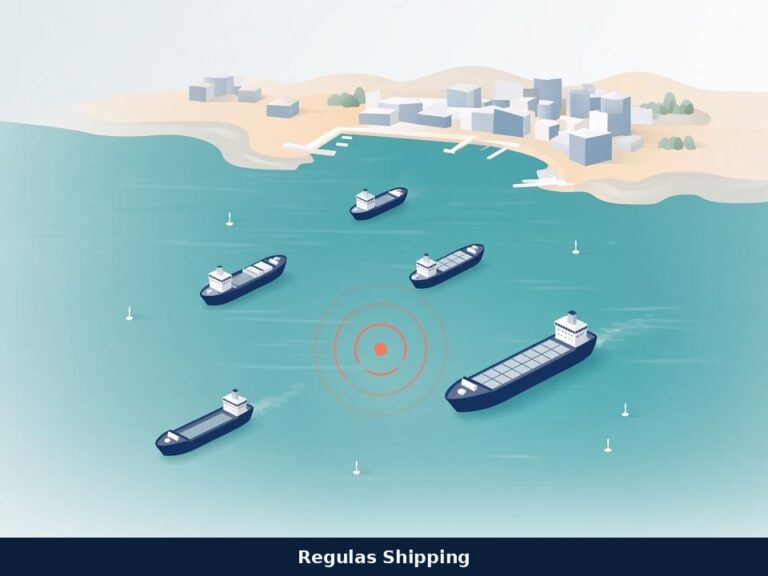
Coastal-state watchkeepers in Galle, Hambantota and Colombo should treat the 47-ship waiting area as a collision and pollution watch, not only as a sanctions story. Empty tankers that have been out for weeks still carry fuel. A disabled or under-manned hull on the southern route is a TSS problem for the next container ship whether or not anyone later agrees on Article 98.
What Operators Should Note
- Log a coastal-state services stance, not a new statute. Herath, as carried on 4 October and restated in The Morning on 11 October: about 47 foreign vessels beyond 12 nautical miles, around 19 of them Iranian, no territorial-sea presence, no government supplies to U.S.-sanctioned ships, Iranian food-and-water request declined. Sunday Times colour had 15 Iranian among 47. Brief the band. Do not invent a named list.
- Keep IRIS Bushehr on a separate desk. Trincomalee, 13 crew, food, accommodation and security under Sri Lankan care. That is the humanitarian exception Colombo is pointing to. It is not a template for the EEZ cluster and not a finding that those ships are already in distress.
- Treat Article 98 as the live legal hinge, not as a settled duty to bunker. Sabry: EEZ presence plus a call for help creates responsibility; sanctions should be UN sanctions. Government and AsiaNews scholars: EEZ is not territorial sea, and ordinary logistical difficulty is not automatically distress. Article 58(2) applies Article 98 in the EEZ. It does not write a stores contract.
- Plan for a place-of-refuge request even if Colombo does not want one. Gunasekera plus IMO Resolution A.1184(33): safety, environment and coastal-state risk are assessed; there is no automatic right to a berth. Article 18(2) covers stopping in territorial sea for distress. It does not open Galle or Colombo.
- Put secondary-sanctions screening on the agent and the barge, not only on the ministry. Herath denied a U.S. demarche and still warned private suppliers about correspondent-bank risk. A humanitarian licence, if one fits, has to be checked against the named parties before a launch leaves the breakwater.
- Do not recast Sunday as a Hormuz file, an OFAC listing, a published Sri Lanka instrument, or a completed distress finding. Keep the unused 8 October Daily Mirror increment on this same stance. Replace nothing in the master’s pack until Colombo names the 19, publishes a welfare inspection, grants or refuses a named refuge request, or issues a Notice to Mariners.
Regulas Shipping will keep lining Colombo’s EEZ stores stance against the IRIS Bushehr exception and the Article 98 argument so operators can treat the 47-ship waiting area as a coastal-state services and pollution watch, not as a new statute or a reason to assume a Sri Lankan berth will be waiting if the water runs out.