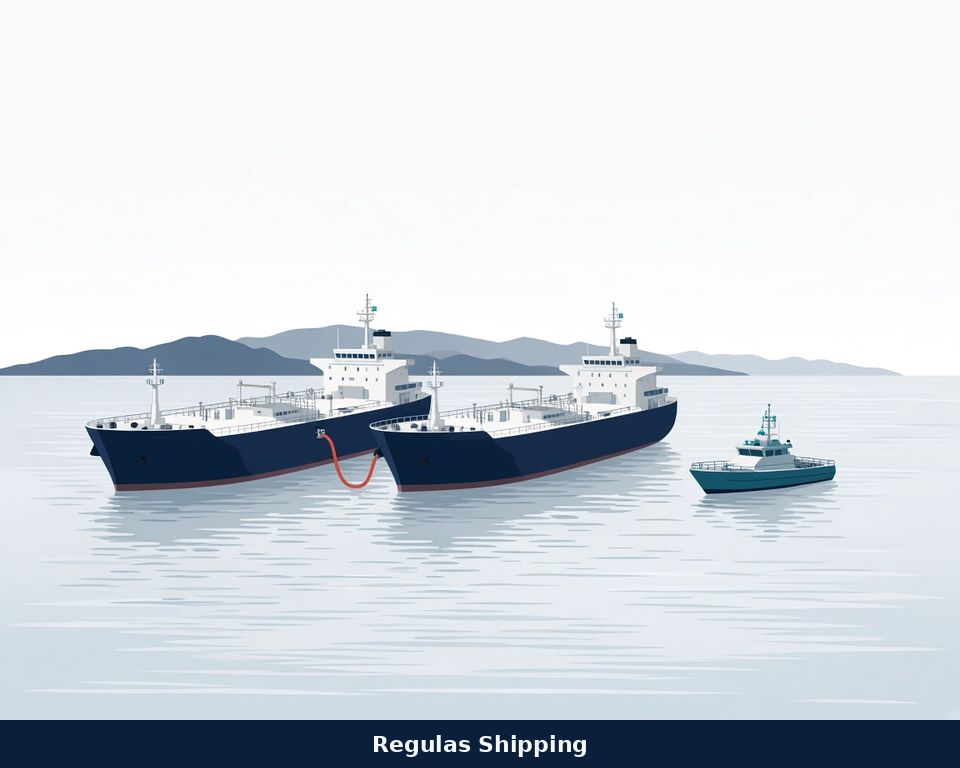
Taiwan’s Coast Guard Administration told local media on Thursday, 1 October, that a Taichung patrol boat had boarded and stopped two Sierra Leone-flag tankers the previous day while they were transferring oil about 35 nautical miles west of Taichung Port. United Daily News, reporting the Third Coast Guard Flotilla’s account, said patrol craft PP-3512 found the two hulls with cargo hoses connected and with no oil-containment boom or other spill-prevention gear in the water. Officers ordered the transfer stopped, recorded video evidence, and drove both ships outside Taiwan’s contiguous zone. The case was referred to the Ocean Conservation Administration for administrative penalty under Article 31 of the Marine Pollution Control Act. The flotilla said it would also pass the ships’ tracks and the origin of the oil to other agencies for a source investigation.
That is a coastal-state pollution boarding of an undeclared ship-to-ship transfer, not a named seizure and not a Hormuz product. Illegal “barge oil” in the Taiwan reporting means two or more ships coming alongside at sea to pump cargo or bunkers through a hose without the customs, port and anti-pollution filings that a Taiwanese STS would require. The Taichung team’s public line on Thursday was that such transfers will not be tolerated, that surface monitoring will continue, and that the public reporting number is 118. Do not recast the file as a shadow-fleet interdiction, a flag-state detention, or a rewrite of the Sohar STS geography already on this desk.
Chinese-language follow-ups the same afternoon, including China Times, put the two Sierra Leone-flag hulls at about 19,481 tons and 4,818 tons and said Article 31 penalties can run NT$1 million to NT$30 million, with a deadline to improve and repeat fines if the ships do not. Those figures are the local penalty band the Taichung coverage attached to the referral. They are not a published Ocean Conservation Administration decision. Full names were not released in the English-accessible CGA account; some local reports used partial names. Until the Ocean Conservation Administration or the Coast Guard publishes a hull, IMO number and penalty notice, the working objects are two Sierra Leone-flag tankers, a hose, no boom, 35 nautical miles west of Taichung on 30 September, and an Article 31 file.
An STS without a boom is a pollution case first
The operational fact the patrol boat photographed is simple. Two tankers were made fast enough to run a hose, and there was no floating containment around the transfer. Article 31 of Taiwan’s Marine Pollution Control Act is the pollution statute the flotilla cited, not a customs smuggling count, even though undeclared STS cargo also sits on the customs and port-state side. A company that treats a dark or poorly lit transfer west of Taichung as a commercial shortcut now has a documented boarding, a video record, a contiguous-zone expulsion and a source-tracing request on the oil. That is enough to open P&I, class, flag and charter correspondence even before a fine is assessed.
The location matters for passage planning. Thirty-five nautical miles west of Taichung Port is outside the harbour but inside the monitoring picture of the Fourth Coastal Patrol District, which made the original report, and of the Third Flotilla, which sent PP-3512. Taiwan’s contiguous zone is the line the ships were driven across. An STS that is invisible to harbour control is not invisible to a coastal-state radar and patrol cycle. Masters who have been using the Taiwan Strait approaches as an informal bunker or cargo-transfer roadstead should assume that a hose in the water without a boom is enough for a boarding, and that “we were only waiting” will not survive a video of connected manifolds.
Keep the file off the Hormuz STS desk. Sohar and the Gulf of Oman remain the wartime transfer geography for barrels that are not going through the strait. This Taichung boarding is a peacetime pollution-and-declaration case on Taiwan’s west coast. It does not identify a PGSA-listed hull, a UKMTO warning, or a sanctioned cargo. It also does not clear other undeclared transfers in the same lane. The flotilla’s Thursday sentence about continued surface monitoring is the watch condition: more boardings are the intended product, not a one-afternoon photograph.
Flag, boom and the next port state
Sierra Leone is the published flag. That is a due-diligence prompt for the next port, the insurer and any charterer who took the ships after 30 September, not a finding that the registry authorised the transfer. Port State Control in the Tokyo MoU region already treats undocumented cargo operations, oil-pollution prevention gear and identity documents as inspection items. A CGA video of a hose and no boom is the sort of third-party record a PSC inspector can put next to the IOPP Certificate, the SOPEP and the Oil Record Book. If the ships call a Taiwanese or neighbouring port after being driven out of the contiguous zone, the boarding file travels with them.
China Times attached the NT$1 million to NT$30 million Article 31 band and a “improve or be fined again” line to the Taichung referral. Treat that as the statutory exposure the local coverage described, and wait for the Ocean Conservation Administration notice for the actual amount. A source investigation of tracks and oil origin is the second exposure. If the cargo is later tied to an undeclared commercial sale, customs and energy-enforcement desks can open beside the pollution file. None of that requires the Coast Guard to have published IMO numbers on 1 October.
Operators who run legitimate STS off Taiwan, mainland China, Japan or Korea should read Thursday as a reminder of the minimum picture a coastal state now photographs: an approved location, a filed operation, a boom or equivalent containment, and a watch who can stop the pump when a patrol boat arrives. Operators who have been running undeclared transfers on Sierra Leone or other open-registry tankers in the same waters should assume the Taichung team will look for the next hose. Documentation, the DPA, the CSO and P&I should own the 30 September boarding together. The war-risk desk does not.
What Operators Should Note
- Log a 30 September boarding, not a 1 October rumour. Third Flotilla / PP-3512, about 35 nautical miles west of Taichung Port. Two Sierra Leone-flag tankers, hose connected, no oil boom. Transfer ordered stopped, video taken, ships driven outside the contiguous zone. Article 31 Marine Pollution Control Act referral to the Ocean Conservation Administration. Tracks and oil origin to be traced.
- Do not wait for published IMO numbers before opening the company file. The English-accessible CGA account did not name the hulls. Local reports used partial names and put the ships at about 19,481 and 4,818 tons. If either ship is yours, flag, class, P&I and the charterer need the boarding video and the Oil Record Book the same day, not after a fine notice.
- Treat a hose without a boom as a pollution event, not as a paperwork miss. Article 31 is the cited statute. Local coverage put the penalty band at NT$1 million to NT$30 million, with repeat fines if the ships do not improve. That is exposure, not an assessed amount. A source investigation can sit beside the pollution file.
- Assume Taiwan Strait approaches are a monitored STS picture. The Fourth Coastal Patrol District made the original report. The Third Flotilla boarded. The public watch number is 118. An informal “sea filling station” west of Taichung is inside that cycle even when it is outside harbour limits.
- Put the next port-state call on notice. A CGA video of connected manifolds and no containment is usable against IOPP, SOPEP and Oil Record Book entries in the Tokyo MoU. A contiguous-zone expulsion is not a clearance to complete the transfer a few miles further west.
- Separate this from Sohar, Hormuz and sanctioned-cargo STS. It is a Taiwanese coastal-state pollution boarding of an undeclared transfer. It does not name a PGSA hull, a UKMTO warning, or a war-risk listed area. CSO, DPA and P&I own it. The Hormuz shuttle desk does not.
- If you run a declared STS in the same region, photograph the boom before the hose. Approved location, filed operation, containment in the water, and a stop-pump authority that works when a patrol boat is alongside. Thursday’s public pictures are what the next boarding team will compare you against.
Regulas Shipping will keep lining the Taichung Coast Guard’s 30 September boarding of two Sierra Leone-flag tankers against Article 31 of the Marine Pollution Control Act so operators can treat an uncontained Taiwan Strait STS as a live pollution-and-declaration case, not as an unmarked bunker stop west of the port.