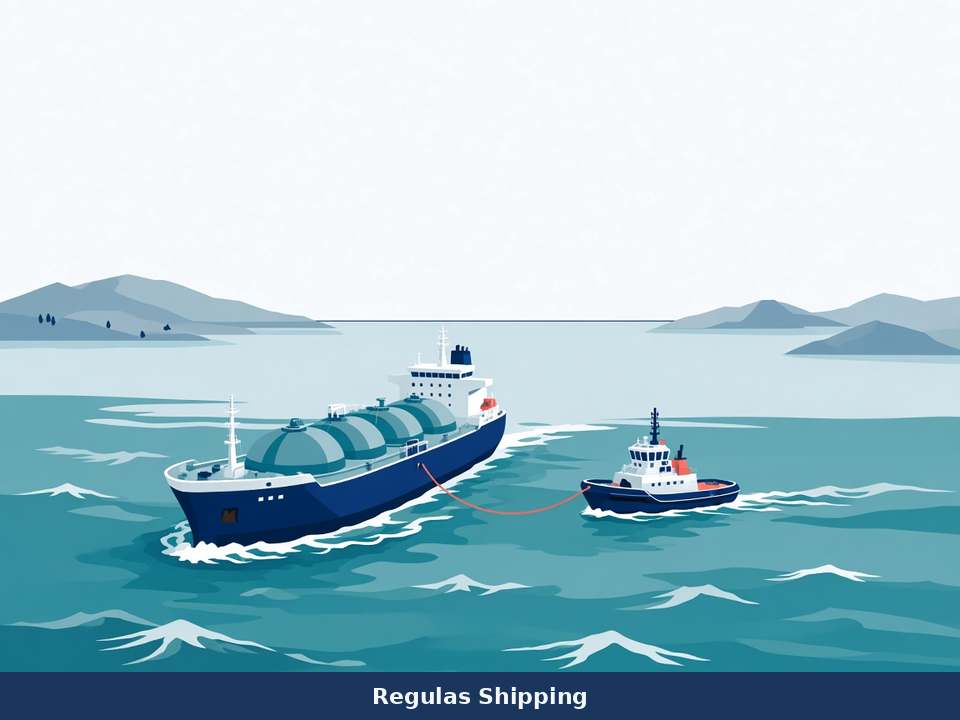
The Hindu reported on Monday, 28 September, that the Indian Coast Guard had averted a major incident about 37 nautical miles east-southeast of Paradip, Odisha, after the Belize-flagged chemical tanker MT SEAGULL 9 suffered a main-engine failure and rapid ballast-tank flooding that caused the ship to tilt dangerously. The ICG statement, carried the same afternoon, said the tanker was carrying 9,000 tonnes of palm oil with 23 crew on board and had issued a distress call at 7:30 a.m. on Sunday, 27 September. New Indian Express, updated at 3:37 a.m. on Tuesday, 29 September, said Paradip Port Authority harbour tug DOLPHIN 25 had subsequently towed the ship into harbour and secured it at NQ2 at around 4 p.m. on Monday without further incident. That Sunday-to-Monday coastal casualty, from distress through Coast Guard damage control to a Monday berthing, is the primary for this note. It is not a Black Sea strike file, a Hormuz war-risk note, or a rewrite of India’s 27 September medical-officer rules already on this blog.
Paradip Port Authority information, reflected in the Express and in later industry write-throughs, put the list at about 10 degrees as water ingress into the ballast tanks outpaced de-ballasting. The vessel’s agent, Atlantic Global Shipping Pvt Ltd, alerted authorities at 5:01 a.m. on Sunday, before the 7:30 a.m. distress timing in the ICG statement. The cargo was crude palm oil for Paradip on behalf of Adani Wilmar. UNI reported the same Monday berthing. None of those accounts named an IMO number in the public ICG or port statements. Open industry particulars describe SEAGULL 9 as a 1998-built Belize-flag chemical tanker of about 11,131 deadweight tonnes and 127.5 metres overall. Operators should work from the named hull, flag, cargo and position in the ICG and PPA files, and should not invent an IMO or a pollution-volume figure that those primaries did not give.
Damage control before the tow
ICGS VISHWAST was sent to the scene. The Hindu, quoting the Coast Guard, said a specialist damage-control team boarded the unstable tanker, deployed submersible de-flooding pumps, arrested the leakage, blanked two damaged seawater pipelines and contained a third fractured line. Concurrent cargo transfer and de-flooding, in coordination with the ship’s crew, stabilised the tanker and removed the immediate capsize threat. A pollution-control vessel and an additional offshore patrol vessel were diverted for pollution response and round-the-clock monitoring. A Dornier from Bhubaneswar provided aerial surveillance. The ICG said a minor palm-oil sheen seen near the vessel on 27 September was confirmed fully dissipated on follow-up sorties on 28 September, with pollution-response protocols remaining active.
Only after that stabilisation did the port move become the main evolution. The Express said the Directorate General of Maritime Administration authorised Paradip Port Authority to deploy a harbour tug. DOLPHIN 25, with towing gear and supplies, left port at 1:40 p.m. on Sunday under the harbour master, reached SEAGULL 9 at 5:24 p.m., completed the tow-line connection at 5:54 p.m. after an external assessment and boarding, then brought the tanker inside port limits. The ICG said the Paradip tug DOLPHIN took the stabilised ship toward the Paradip anchorage, with main-engine repairs under way with assistance from VISHWAST’s technical team. The Express said the ship later entered harbour with minimum engine assistance and was secured at NQ2 around 4 p.m. on Monday. PPA chairperson Susanta Kumar Purohit credited coordination among the port, the Directorate General of Shipping, the Indian Coast Guard, MRCC, Ocean Sparkle Ltd and other stakeholders, with Indian Navy support. Deputy conservator Captain A.C. Sahoo coordinated the operation; Captain S.B. Panigrahi facilitated the berthing assistance.
Operational implications for tankers closing an Indian load or discharge port
A small products or chemical tanker that loses its main engine and then floods ballast through damaged seawater lines is a stability casualty first and a pollution casualty second. A 10-degree list with 9,000 tonnes of palm oil still on board is close enough to a capsize and a cargo-release case that the Coast Guard treated both as live risks: blank the lines, pump the tanks, shift cargo, put a pollution-control ship and a Dornier overhead, then tow. The fact that the sheen was later reported dissipated does not mean there was no release, and it does not mean a port or receiver can skip sampling, tank-gauging and a class or P&I survey before anyone treats the cargo as sound.
The timeline also shows how fast a coastal Indian emergency consumes harbour assets. A specialised OPV crew boarded on Sunday morning; a port tug was not alongside until late Sunday afternoon; the ship was not fast at NQ2 until Monday afternoon. Ships already programmed for Paradip, and tankers in the approaches, should expect a tug, a berth and a pollution watch to be committed to the casualty for more than 24 hours. Charterers moving palm oil or other edible-oil stems into Paradip should not assume that a “safely berthed” headline restores the original discharge window. Engine repairs were still under way with Coast Guard technical help after the ship was alongside.
Edible-oil cargo quality is part of the same file. Concurrent cargo transfer was used to restore stability, which means the 9,000-tonne stem was moved in a listing ship with damaged seawater lines and a later, if minor, palm-oil sheen. Receivers will want ullages, temperatures, samples and a note of which tanks were used in the transfer before they take delivery. A coastal chemical tanker of this size also sits in a crew-welfare bracket well below India’s new 100-person medical-officer threshold; 23 people still needed a damage-control boarding, a pollution watch and a port tow. The lesson is not that a doctor’s rule would have changed Sunday’s flooding. It is that small-tanker emergencies off the Indian east coast are still resolved by ICG damage control, harbour tugs and terminal surveys, and those assets should be in the voyage plan before the ship is 37 nautical miles off the pilot station with a dead engine.
What Operators Should Note
- Treat Sunday’s distress as a combined loss-of-power and flooding casualty, not as a simple engine breakdown. The ICG said the main engine failed and a ballast tank flooded rapidly, producing a dangerous list. The Express put that list at about 10 degrees because ingress outpaced de-ballasting. A ship that cannot manoeuvre and cannot control its tanks needs damage-control boarding, not only a tug on the horizon.
- Keep the ICG damage-control sequence in the master’s briefing for similar coastal failures. VISHWAST’s team blanked two damaged seawater pipelines, contained a third fractured line, ran submersible pumps and transferred cargo while de-flooding. That is the practical order: stop the sea from coming in, restore buoyancy and reduce free surface, then talk about a tow. Do not start a harbour tow while the list is still building.
- Assume a pollution watch even when the sheen is later reported gone. The ICG diverted a pollution-control vessel and an OPV, flew a Dornier from Bhubaneswar, and said a minor palm-oil sheen on 27 September had dissipated by 28 September. Receivers, terminal operators and P&I correspondents should still survey tanks, lines and the sea surface around NQ2 before treating the 9,000-tonne palm-oil stem as unaffected.
- Budget more than a day from distress to a safe berth on the Odisha coast. Agent notification was logged at 5:01 a.m. Sunday; the ICG distress time is 7:30 a.m.; DOLPHIN 25 did not connect a tow line until 5:54 p.m.; NQ2 was 4 p.m. Monday. Ships inbound to Paradip should plan around committed tugs, a occupied berth and residual Coast Guard units still on the casualty.
- Do not treat Monday’s berthing as a completed mechanical repair. Both the ICG and the port said main-engine work continued with VISHWAST technical support after the ship was stabilised and, in the port account, after she was alongside. Charterers and cargo interests should wait for class, flag and terminal clearance before counting on a prompt discharge or a return to sea.
- Use the named commercial facts and leave the gaps blank. Public primaries give Belize flag, 23 crew, about 9,000 tonnes of crude palm oil for Adani Wilmar, agent Atlantic Global Shipping, about 37 nautical miles east-southeast of Paradip, and berth NQ2. They do not give an IMO number, a confirmed pollution tonnage, or a root-cause report on why the seawater lines failed. Do not fill those gaps from secondary databases in operational messages to charterers or insurers.
- Keep this file separate from India’s seafarer-medical rules and from Black Sea or Hormuz attack reporting. SEAGULL 9 is a coastal stability and pollution-response case. It does not change the 27 September Merchant Shipping medical-officer rules, Ambrey’s Black Sea spillover tally, or JMIC’s Hormuz severe product. Brief the Odisha approaches on flooding and tug availability, not on a new war-risk area.
Regulas Shipping will keep lining the Indian Coast Guard’s 28 September damage-control account of MT SEAGULL 9 against Paradip Port Authority’s Monday NQ2 berthing so operators can treat a 10-degree list and fractured seawater lines as a stability, pollution and berth-occupancy problem, not as a closed engine-repair story.