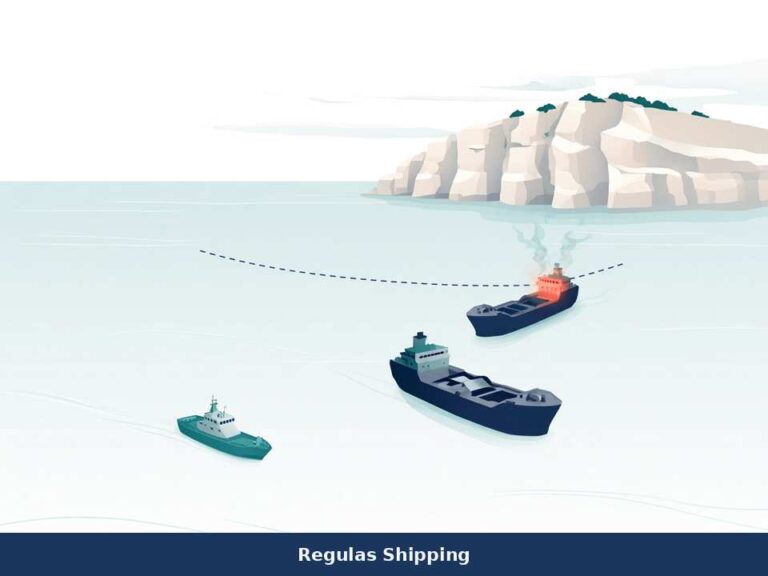
The Russian Defence Ministry said on Thursday, 24 September, and again on Friday, 25 September, that its forces had struck cargo ships and port infrastructure it linked to Ukrainian military supply. Reuters in Moscow reported the Friday statement: overnight drone strikes on Ukrainian defence-industry sites, logistics centres and vessels used by Ukraine’s armed forces, including a cargo ship carrying military and dual-use goods to Odesa, later another cargo vessel in the Odesa region that had delivered military supplies to Chornomorsk, plus port infrastructure at Reni on the Danube. An earlier Reuters/Hindu account of the Thursday overnight wave also mentioned an oil tanker bound for Chornomorsk among the claimed targets, and a later cargo vessel heading to Odesa. Reuters said it could not independently verify the claims. The ministry did not name the ships, their flags, operators, cargoes or positions, and it did not say whether any hull was damaged or destroyed. That unnamed, unverified claim-set is the primary for this note. It is not a rewrite of Wednesday’s Ambrey census of 45 merchant ships hit outside the old Black Sea listed area, of JWLA-035, or of the 23 September Sulina offshore-clearance procedure.
The geography is the part operators can use even without a name. Odesa and Chornomorsk are Ukraine’s remaining deep-sea commercial doors on the Black Sea. Reni is a Danube river port that has been taking cargo that can no longer move through those deep-sea berths at anything like pre-war volume. A ministry statement that treats a cargo ship bound for Odesa, a ship that has already worked Chornomorsk, and Reni’s port infrastructure as military-supply targets is an association claim. It is how a commercial call becomes, in the attacker’s narrative, a dual-use voyage. The ministry also listed drone assembly and storage in the Kyiv region, telecommunications centres, an Odesa logistics hub, a data centre used for intelligence processing, and a drone warehouse at Novi Biliari in the Odesa region. Those are land targets. They sit in the same overnight package as the ships. The operational reading is not that every Odesa or Chornomorsk caller is now a confirmed military hull. It is that Moscow is again stating, in public, that it will strike ships it says are carrying military or dual-use goods into those ports, and that it will strike the river door as well.
What is missing is as important as what was said. There was no UKMTO, NAVAREA or Ukrainian confirmation of a named commercial casualty on Thursday or Friday that matches the ministry’s list. There was no flag, IMO number, AIS track or damage photograph in the Reuters copy. There was no crew account. Marine Insight’s Saturday write-through, citing Reuters and The Hindu, repeated that the extent of any damage and any effect on shipping around Odesa, Chornomorsk and Reni remained unclear. Operators should not invent a hull to fill that gap, and they should not treat the absence of a name as proof that nothing was hit. Unnamed strike claims are how a basin stays expensive: the underwriter, the DPA and the master have to price a port approach against a statement that may or may not have a ship under it.
A dual-use accusation is a screening problem, not a cargo fact
The ministry’s language — military and dual-use goods, military supplies, vessels used by Ukraine’s armed forces — is the same association test that has already moved Black Sea war-risk from a handful of ports into open water. Ambrey’s Wednesday file, covered on 26 September, counted at least 45 merchant ships attacked in the past 12 months in waters that had not previously been listed, and at least 156 in Russian and Ukrainian waters between 1 July and 21 September. JWLA-035 already lists the Black Sea excluding the territorial seas of adjoining states other than Russia and Ukraine. Thursday’s claim does not change that map. It adds a different operator task: if a ship is going to Odesa, Chornomorsk or Reni, or has just left those berths, someone in the company has to be able to show what was in the holds, who chartered it, and why that story would not read as dual-use to a party that has said it will strike on that basis. That is a KYC and cargo-declaration problem for the owner, the charterer and the club. It is not a finding that the unnamed ships were carrying weapons.
The river piece matters because the deep-sea workaround is already strained. Sulina’s decision to clear inbound ships in the Black Sea rather than inside the canal, covered on 23 September, was a queue rule for a two-week Danube backlog. Reni sits on that same river system. A claimed strike on Reni port infrastructure, even unverified, is a reminder that the Danube alternative is still inside the war. A grain or general-cargo coaster that has been told the canal will accept it after an offshore clearance is still making a Black Sea approach to a river mouth that Moscow has now named in the same breath as Odesa and Chornomorsk. JWLA-035 does not prohibit that voyage. It prices it. Thursday’s statement is a reason to keep the notice, the additional premium and the crew-bonus trigger on the river door, not only on the deep-sea berth.
Unnamed claims still change the passage plan
The correct use of an unverified ministry statement is narrow. Do not add a named ship to the company casualty list. Do not brief a master that Odesa is closed, or that it is open. Do not collapse this file into Ambrey’s 45-ship spillover or into Erdoğan’s 22 September UNGA line that recent Black Sea commercial-ship attacks are unacceptable. Those are separate posts. What Thursday and Friday do change is the briefing a DPA should already be giving for any hull that is going to, coming from, or waiting off Odesa, Chornomorsk, Reni or the Sulina approaches this week. The targeting story Moscow has put on the record is cargo and function, not flag. A Liberia, Panama or Palau hull on a commercial fixture can still be described, after the fact, as a military-supply ship. That is why AIS history, last port, charterer, cargo papers and STS partners belong in the same pack as the war-risk notice. It is also why a ship that is only transiting the high seas toward a Romanian or Bulgarian berth should not assume Thursday’s port-strike language does not apply to the sea leg. Ambrey has already said the war left the old coastal belt. A ministry statement that names Odesa, Chornomorsk and Reni in one night is the port-side half of the same week.
Crew welfare follows the same unnamed logic. If a ship was hit and the ministry will not name it, the first confirmation will come from the master, the flag or the coastal state, not from a Moscow communiqué. Companies with ships in those approaches should already have a 24-hour check that does not wait for Reuters to match a hull: position, crew count, fire and watertight status, and a pre-agreed line to the labour-state embassy if Indian, Filipino or other exposed ratings are on board. Jaishankar’s Friday Group of Friends launch, covered separately today, is the diplomatic channel for that labour-state problem. It is not the emergency-response plan. The plan is still ISM, flag, P&I and the club’s war-risk desk.
What Operators Should Note
- Log Thursday–Friday as an unverified association claim, not as a named casualty. Reuters could not confirm the strikes. No flag, IMO number or damage state was published. Do not invent a hull, and do not treat the silence as a all-clear. Price Odesa, Chornomorsk and Reni as if the claim may have a ship under it.
- Keep this file separate from Ambrey’s 45-ship census and from JWLA-035. Wednesday’s Ambrey note is a 12-month geography count. JWLA-035 is the listed-area circular already covered on 20 September. Thursday’s ministry statement is a specific overnight claim against unnamed ships and Reni infrastructure. Do not merge the three into one “Black Sea update.”
- Run a dual-use screen on every Odesa, Chornomorsk and Reni fixture. The ministry’s words were military and dual-use goods, military supplies, and vessels used by Ukraine’s armed forces. Owners, charterers and clubs should be able to show cargo, charterer, last port and beneficial ownership for any ship on those berths this week. That is a defence file, not a political argument.
- Do not treat the Danube workaround as outside the strike picture. Reni was named with the deep-sea ports. Sulina’s offshore clearance, covered on 23 September, is a queue rule. It does not move a waiting hull out of JWLA-035 or out of a ministry statement that now includes the river door.
- Require a company confirmation loop that does not wait for a name. For every ship in the Odesa, Chornomorsk, Reni or Sulina approaches, the DPA should have a same-day position, crew and damage check. If something is wrong, the first calls are master, flag, P&I and the labour-state embassy, not a wait for the ministry to identify the hull.
- Rework lookout and AIS assumptions for the port approach and the high-seas leg. A dual-use accusation can be written after the fact against a commercial flag. Citadel, fire-party and AIS-on/AIS-off rules written only for a berth will miss a hit on passage. Adjoining-state territorial seas remain the JWLA-035 carve-out; their EEZs and the high seas do not.
- Do not brief UNGA language as cover for a Ukrainian-port call. Erdoğan’s “unacceptable” line and Friday’s India–Liberia seafarer group are diplomacy. They do not escort a ship into Odesa or pull additional premium off a Chornomorsk voyage.
Regulas Shipping will keep lining the Russian ministry’s unnamed Odesa, Chornomorsk and Reni claims against Ambrey’s basin census and the JWLA-035 list so operators can treat a dual-use accusation as a screening and notice problem, not as a named-hull all-clear.