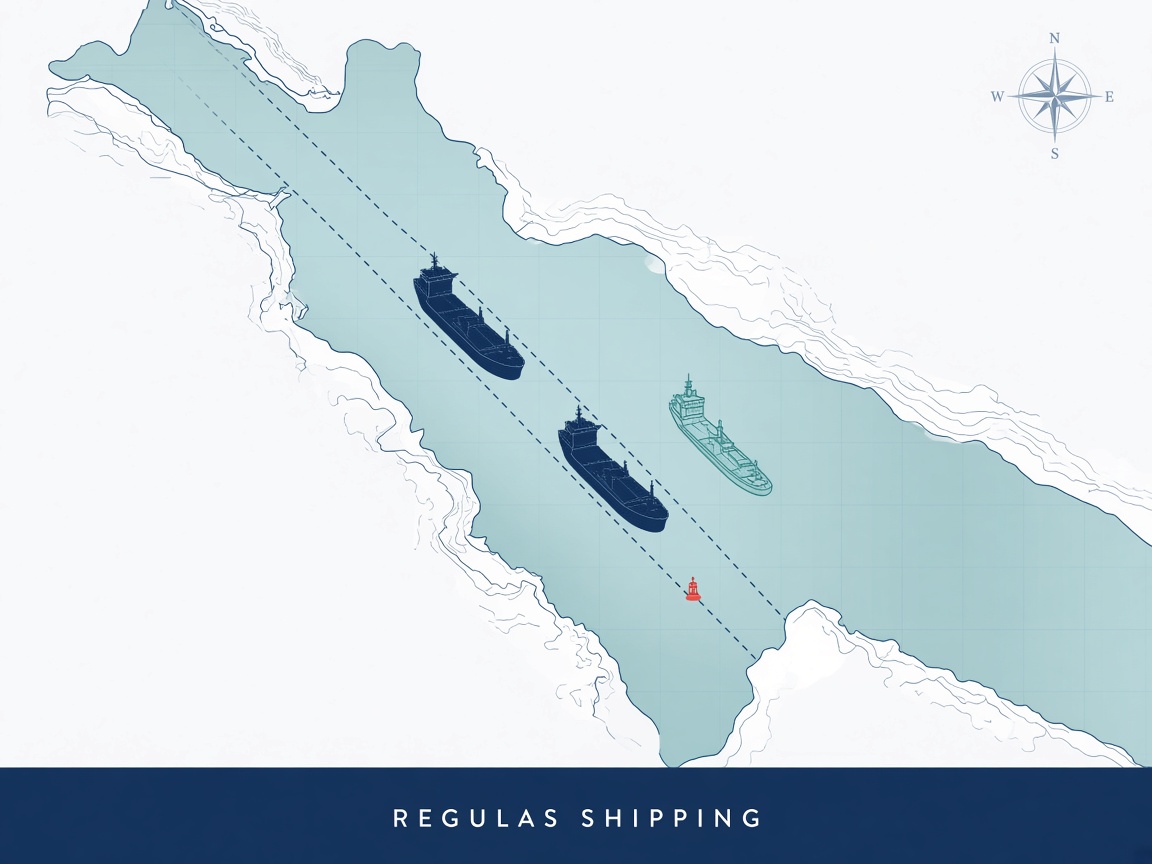
U.S. Central Command said on Saturday that more than one billion barrels of Gulf crude have moved through the Strait of Hormuz in the last couple of months under coordinated protection, even as independent ship-tracking still shows many days with only a handful of AIS-visible commodity transits. Admiral Brad Cooper, writing and speaking in a CENTCOM video posted on X, said U.S. forces had assisted more than 2,000 commercial transits, that primary lanes are clear of mines, and that crude, cargo and LNG volumes over the past two weeks were higher than at any point in the previous six months. Iranu2019s armed forces rejected the barrel claim as false. For operators, the gap between a cumulative military facilitation total and what AIS shows on a given morning is now the live routing problem, not a public-relations dispute.
Cooperu2019s formulation was specific. u201cWeu2019ve reached this significant milestone while assisting over 2000 commercial ship transits through the Strait by providing coordinated protection. Clearly momentum is building,u201d he said. He added that thousands of ships had passed, that more than one billion barrels of crude had been shipped from Gulf partners, and that u201cIran has exported zero barrels thanks to our ironclad blockade.u201d He said Washington is working with regional partners, insurers and shipping companies to raise traffic further, and that CENTCOM is u201cenhancing their air defense, forming a new coalition attack drone unit, and keeping the Strait of Hormuz and surrounding waters open and clear.u201d The Emirates News Agency dated the operational update to the early hours of 20 September. The Peninsula Qatar, carrying a QNA dispatch, placed the same remarks on Saturday evening, 19 September.
That message sits against a thinner AIS picture. Reuters, citing Kpler snapshots, reported four commodity vessels in the strait on Thursday, 17 September u2014 three inbound and one outbound at 0200 GMT u2014 down from six a day earlier and below a 10-day average of about 16. The visible mix was two Panamax tankers, one Supramax and one Kamsarmax; no VLCC and no LNG carrier appeared in that transit set. Wednesdayu2019s count had already dropped to three ships, against 12 on Tuesday and a 10-day average near 17. Pre-war traffic was on the order of 125 ships a day. Reuters has repeatedly cautioned that the figures can move because some ships switch off transponders in the conflict zone. Three LNG carriers u2014 Al Daayen, Al Samriya and Marigold LNG u2014 reappeared outside the strait on Thursday after loading at Ras Laffan or Das Island, a reminder that dark or delayed tracks, not empty seas, still explain part of the gap.
CENTCOMu2019s own recent numbers also have to be read as two missions, not one. On 17 September, spokesman Captain Tim Hawkins told Al Jazeera the blockade was u201chighly effective,u201d that Iran does not control the waterway, and that U.S. forces had assisted commercial vessels moving more than 900 million barrels of crude since early May. He said more than 100 ships had been redirected for trying to violate the blockade, and that internationally recognised primary lanes had been cleared of mines several weeks earlier. On 18 September CENTCOM said the figure stood at 105 redirected commercial vessels, with USS Boxer and its embarked Marine Expeditionary Unit still enforcing the blockade in the Arabian Sea. Cooperu2019s Saturday billion-barrel line is therefore an update on a facilitation tally that Hawkins had already put above 900 million, not a claim that AIS now looks like 2025.
The mine-clearance point is similarly dated. Cooper and President Donald Trump announced in late August that Iranian mines in internationally recognised lanes had been removed or detonated. That does not cancel the projectile and drone pattern still running on the Omani approaches. UKMTO spent 16u201318 September circulating unnamed tanker and security-incident warnings near Khasab, including at least one unknown-projectile hit that started a fire later extinguished with the crew reported safe. Iranu2019s Revolutionary Guard separately named the Togo-flagged products tanker Trend (IMO 9477177) and described an u201cillegal passage.u201d IMO Secretary-General Arsenio Dominguez told member states on 16 September that verified Hormuz attacks had reached 80 since 28 February, with 22 seafarer deaths. Iranu2019s armed forces spokesman Abolfazl Shekarchi on 19 September called Cooperu2019s barrel and blockade remarks u201cfalseu201d and u201cridiculousu201d and a u201cfailed psychological operation.u201d Tehran continues to say the strait is closed on its terms. Parliament speaker Mohammad Bagher Ghalibaf repeated on Sunday that Hormuz will not reopen until Iranian conditions are met.
Energy markets are being asked to treat those statements as compatible. U.S. Energy Secretary Chris Wright said on 13 September that markets still need to rely on transit he estimates at 10 million barrels a day of crude and products through Hormuz, calling oil u201ctighter than weu2019d like today, but theyu2019re not overly tight.u201d Saudi Arabiau2019s Eastu2013West Petroline, the main land bypass, was stopped after 11 September drones and has not been restored to nameplate service. Aramco has been moving Septemberu2013October Ras Tanura barrels toward ship-to-ship transfer off Sohar. Iranu2019s Ports and Maritime Organisation non-compliance list still stands at 77 vessels, with P&I clubs and class warned not to serve listed hulls. Daily AIS counts in the low single digits, shuttle and STS inefficiency, and VLCC earnings above $1 million a day on China runs are the commercial expression of the same waterway Cooper now calls a six-month high.
Pakistan added a diplomatic layer on Saturday. Foreign Minister Ishaq Dar told Iranian counterpart Abbas Araghchi by phone that uninterrupted energy supplies and u201csafe and expeditious passage of shipsu201d matter for developing countries, and the two sides agreed to meet in New York during UN General Assembly week. That conversation does not change voyage instructions. It does underline that flag states and energy importers are still trying to separate commercial transit from the blockade and from Iranu2019s permit-and-route demands.
Operational implications
A CENTCOM facilitation total measured in billions of barrels can be true in the commandu2019s own escorted-and-assisted ledger and still leave a master looking at a four-ship Kpler day. Coordinated protection is a product: it applies to ships that are in the package, on the demined primary lanes, and acceptable under the blockade screen. It does not automatically cover dark transits, PGSA-listed tonnage, southern-route experiments, or hulls that have not been nominated into the U.S. and partner process. Insurers named by Cooper as part of the effort to raise volumes will still underwrite on current listed-area language, not on a video claiming momentum.
The zero-export line on Iranian barrels is a blockade statement. Third-country owners should not read it as a safety certificate, and they should not assume that a ship carrying Gulf crude is therefore of no interest to Iranian forces. Recent UKMTO warnings have been unnamed, delayed, and clustered on the Omani side of the strait, which is exactly where commercial traffic tries to stay out of Iranian-administered routing. Engine-room and projectile hits have been the dominant damage pattern in that sector. Mine clearance of the TSS does not remove that threat.
Routing alternatives remain constrained. Petroline is not a substitute while pumping stations are down. Sohar STS and Gulf of Oman lightering absorb hulls and add time. Yanbu still depends on a Red Sea and Bab el-Mandeb picture that has deteriorated since the Houthi advance on Mokha and the Saudi-linked embargo. Charterers shopping a u201cHormuz is openu201d narrative against a $1 million-a-day VLCC market are not looking at the same risk as a crew on a products tanker 16 nautical miles off Khasab.
What Operators Should Note
- Treat Cooperu2019s billion barrels and Kpleru2019s four-ship Thursday as different datasets. The first is a cumulative facilitation claim over u201cthe last couple of months,u201d including assisted transits that may have been dark to public AIS. The second is a morning snapshot of commodity ships still pinging. Voyage planning should ask which dataset the charterer, the war-risk underwriter and the embarked routing cell are actually using.
- Coordinated protection is not a general licence to transit. Confirm in writing whether the ship is inside a U.S. or partner protection arrangement, on the demined primary lanes, and clear of the 105-vessel redirection screen CENTCOM cited on 18 September. A ship that is merely u201cin the straitu201d is not the same as a ship that has been accepted into that process.
- Mine-free TSS is not projectile-free TSS. Primary-lane clearance was announced in late August. UKMTO warnings through 16u201318 September still describe unknown projectiles and fires on the Omani approaches, with crews reported safe after the fact. Keep citadel, water-spray, lookout and engine-room manning instructions aligned to that pattern, not to the mine headline.
- Screen the PGSA list and the blockade list as separate filters. Iranu2019s 77-vessel non-compliance list and the U.S. redirection tally can both attach to a fixture. Clubs and class have already been warned off listed service. Cargo interests should check both lists before stem, STS or transshipment is agreed.
- Do not take Tehranu2019s u201cstrait is closedu201d or Washingtonu2019s u201cIran exported zerou201d as the voyage order. Both are political descriptions of the same contested waterway. The operational order is still the last UKMTO/JMIC product, the shipu2019s war-risk warranty, and whether the master has a nominated lane and escort window.
- Price the inefficiency, not only the war-risk premium. Shuttle legs, Sohar STS, AIS-off time and waiting for a protection window are now part of laytime and bunkers. VLCC China earnings above $1 million a day already capitalise that delay. A six-month-high volume claim does not shorten a ship that is circling in the Gulf of Oman.
- Keep reporting delayed and unnamed. Recent Hormuz incidents have reached UKMTO hours or days late, often without flag, name or cargo. File position, route and anomaly reports early, and do not wait for a named hull in open media before raising the shipu2019s own threat level.
Regulas Shipping will keep monitoring CENTCOM facilitation claims against AIS and UKMTO incident traffic through the Strait of Hormuz, and will update operators as protection arrangements, blockade redirections and projectile warnings change.