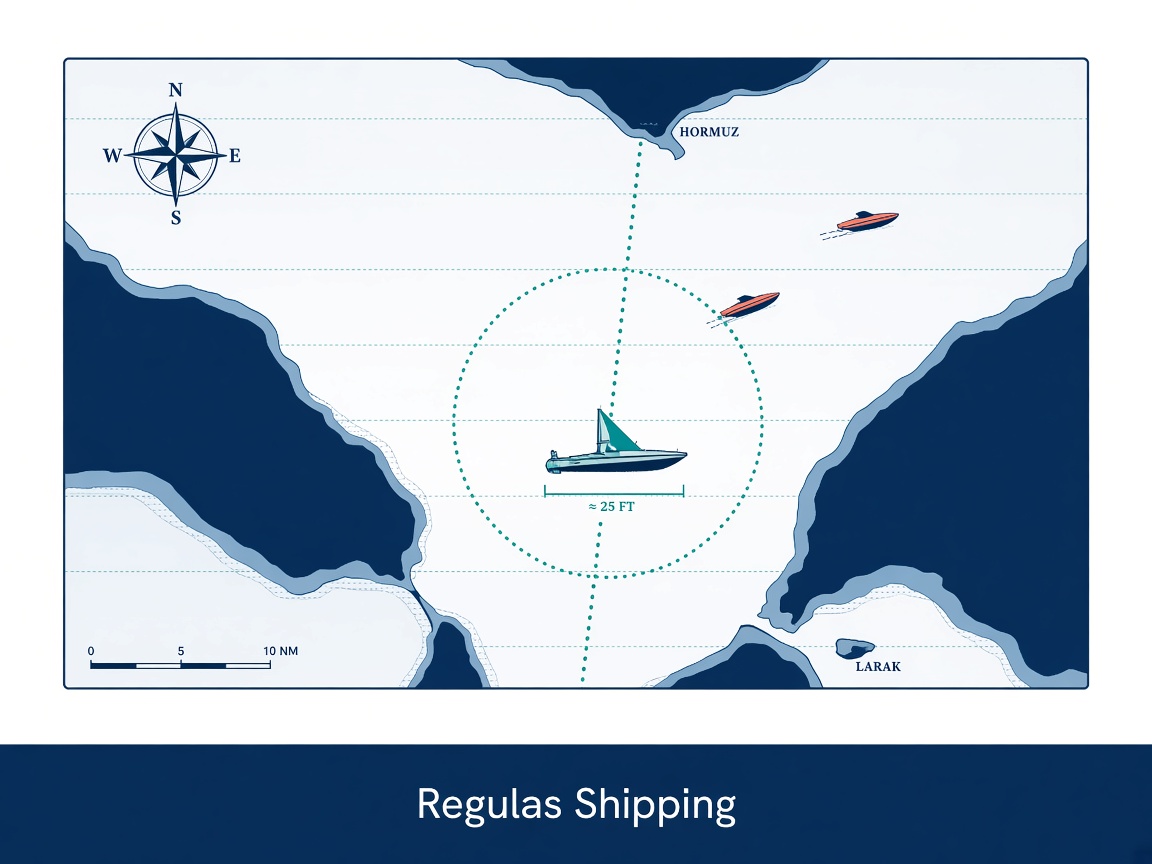
U.S. Central Command said on Tuesday, 15 September 2026, that Iranian small boats had tried to take possession of a U.S. unmanned surface vessel in Middle East waters and were unsuccessful after CENTCOM “forcefully responded.” Spokesman Capt. Tim Hawkins told reporters the surface drone remains under U.S. operational control. He identified the craft as a Saildrone, a small, roughly 25-foot (8-metre) unmanned surface vehicle that U.S. forces have used for several years to watch maritime traffic in the region.
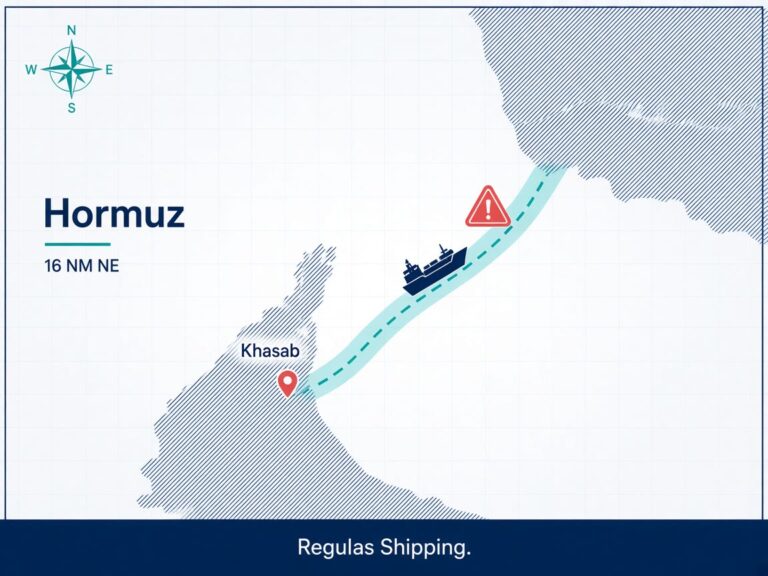
The incident sits on Monday evening, 14 September. Ahmad Nafisi, Hormozgan’s deputy governor for political, security and social affairs, told Iranian state media that two boats were struck in a drone attack about 12 nautical miles from Larak Island and 30 miles from Kargan port. He described the hulls as fishing boats, said an unspecified number of people were missing, and said search-and-rescue operations were under way. Axios, citing unnamed U.S. officials, reported that boats used by Iran’s Islamic Revolutionary Guard Corps tried to capture a Navy surface drone in the Strait of Hormuz, that an American drone fired two missiles, and that the boats were destroyed. CENTCOM confirmed the attempted seizure and the forceful response. It did not, in the public line, identify the boats as fishing craft, confirm casualties, or give a precise position.
For company security officers, that split in the product is the operational fact. One side of the strait is describing a civilian fishing casualty and a SAR. The other is describing an IRGC small-boat attempt on a U.S. unmanned unit and a kinetic reply that left the Saildrone in U.S. hands. Until UKMTO, MSCIO or a coastal-state notice maps the event to a named commercial vessel, masters should log it as a small-boat and unmanned-system exchange in the Larak–Hormuz approaches, not as a closed merchant-casualty file.
A different product from last week’s unmanned claims
Monday’s event is not a reissue of last week’s IRGC claim against Saildrone hull 5838. That 10 September statement said Iranian forces had struck a U.S. Saildrone Explorer at the entrance to the Strait. This week’s sequence is the reverse: Iranian small boats moving onto a U.S. surface drone, and a U.S. response that CENTCOM says kept the unit under American control.
It is also distinct from the Anduril Dive-LD underwater vehicle that Iranian state television said had been captured at the entrance to the Strait about a week earlier. Hawkins said then that the Dive-LD had malfunctioned while surveying, that the U.S. military no longer had possession of it, and that it was an older model that neither collected sensitive data nor carried classified sonar or radar. A lost or captured UUV is a recovery and classification problem. A live Saildrone that remains on task after a small-boat attempt is a traffic-separation problem. Commercial bridges in the strait now have to assume unmanned surface craft, IRGC fast boats, and U.S. covering fire can occupy the same approaches on the same night.
Stars and Stripes, quoting Hawkins, placed the attempted seizure “this week” and did not give a time or a latitude. Iranian provincial reporting filled that gap with Larak and Kargan. Larak Island sits inside the Strait of Hormuz, on the Iranian side of the main shipping lanes, close to Bandar Abbas, Qeshm and the northern TSS. A 12-nautical-mile offset from Larak and a 30-mile offset from Kargan put the reported position in coastal Iranian waters, not in the Omani-side lane that many commercial planners have been treating as the less-exposed corridor. That does not make the southern route safe. It does mean a kinetic U.S.–IRGC exchange can occur inshore of the TSS while shuttle tankers and residual merchant transits are still being pushed through under U.S. facilitation.
What it changes for commercial transits
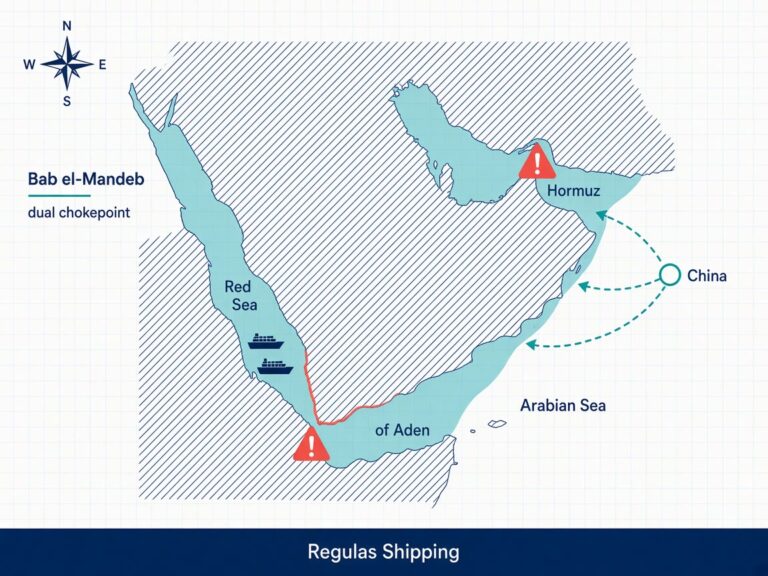
The strait is already a SEVERE threat waterway on Joint Maritime Information Center products. UKMTO reported a separate unknown-projectile strike on a merchant vessel at 2040 GMT on Monday, 14 September, with no damage and no pollution named. The weekend file on the Panama-flagged products tanker El Gaia — fire, missing crew, an Omani tow and competing mine and drone accounts — remains open. Monday’s small-boat event does not close those merchant files. It adds an unmanned-system and swarm layer on top of projectile, mine and drone risk.
Hawkins said last week that U.S. forces had assisted about 1,600 vessels and more than 800 million barrels of crude through the strait since early May, and that multiple routes remain open. A U.S. official put seven-day average oil movements through the waterway at just under 11 million barrels per day, against a 2025 pre-war Kpler baseline near 15 million. Those facilitation numbers are not a threat downgrade. They are evidence that residual commercial traffic is moving under naval cover in the same envelope where IRGC small boats are still attempting to seize U.S. unmanned units. A 30-nautical-mile standoff from U.S. warships, already in JMIC and NAVCENT advice, now has a practical companion: do not close a Saildrone, a skiff cluster, or an unidentified fast boat on the assumption that it is fishing traffic.
Misidentification risk runs both ways. Iranian media called the destroyed hulls fishing boats. U.S. officials called them IRGC small boats used in an attempted capture. IRGC fast-attack craft have a long record of operating among, and sometimes presenting as, small civilian boats in the Gulf. A merchant vessel that alters course toward a cluster of small contacts, or that answers a VHF hail by closing a U.S. unmanned unit, can put itself between the two. The CSO pack for a Hormuz or Gulf of Oman transit therefore needs a small-boat and USV annex, not only a projectile and mine annex.
The operational implication is that unmanned systems are now a live part of the traffic picture, not a background surveillance layer. A 25-foot Saildrone is hard to pick out on a cluttered radar at night, harder still when AIS-on merchant ships are already receiving directed hails to divert toward the northern Iranian-controlled route. BMP Maritime Security reporting to UKMTO, MSCIO and IFC-IOR remains the commercial channel. A kinetic U.S. response around a USV is a military channel. Those two channels will not reconcile in real time on the bridge. The practical instruction is to keep the ship outside any developing small-boat cluster, hold the 30-nautical-mile U.S. unit standoff, and treat Larak, Qeshm, Hengam and the Musandam approaches as one live envelope until a named UKMTO or NAVAREA product says otherwise.
What Operators Should Note
- Log Monday’s Larak event as a small-boat and USV exchange, not as a merchant casualty. CENTCOM confirmed an attempted seizure of a U.S. unmanned surface vessel and a forceful response that left the Saildrone under U.S. control. Hormozgan reporting placed two boats 12 nautical miles from Larak Island and 30 miles from Kargan, with people missing and a SAR under way. Do not merge this file with El Gaia or with UKMTO’s Monday 2040 GMT projectile until a warning product maps them together.
- Treat unmanned surface craft as traffic, not as scenery. Hawkins identified the unit as a roughly 25-foot Saildrone. These craft patrol the strait with little AIS presence and a small radar signature. A close CPA, a challenge by VHF, or an attempt to “investigate” a small sail contact can put a merchant ship inside a U.S.–IRGC engagement.
- Hold the 30-nautical-mile standoff from U.S. units and do not close small-boat clusters. JMIC and NAVCENT advice on visit-and-search, VHF hails and misidentification still applies. IRGC fast boats and fishing skiffs can occupy the same visual picture. Altering toward either group is a security decision, not a courtesy manoeuvre.
- Keep Larak, Qeshm, Hengam and the Musandam approaches in one passage-plan envelope. A coastal-state SAR 12 nautical miles off Larak does not clear the Omani-side lane. Projectile warnings, an engine-room fire under tow, and a USV seizure attempt have now printed on consecutive days in the same strait. Fire-response, citadel or abandon-ship readiness, and SOPEP gear stay live on approach.
- Do not read U.S. facilitation statistics as a threat downgrade. About 1,600 assisted transits and a seven-day oil average near 11 million barrels per day describe residual movement under naval cover. JMIC’s SEVERE rating, directed hails onto the northern route, and the PGSA non-compliance list remain in force. War-risk warranties and BMP reporting do not move because a Saildrone stayed in U.S. hands.
- Preserve AIS, VDR, bridge logs and security communications on any Hormuz or Gulf of Oman transit this week. Competing fishing-boat and IRGC-boat accounts will matter later to flag, P&I and charterers if a merchant ship is nearby. Record small-boat contacts, USV sightings and any U.S. or Iranian VHF instruction as they happen.
Regulas Shipping will keep lining CENTCOM, Hormozgan and UKMTO products on this Larak–Saildrone file so operators can treat unmanned surface craft and small-boat clusters as part of the live Hormuz traffic picture, not as a side dispute between navies.