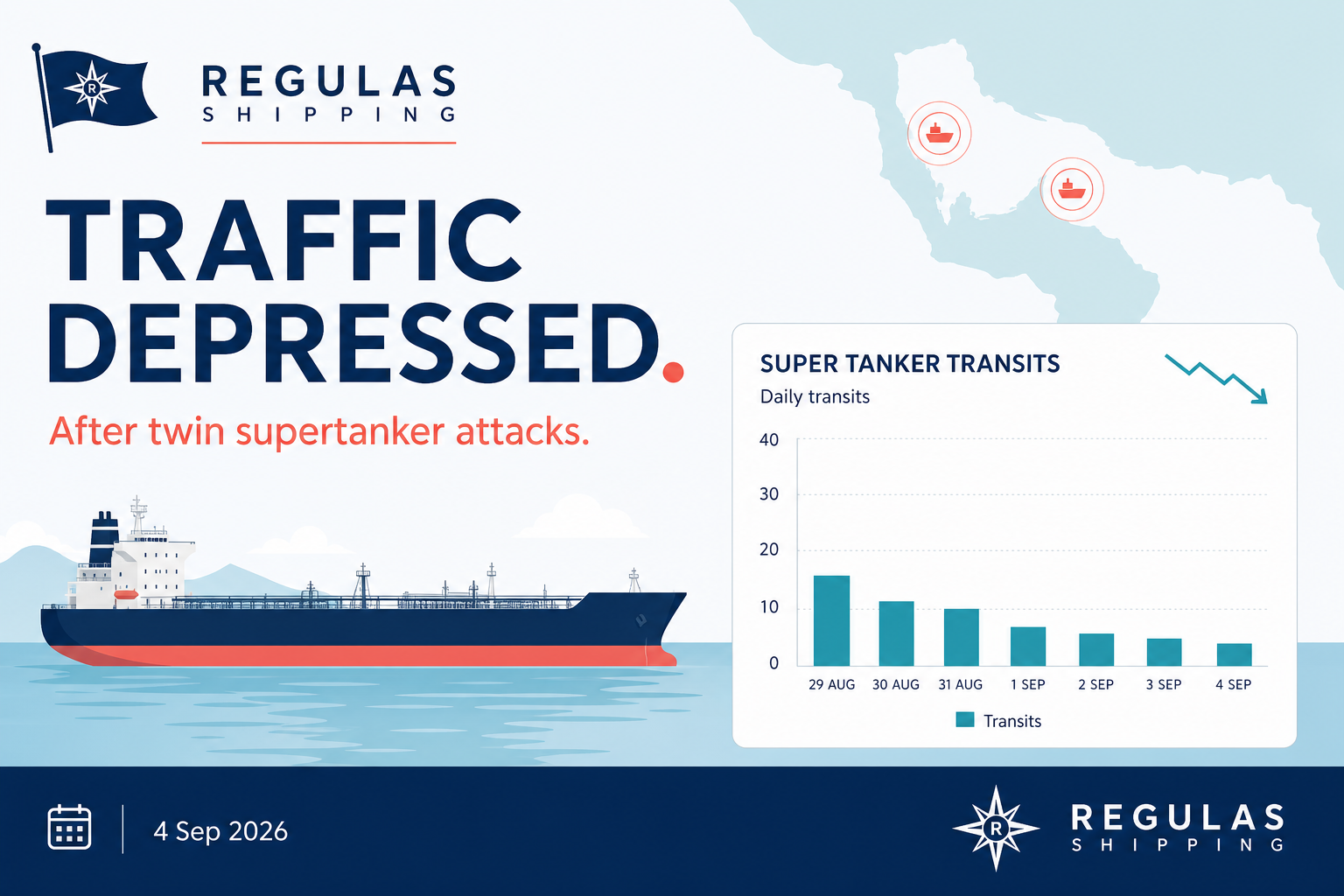
On 4 September 2026, early-month traffic through the Strait of Hormuz remained significantly diminished as owners and charterers assessed fallout from the 1 September twin VLCC attacks near Khasab. Industry summaries described only a handful of commodity vessels still willing to show in the strait — far below even the already-suppressed late-August averages — with mainstream tanker trade widely treated as effectively suspended for normal commercial programmes.
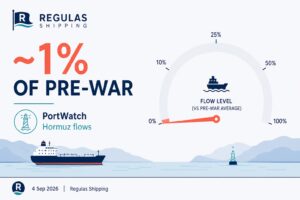
PortWatch and related throughput monitors circulating in early September underscored how extreme the collapse remains versus pre-crisis baselines, with some lagged daily prints in the single digits against peacetime averages an order of magnitude higher. War-risk premiums stayed elevated, and the Sidr fatality confirmation earlier in the week further hardened crew and insurer resistance. Dual-chokepoint pressure from Red Sea/Houthi risk continued to limit clean workarounds for Gulf energy.
Commercially, the market is in a “wait for durable calm” posture: one or two quiet days will not reopen fixing books after clustered projectile strikes and confirmed seafarer deaths. Operators should plan on multi-week disruption unless JMIC severity falls and tanker mix recovers together.
What Operators Should Note
- Model September Gulf stems as high-probability deferrals or diversions.
- Keep war-risk quotes live daily; last week’s premium may already be stale.
- Do not interpret a single quieter session as recovery after twin VLCC hits.
- Coordinate with cargo interests on storage, pipeline and Red Sea fallback options.
- Maintain heightened bridge and citadel readiness for any residual facilitated moves.
Regulas Shipping will keep watching early-September Hormuz prints against attack tempo and insurance pricing.