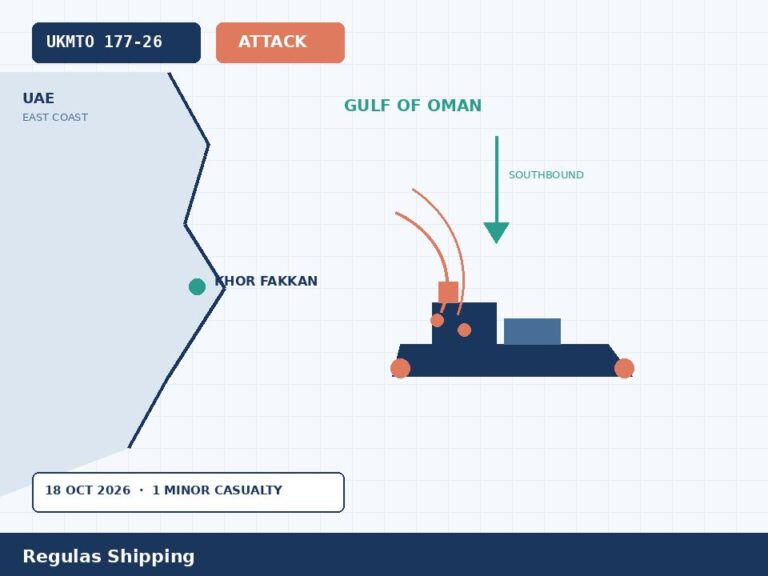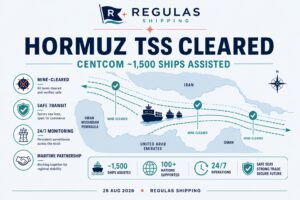
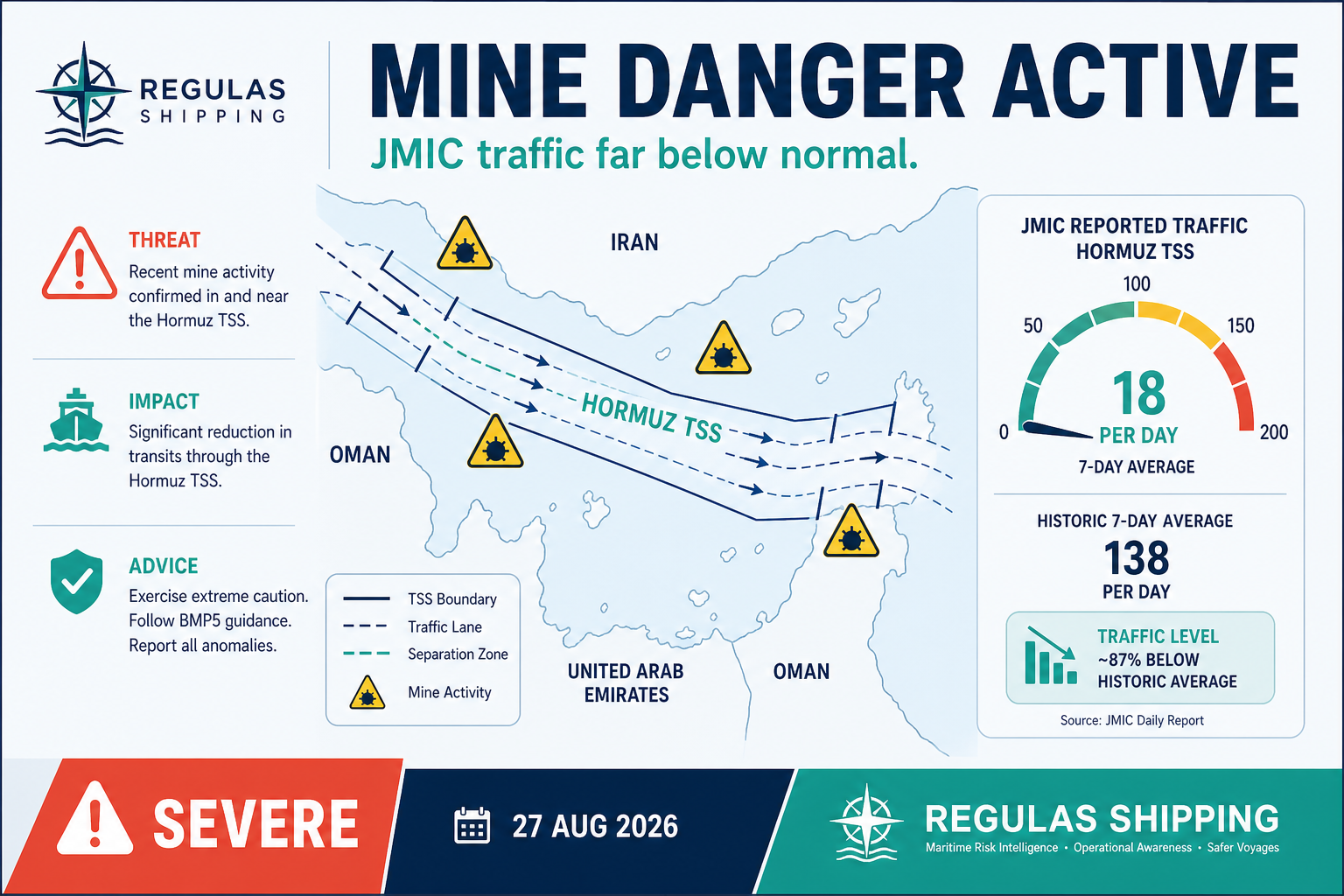
On 27 August 2026, the Joint Maritime Information Center reiterated that commercial operators should not treat the Strait of Hormuz as cleared for normal transit. JMIC warned of a continued risk from drifting or uncharted mines in and near the Traffic Separation Scheme, with mine danger areas still active and clearance/survey operations ongoing — even after U.S. political statements that international waters had been demined.
Traffic remains heavily suppressed. JMIC cited a historical average of about 138 vessels per day in 2025; U.S. data showed only 37 U.S.-facilitated transits over 25–26 August, while independent tracking continues to show very low non-facilitated commercial flow. JMIC expects reduced traffic on both the northern Iranian-controlled route and the southern Omani corridor while attacks, blockade enforcement and regional tension persist.
What Operators Should Note
- Obtain current mine-danger coordinates from NCAGS/UKMTO before any TSS planning.
- Do not equate political demining claims with an all-clear while JMIC keeps mine-risk reporting relevant.
- Price delay, diversion and war-risk costs against any short-term recovery in crossing counts.
- Brief crews that mine and projectile threats can coexist on the same passage.
Regulas Shipping will keep aligning JMIC/UKMTO mine and traffic outlooks with day-to-day fixture and passage decisions.