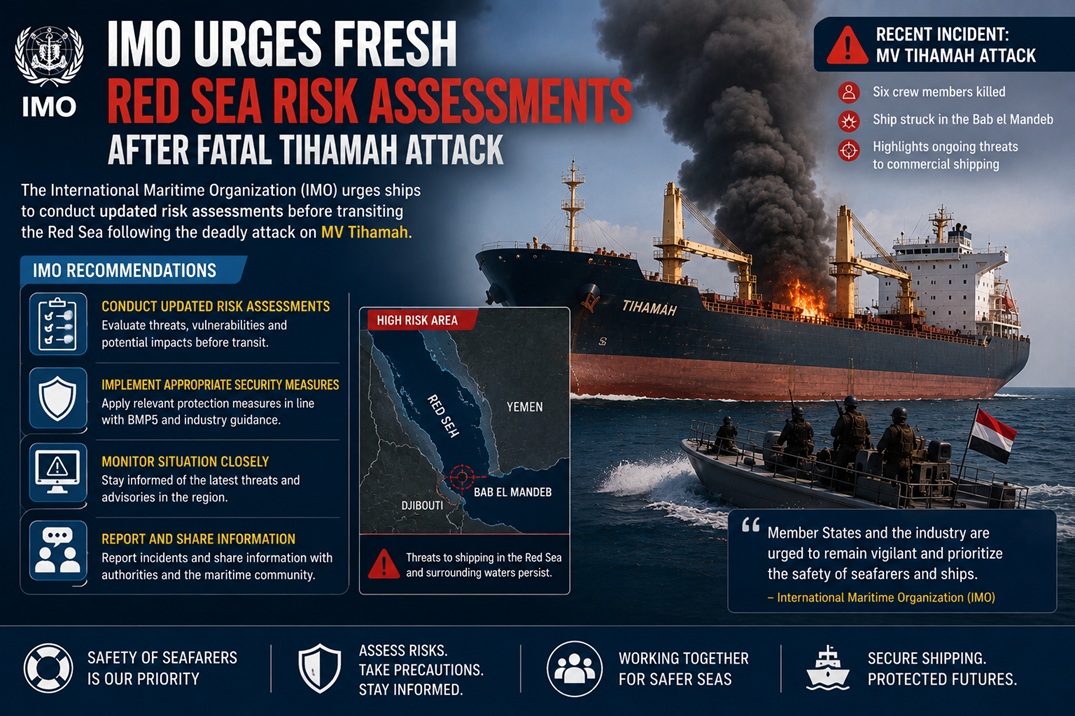
IMO Secretary-General Arsenio Dominguez has urged shipowners and operators to thoroughly reassess transit risks in the Red Sea and Gulf of Aden after Tuesday’s deadly attack on the cargo ship Tihamah off Al Mokha, Yemen. In a statement issued on Wednesday, 12 August, Dominguez condemned the strike that killed multiple seafarers and warned that continued attacks on shipping escalate regional tensions and threaten the global supply chains on which everyone depends.
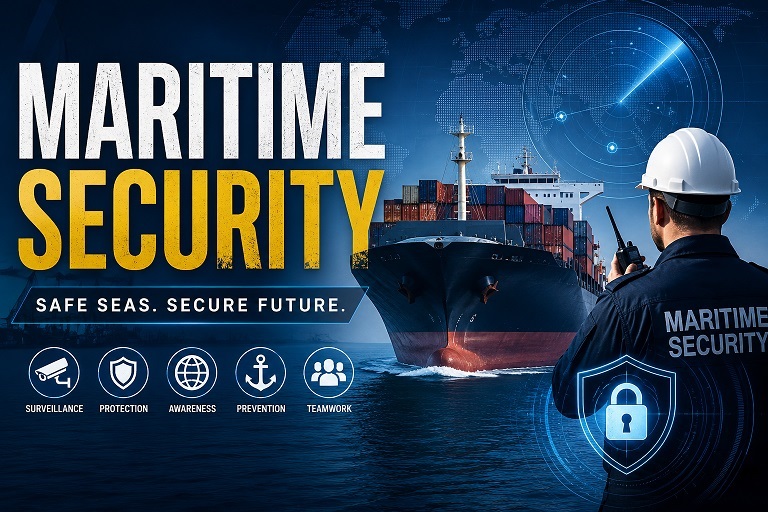
“Once again, innocent seafarers have lost their lives in an indefensible attack on international shipping,” Dominguez said. “I reiterate my call for shipowners and ship operators to thoroughly assess risks before transiting this and other regions and follow appropriate best management practices.”
Seafarer Safety Framed as a Legal Obligation
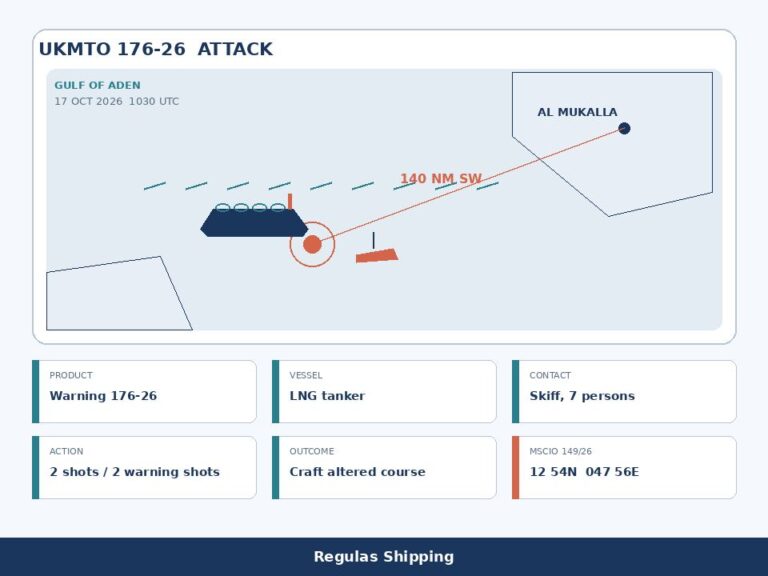
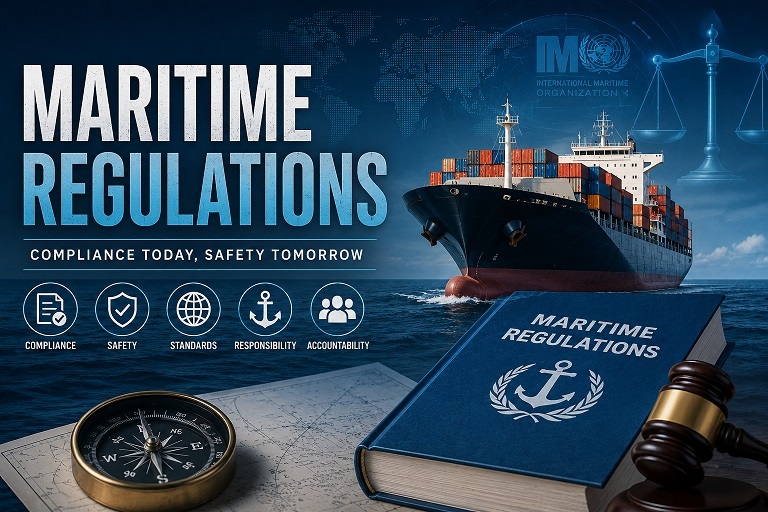
The Secretary-General stressed that seafarers “deserve to be protected and allowed to do their jobs in safety and security,” and described ensuring seafarer safety as “a fundamental obligation under international law and a shared responsibility of the global community.” He also called for the immediate and unconditional release of seafarers still held captive following piracy attacks in the Red Sea and Gulf of Aden.
The statement comes as traffic through Bab el-Mandeb remains well below pre-blockade levels and as operators weigh whether commercial urgency can still justify exposure to projectile and secondary-strike risk. The IMO’s message does not create a new legal instrument, but it raises the compliance and governance bar: boards, DPA offices and charterers will be expected to show that Red Sea and Gulf of Aden voyage decisions rest on documented, current risk assessments and Best Management Practices — not habit or freight pressure alone.
What Operators Should Note
- Update voyage-specific risk assessments for any Red Sea or Gulf of Aden transit before the next fixture or departure, not after the next incident.
- Document Best Management Practices applied — hardening, reporting, routing and crew briefings — so decisions can withstand later scrutiny by insurers, charterers and flag administrations.
- Treat seafarer welfare and hostage-release obligations as part of the same security governance file, not a separate humanitarian sidebar.
- Align commercial routing choices with war-risk underwriter and UKMTO advisories; an IMO-level warning makes weak paperwork harder to defend if a casualty follows.
RegulAs Shipping will continue tracking IMO guidance alongside verified Red Sea and Gulf of Aden incident reporting as operators recalibrate transit policy.