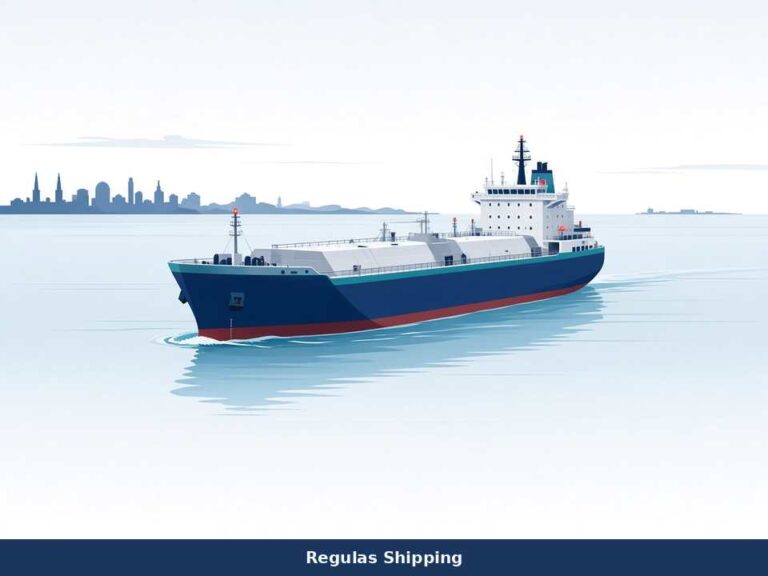
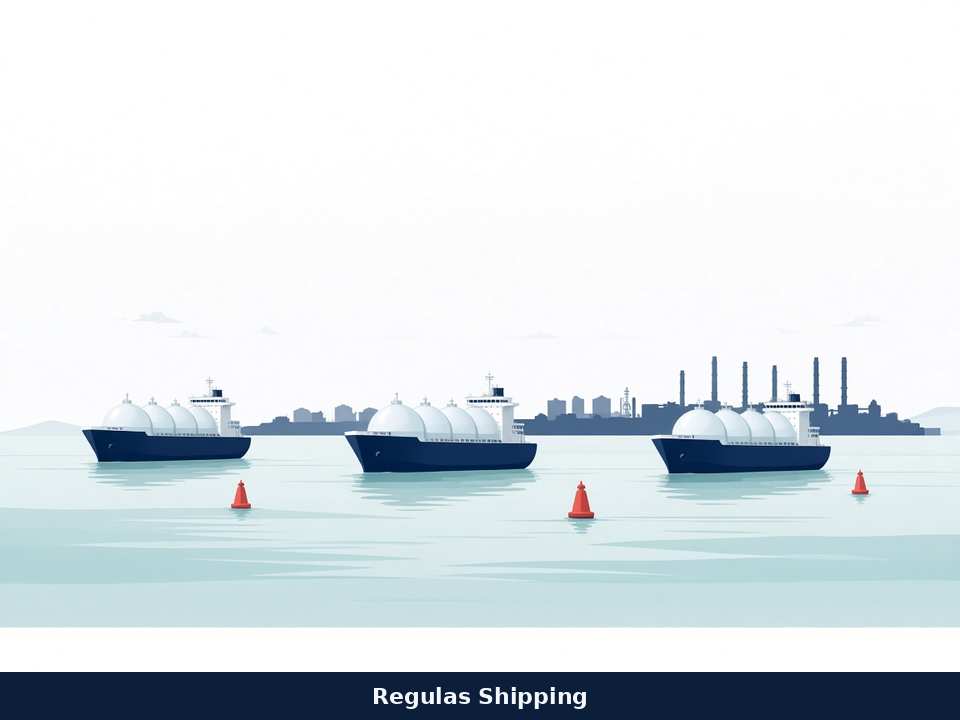
Bloomberg reported on Wednesday, 7 October, that Qatar has amassed a fleet of empty liquefied-natural-gas carriers in the Persian Gulf, a sign that one of the world’s largest exporters of the fuel may be preparing to lift more cargoes through the Strait of Hormuz. At least 12 ballast LNG ships owned or chartered by QatarEnergy were waiting in waters near the country, on a Bloomberg analysis of satellite images and ship-tracking data. Together the vessels can hold about 1.1 million tons of LNG, or roughly 2 per cent of the carrying capacity of the global tanker fleet. QatarEnergy did not immediately respond to a request for comment. There is no guarantee the ships will sail through Hormuz once loaded. Iranian attacks on merchant shipping have intensified. Bloomberg noted, in the same piece, that a Greek-owned LNG carrier had been hit by an unidentified object near the waterway, citing Athens News Agency and Greece’s shipping ministry. That hull is Maran Gas Mystras, the dedicated companion file on this desk. It is context for why a ballast stack inside the Gulf is not the same as a completed export restart. It is not a second naming of Sunday’s casualty.
The commercial fact is still a fact. Twelve empty gas carriers sitting on the Qatari side of a SEVERE strait, with enough cubic metres between them to move a visible slice of winter supply, is an operating picture masters, charterers and buyers have to price. It is not a UKMTO warning, not a JMIC downgrade, and not a Ras Laffan loading notice. Stay with Bloomberg’s satellite-and-AIS count, the no-comment from QatarEnergy, and the explicit hedge that loaded ships may still refuse the transit.
What the Wednesday count shows, and what it does not
Bloomberg’s Stephen Stapczynski and Ruth Liao dated the stack to 7 October. The ships are ballast. They are owned or chartered by QatarEnergy. They are waiting near the country, not listed by name in the gCaptain pickup used here. Combined capacity is about 1.1 million tons. The 2 per cent global-fleet line is Bloomberg’s comparison, not a QatarEnergy utilisation figure. Do not convert 12 hulls into 12 confirmed Ras Laffan stems, and do not invent IMOs, flags or which anchorage they occupy.
LNG traffic through Hormuz rose in September to the highest level since the war began, Bloomberg said, but shipments remain about 75 per cent below February, before the United States and Israel attacked Iran. The recent increase has already moved the buy side. India, Bloomberg said, has been forced to scale back some spot purchases to make room for the return of Qatari cargoes. That is a contractual crowding-out line, not a Petronet circular and not a finding that long-term force majeure has been lifted. Oil shipments have rebounded more sharply over recent months. Much of that crude has been loaded onto other ships in the Gulf of Oman in a shuttle pattern. Bloomberg’s point, which operators already know from the deck, is that those transfers are technically more difficult with super-chilled LNG. Do not brief an STS workaround as the plan for this 12-ship stack.
September colour from the Cyprus Mail recap used in the companion Maran Gas Mystras file is consistent with a recovery that is real and still thin: S&P Global Energy counted 19 LNG shipments through the strait in September, Kpler 21, against 15 in June. Additional Qatari cargoes were reported through the waterway over the past weekend despite the security picture. International Energy Agency figures in that recap put just over 112 billion cubic metres of LNG through Hormuz in 2025, close to 20 per cent of global trade, around 90 per cent of it destined for Asia. US Energy Information Administration figures there put LNG flows at 10.5 billion cubic feet per day in the fourth quarter of 2025 and 0.8 billion cubic feet per day in the second quarter of 2026. Use those as corridor maths. They do not identify Wednesday’s 12 ships, and they do not say Ras Laffan is back at nameplate.
Earlier positioning, kept as history rather than a second count
This is not Qatar’s first ballast repositioning of the war. Bloomberg on 7 September described six empty Qatar-linked gas carriers in the Gulf of Oman or on the way there, another empty ship already inside the Arabian Gulf, 15 laden LNG carriers then idled behind Hormuz, and two ships loading at Ras Laffan. Two empty tankers that appeared to attempt the strait had turned around and were waiting near the eastern entrance. Energy Minister Saad Sherida Al-Kaabi, at the Qatar Economic Forum in New York in late September, said undamaged parts of Ras Laffan could resume full operations “within a couple of weeks” when Hormuz reopens — a political clock, not a Wednesday sailing list. Baird Maritime’s late-September AIS recap named several Qatar-linked transits as they reappeared outside the strait: GasLog Skagen off Sri Lanka with a Ras Laffan cargo, Al Shamal, Mesaimeer, Al Ghashamiya into Dahej, Al Samriya, Al Daayen toward Caofeidian, Shandong Redwood into Pakistan, and Al Mafyar inbound in ballast. Those are September hulls. Do not drop them onto Wednesday’s unnamed 12. Do not treat dark-transit colour from that month as a standing QatarEnergy procedure for the ships now waiting inside.
JMIC Update 102, ICOD 041500 UTC 4 October, still holds the Strait of Hormuz at SEVERE. Independent tracking in that note showed single-digit commodity transits each way; US NCAGS averaged about 32 vessel transits a day over the previous 72 hours against a 2025 baseline of about 138. US-facilitated Strait transits 1–3 October were 95. Update 102 still carried the 30 September CENTCOM figure of 125 redirected ships; Monday’s official count, already used as blockade hygiene on this desk, is 130. Neutral transit remains permitted. AIS-on still carries hail and targeting colour. A 30-nautical-mile standoff from US units remains the published misidentification hedge. None of that is a loading window for 12 ballast LNG carriers.
Operational implications
A ballast LNG stack on the Qatari side of Hormuz is a storage, crewing and war-risk problem before it is a headline about winter prices. Each hull still needs a crew willing to transit, a war-risk quote that a charterer will pay, a BMP and citadel plan written for projectile and UAV watch rather than piracy, and a decision on AIS that collides with two published instructions: JMIC’s AIS-on targeting warning and Oman’s Article 10 AIS-on rule inside territorial sea, already the dedicated 2 October reminder on this desk. Dark transits that worked, or appeared to work, for a handful of September cargoes are not a compliance answer inside 12 nautical miles of Oman and are not a safety answer against a waterline hit of the kind Greece has now named on Maran Gas Mystras.
LNG cannot copy the crude shuttle that has rebuilt oil volumes through Gulf of Oman ship-to-ship transfers. Cryogenic cargo, boom geometry, vapour handling and receiving-ship compatibility are different. If QatarEnergy loads the 12 and they wait for a quieter 48 hours, buyers should assume cargo can sit, boil off, or be diverted inside the Gulf — including the Kuwait short-haul outlet that earlier Bloomberg files said had helped keep Ras Laffan ticking over — rather than assume a clean Fujairah or east-of-Singapore arrival. If they do sail, they sail through the same SEVERE water in which UKMTO has logged unnamed projectile strikes on successive days, an IRGC turn-back north of Khasab, and, as of Tuesday, a named Greek-flag LNG casualty that kept going to Fujairah.
Indian, Japanese, Korean and Chinese receivers who have been filling from spot cargoes should treat Bloomberg’s India line as a scheduling warning: Qatari term volumes, if they reappear, will displace spot, not sit beside it. That is a commercial crowding effect, not a safety circular. It still belongs on the operator desk, because a ship that is suddenly wanted on a Qatari stem is a ship whose CSO may be asked to accept a Hormuz window that last week’s risk committee declined.
Do not fold this stack into the US blockade of Iranian ports, the UANI floating-storage drawdown off Malaysia, or CENTCOM’s 130th redirect. Those are Iranian-export files. Qatar is a different flag, a different cargo and a different door, using the same strait. Do not recast Wednesday as a Hormuz reopen, a PGSA transit-rule change, or a finding that LNG is now safer than crude.
What Operators Should Note
- Log a 7 October ballast count, not a sailing list. Bloomberg: at least 12 empty LNG carriers owned or chartered by QatarEnergy waiting in waters near Qatar; combined capacity about 1.1 million tons, about 2 per cent of global tanker carrying capacity. QatarEnergy had no immediate comment. No guarantee they transit Hormuz once loaded. Do not invent names, IMOs, flags or berths.
- Keep Maran Gas Mystras on its own line. Bloomberg’s Greek-owned LNG hit is the dedicated companion piece: Greece-flag Maran Gas Mystras, IMO 9658238, Sunday waterline projectile, 30 crew safe including 11 Greeks, manager says fully operational toward Fujairah. It explains the hedge. It does not identify Wednesday’s 12 ships and it does not mean gas carriers are now routine Hormuz traffic.
- Treat September’s LNG recovery as thin, not restored. Highest monthly Hormuz LNG since the war began; still about 75 per cent below February on Bloomberg. S&P 19 / Kpler 21 shipments in September versus 15 in June, in the Cyprus Mail recap. India has already cut some spot purchases to make room for returning Qatari cargoes — a crowding line, not a force-majeure circular.
- Do not brief an oil-style Gulf of Oman STS as the LNG plan. Crude has rebuilt volumes by shuttling. LNG transfers of that kind are technically harder. If the 12 load and wait, boil-off, Kuwait short-haul and inside-Gulf storage are the realistic buffers until a transit window exists.
- Write the transit, if it comes, against JMIC SEVERE and Oman Article 10 together. Update 102 still SEVERE; AIS-on hail and targeting colour; 30 nautical-mile US-unit standoff; NCAGS humanitarian exception is not a QatarEnergy permit. AIS-off inside Omani territorial sea remains a compliance problem on the 2 October MSC reminder. Crew, war-risk and citadel plans need a projectile/UAV watch, not a piracy template.
- Do not recast Wednesday as a Hormuz reopen, a Ras Laffan nameplate restart, a PGSA instrument, or a UKMTO product. Al-Kaabi’s “within a couple of weeks when Hormuz reopens” remains a September political clock. Stay with an unnamed 12-ship ballast stack and a loaded-ship hedge. CSO, charterer and buyer own the next movement until QatarEnergy names hulls or a master reports a transit.
Regulas Shipping will keep lining Bloomberg’s 12-ship QatarEnergy ballast count against the dedicated Maran Gas Mystras casualty and JMIC’s SEVERE strait so operators can treat the stack as commercial positioning inside a live projectile watch, not as a completed export restart or a reason to drop BMP on the next Ras Laffan window.