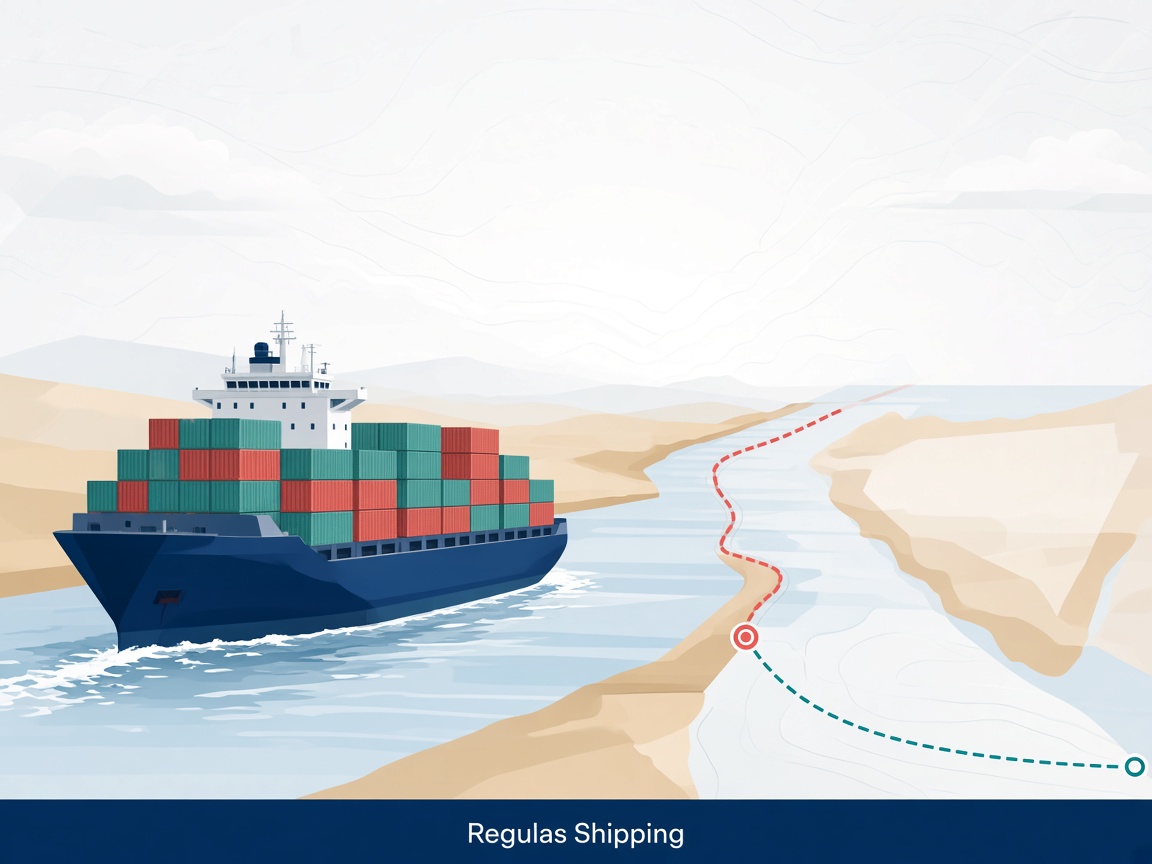
Maersk and Hapag-Lloyd said on 14 September 2026 that four more Gemini Cooperation services will leave the Cape of Good Hope routing and transit the Suez Canal. The change covers Maersk’s AE5, AE11, AE12 and ME2 services, which Hapag-Lloyd markets as NE4, SE2, SE1 and IEX. They join AE15 and AE19, the two Gemini strings already on the trans-Suez corridor. The first announced westbound sailing is Antonia Maersk, voyage 635W, on AE11 from Tanjung Pelepas on 19 September — four days from this Tuesday’s date line.
The carriers presented the move as a structural network change after an assessment of security conditions, not as a declaration that the Red Sea is clear. Maersk’s customer advisory says any further alteration to Gemini services “will remain dependent on the ongoing stability in the Red Sea area and the absence of any escalation in conflicts in the region.” It puts the safety of crew, vessels and cargo as the highest priority. That is the operator-relevant sentence. A published rotation through Suez is a commercial product. It is not a JMIC, UKMTO or MSCIO downgrade, and it is not a substitute for BMP Maritime Security on a Bab el-Mandeb transit.
Gemini began operations on 1 February 2025 with 57 services, around 340 vessels and about 3.7 million TEU of capacity, initially routed around the Cape because of the Houthi campaign against merchant shipping that began in late 2023. That campaign has targeted more than 100 merchant vessels in and around the Red Sea and Gulf of Aden, sunk four commercial ships and seized the Galaxy Leader. Most mainline carriers still keep a large share of Asia–Europe tonnage south of Africa. The 14 September advisory is the widest Gemini restoration yet of the canal corridor, but it sits on a threat picture that has hardened again this month rather than eased.
What the rotations actually put through the canal
AE5, the Asia–Northern Europe string, is published as Qingdao – Ningbo – Tanjung Pelepas – Suez Canal – London – Bremerhaven – Hamburg – Rotterdam – Algeciras – Suez Canal – Tanjung Pelepas. AE11, Asia–Mediterranean, is Shanghai – Yantian – Tanjung Pelepas – Suez Canal – Port Tangier – Valencia – Barcelona – La Spezia – Genoa – Vado Ligure – Suez Canal – Singapore. AE12, also Asia–Mediterranean, is Ningbo – Shanghai – Tanjung Pelepas – Suez Canal – Algeciras – Koper – Rijeka – Algeciras – Suez Canal – Singapore. ME2, India–Europe, is Ennore – Colombo – Suez Canal – Algeciras – Rotterdam – London – Hamburg – Port Tangier – Suez Canal – Colombo. All four services are described as transiting Suez in both directions.
Maersk’s first-sailing table is specific enough for voyage orders. Westbound, AE11 switches with Antonia Maersk 635W from Tanjung Pelepas on 19 September; AE5 follows with Marchen Maersk 635W from Tanjung Pelepas on 21 September; ME2 switches with Cornelia Maersk 638W from Colombo on 24 September. Eastbound, AE5 switches with Maastricht Maersk 637E from Algeciras on 22 September; AE11 with Maersk Halifax 637E from Vado Ligure on 28 September; ME2 with Cornelia Maersk 643E from Port Tangier on 31 October. The first AE12 sailing has not been named. Shippers and feeder operators who have been planning Cape dates against those strings need the new last-call and ETD pairs in the booking system this week, not after Antonia Maersk has sailed.
The restoration is a continuation, not a first experiment. AE15 returned to Suez in July, later added Jeddah, and on 7 September Maersk published a further AE15 rotation that adds Salalah, with Morten Maersk voyage 638E leaving Damietta on 18 September and due Salalah on 24 September. AE19 moved to the canal in August with a rotation that calls Jeddah. Maersk’s independently operated MECL, linking India, the Middle East and the U.S. East Coast, has also been put back through Suez with an eastbound Jeddah call, after an earlier 2026 attempt was reversed. Those Jeddah and Salalah calls matter for more than transit time. They put Gemini cargo, and in some cases a Saudi port call, into a Red Sea that Houthi forces have again treated as a pressure point against Saudi-linked shipping.
The security file the advisory does not cancel
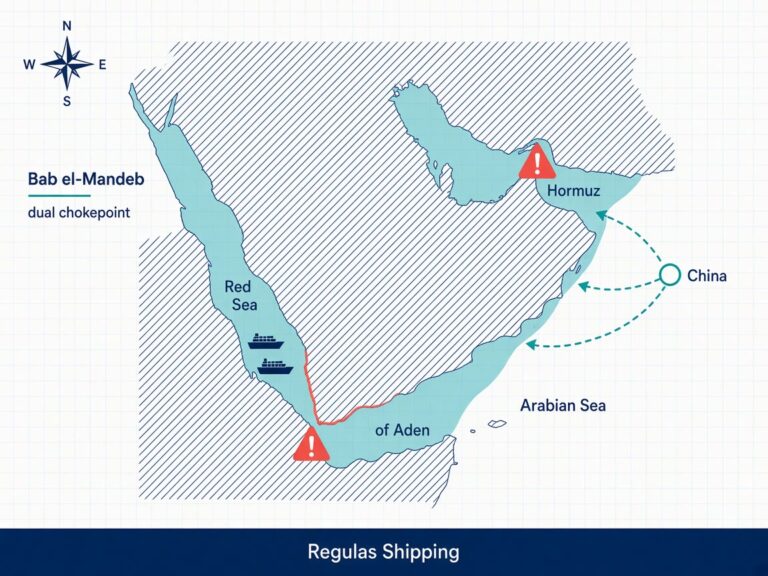
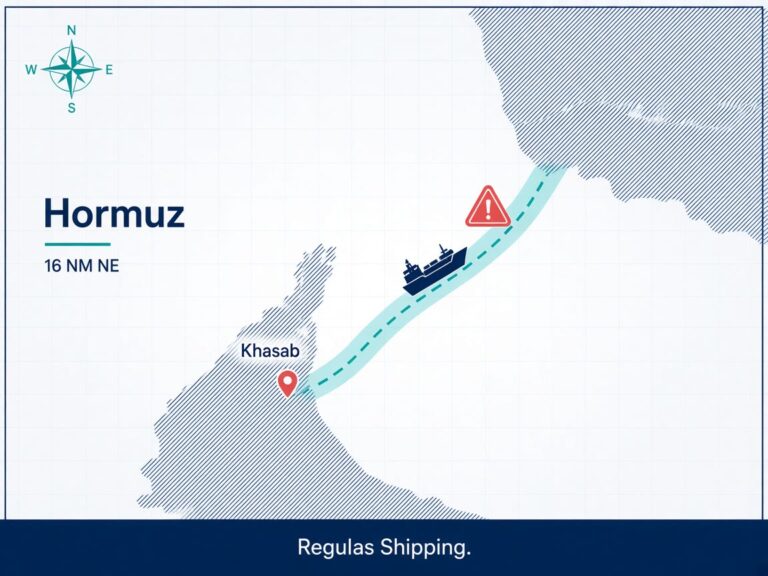
The 14 September notice arrives while Iran-aligned Houthi forces have expanded their position along Yemen’s Red Sea coast and around the Bab el-Mandeb Strait. Houthi forces seized Mokha earlier this month, tightening the approach to Perim and the Hanish islands, and Kpler-counted Bab el-Mandeb transits have already printed as low as six ships against about 30 on a recent Friday. The Houthis declared a maritime blockade against Saudi-associated shipping on 20 July. Saudi Arabia’s East–West pipeline, the main Hormuz bypass to Yanbu, was stopped on 11 September after drone strikes. Operators now face two chokepoints on the same peninsula: a severely restricted Strait of Hormuz on the Gulf side and a Red Sea corridor that liner operators are putting more strings through even as the Bab el-Mandeb threat remains live.
Maersk’s own language leaves a reversal path. The advisory says the partners will keep monitoring the Middle East security situation closely. Individual sailings, or the wider structural change, can still be sent back around the Cape if the picture changes. That is the planning assumption cargo interests should hold. A four-day notice to the first westbound Suez sailing is enough to recut transhipment, inland cut-offs and insurance declarations. It is not enough to treat Jeddah, the southern Red Sea or the canal approaches as a peacetime lane. War-risk underwriters, flag security levels and BMP reporting do not move on a liner rotation PDF.
The operational implication for non-Gemini operators is narrower and more concrete. More mainline capacity on the canal will pull some Asia–Europe boxes off the Cape, shorten some advertised transit times, and change feeder and transhipment patterns at Tanjung Pelepas, Colombo, Tangier and Algeciras. It will also concentrate more high-value liner tonnage in a waterway where projectile, drone and boarding risk has not been withdrawn. Ships that are not on Gemini still have to decide, string by string, whether they follow the canal, stay on the Cape, or accept a dual plan. Saudi-associated cargo, Jeddah calls, and any AIS or ownership feature that a Houthi cell might read as a target remain a separate screening problem from Maersk’s network map.
What Operators Should Note
- Put the first-sailing dates into voyage orders this week. Antonia Maersk 635W is due out of Tanjung Pelepas on 19 September on AE11/SE2. Marchen Maersk 635W follows on AE5/NE4 on 21 September. Cornelia Maersk 638W leaves Colombo on ME2/IEX on 24 September. AE12/SE1 still has no named first ship. Eastbound switches begin with Maastricht Maersk 637E from Algeciras on 22 September.
- Read the published rotations as canal transits in both directions, including the Mediterranean and North Europe loops. AE5, AE11, AE12 and ME2 now list Suez on the way west and on the way east. Booking, transhipment and inland cut-offs built on Cape dates will miss the new last-call pairs at Tanjung Pelepas, Colombo, Algeciras, Vado Ligure and Port Tangier.
- Do not treat the advisory as a threat downgrade. Maersk and Hapag-Lloyd say the change depends on continued Red Sea stability and the absence of escalation. UKMTO, MSCIO, BMP Maritime Security and war-risk warranties still govern the southern Red Sea and Bab el-Mandeb. Keep citadel, fire-response and reporting procedures live on any canal routing.
- Screen Jeddah, Salalah and Saudi-associated cargo as a distinct Houthi-target problem. AE15 and AE19 already call Jeddah; AE15 adds Salalah from 18–24 September. The 20 July Houthi blockade line against Saudi-linked shipping has not been lifted. Ownership, charter, cargo interest and AIS presentation that a hostile actor could read as Saudi-linked belong in the CSO pack before a box is loaded, not after the ship is in the Red Sea.
- Hold a Cape contingency for the same strings. Gemini has already reversed a Red Sea restoration once on MECL in 2026. The 14 September notice itself flags that individual sailings or the wider change can go back around Africa. Charterers and BCOs should keep Cape transit times, extra bunker exposure and missed-window clauses priced, not archived.
- Reprice insurance, flag security and crew-change assumptions against a dual-chokepoint basin. Hormuz remains a SEVERE projectile and mine waterway on the Gulf side; Bab el-Mandeb is again a live Houthi problem on the Red Sea side. A shorter Asia–Europe transit does not reduce war-risk additional premiums, ISPS measures, or the need to name who may divert after a UKMTO warning.
- For non-Gemini fleets, decide string by string rather than following the liner map. More canal capacity will change slot availability and feeder patterns. It does not decide whether a tanker, a bulker or a smaller container operator should enter the southern Red Sea. That decision stays with the company security officer against current UKMTO and MSCIO products, not against a competitor’s rotation.
Regulas Shipping will keep lining Gemini’s published Suez rotations against UKMTO, MSCIO and BMP Maritime Security so operators can treat the 19 September first sailing as a routing change with a live Red Sea threat file, not as a declaration that Bab el-Mandeb is clear.